A Bible passage records a narrative; it does not by itself identify a surviving building or prove an event at an exact map pin. Our profiles distinguish the biblical text, later Christian tradition and evidence about the place. Many memorial churches are centuries younger than the events they commemorate.
This selection covers biblical connections and Christian heritage in our directory. It is not a complete list of biblical locations or a count of church buildings. Christian heritage sites without a biblical association are included for their own history.
Saint Mary’s at Sakha preserves an older church setting within a building repeatedly renewed. The pilgrimage account records rebuilding authorised by Muhammad Ali and a modern restoration completed in May 2014, continuing the site’s place in Coptic devotional life.
Matthew describes flight into Egypt; the named stop belongs to later Coptic tradition.
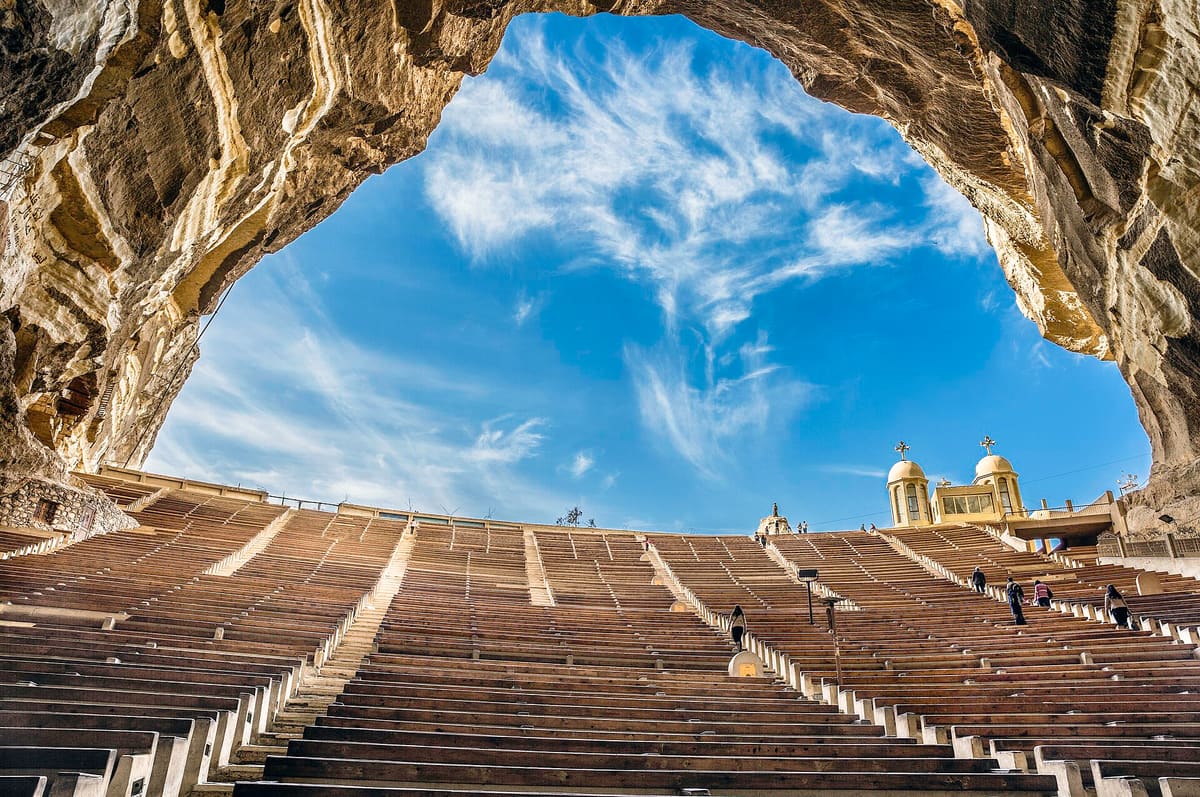
The modern ministry at Mokattam began in 1973 with Brother Farahat, later Father Samaan, among Cairo’s waste-collecting community. Saint Simon’s cave churches developed as places of worship and gathering within this neighbourhood.
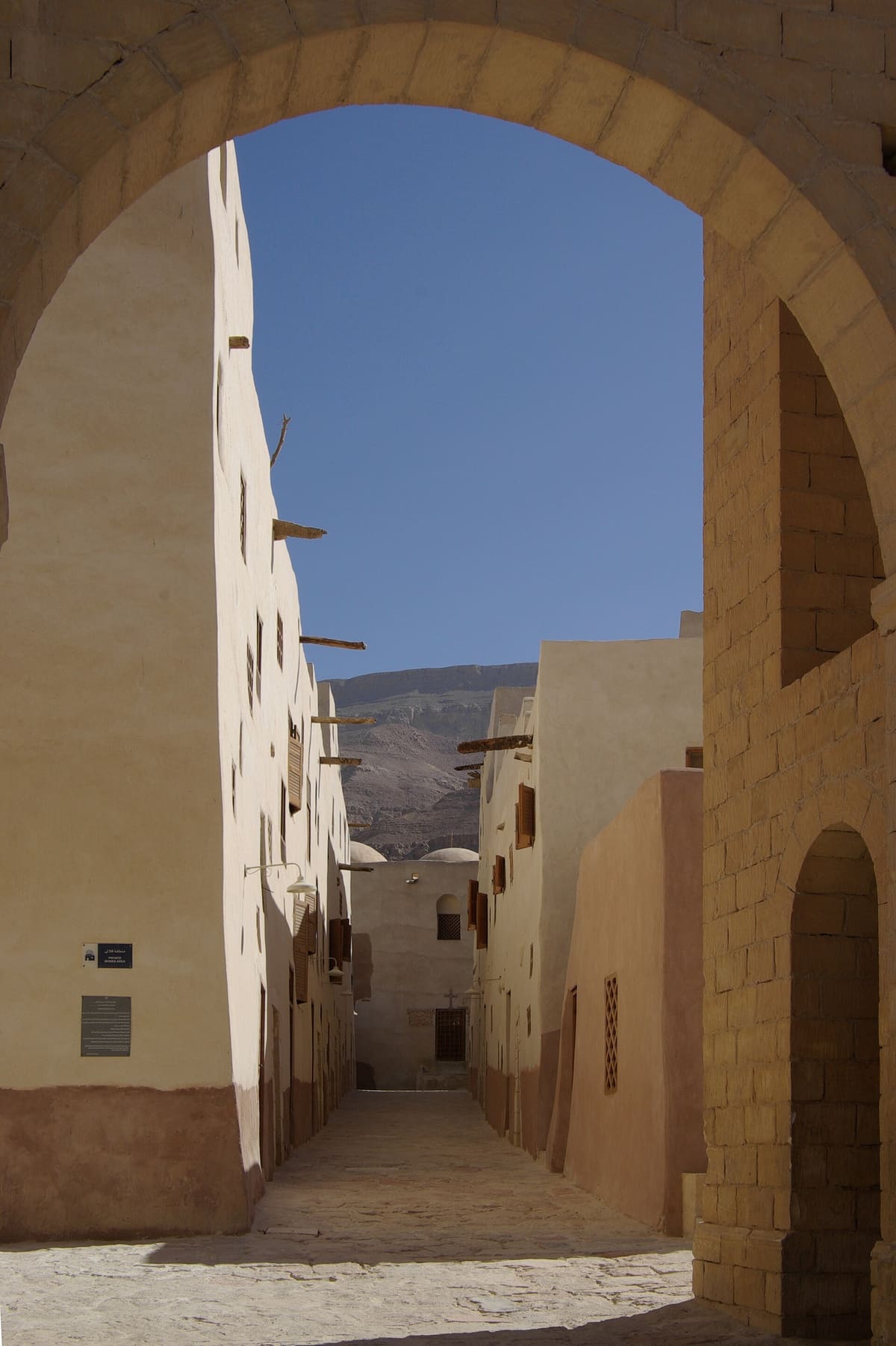
This Eastern Desert monastery honours Anthony, a formative figure in Christian monasticism. Its old church preserves an important early-thirteenth-century wall-painting programme, later recovered through modern conservation.
This monastery traces its origins to the fourth-century community of Saint Macarius. A major revival began in 1969, when Father Matta al-Miskin, known as Matthew the Poor, arrived with twelve monks.
Saint Bishoy’s monastery grew from a fourth-century monastic foundation in Wadi El Natrun. Its fortified enclosure preserves churches, monastic cells and communal facilities, reflecting both spiritual retreat and the practical needs of desert life.
The Red Monastery’s church near Sohag dates to the late fifth century. Its painted interior preserves an exceptional record of early Coptic art, brought back into view through conservation and scholarly study.
This desert monastery preserves the traditional cave of Paul the Anchorite. In the early eighteenth century its monks revived large-scale church painting, continuing a form of Coptic religious art that had largely disappeared centuries earlier.
The present church was built in 1841 over an older church affected by Nile flooding, according to the Holy Family pilgrimage account. Dedicated to the Virgin Mary and Saint Abanoub, it preserves Samanoud’s longstanding Christian pilgrimage traditions.
Matthew describes flight into Egypt; the named stop belongs to later Coptic tradition.
A walled garden at Matareya, the ancient Heliopolis, keeps a sycamore venerated as the tree under which the Holy Family sheltered. The Ministry of Tourism and Antiquities records that the original tree weakened and fell in 1656, and that Franciscan priests gathered its branches and replanted them.
This Coptic Orthodox monastery stands on Mount Koskam, south of Cusae in Assiut. Its stone fortress was built in the sixth or seventh century, and the fortress chapel keeps a twelfth-century lectern from the repair that followed.
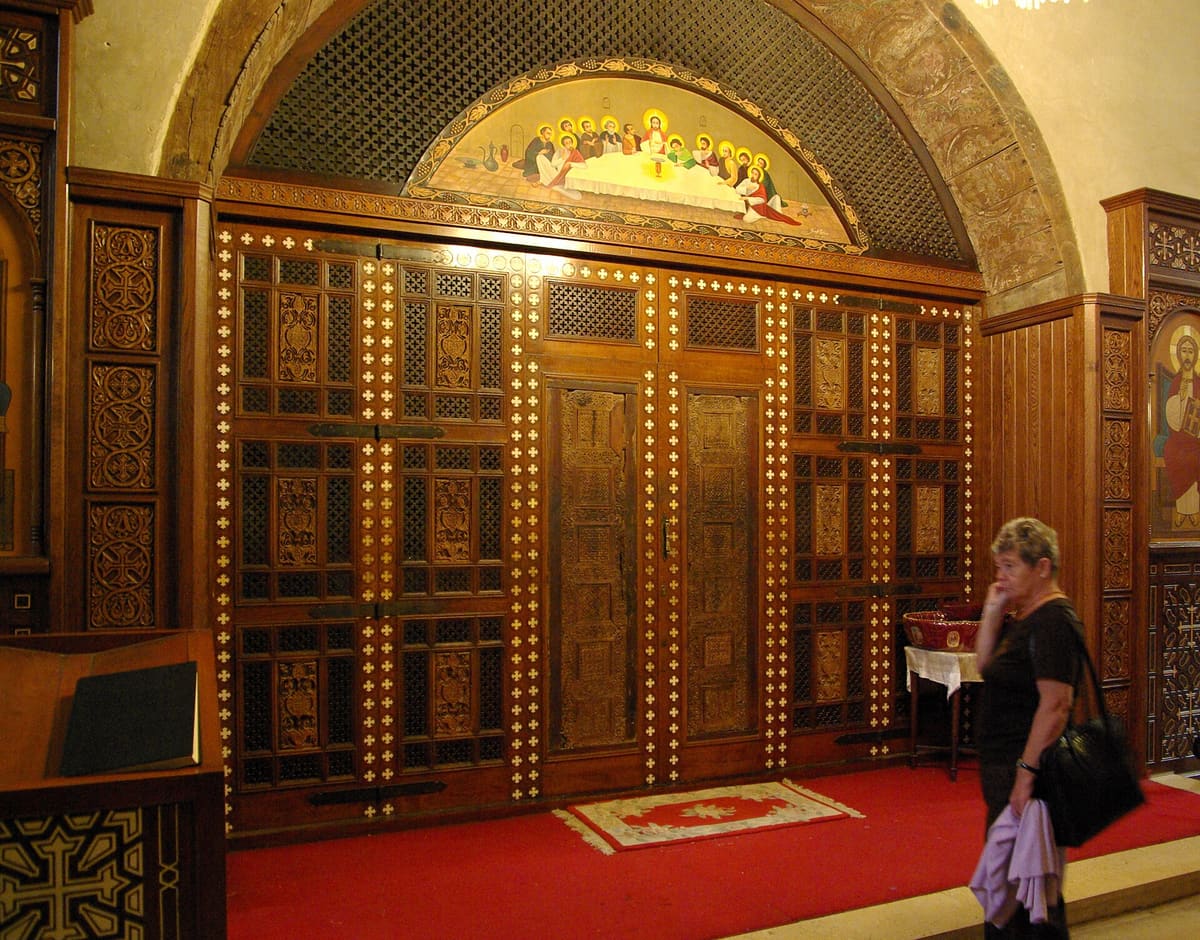
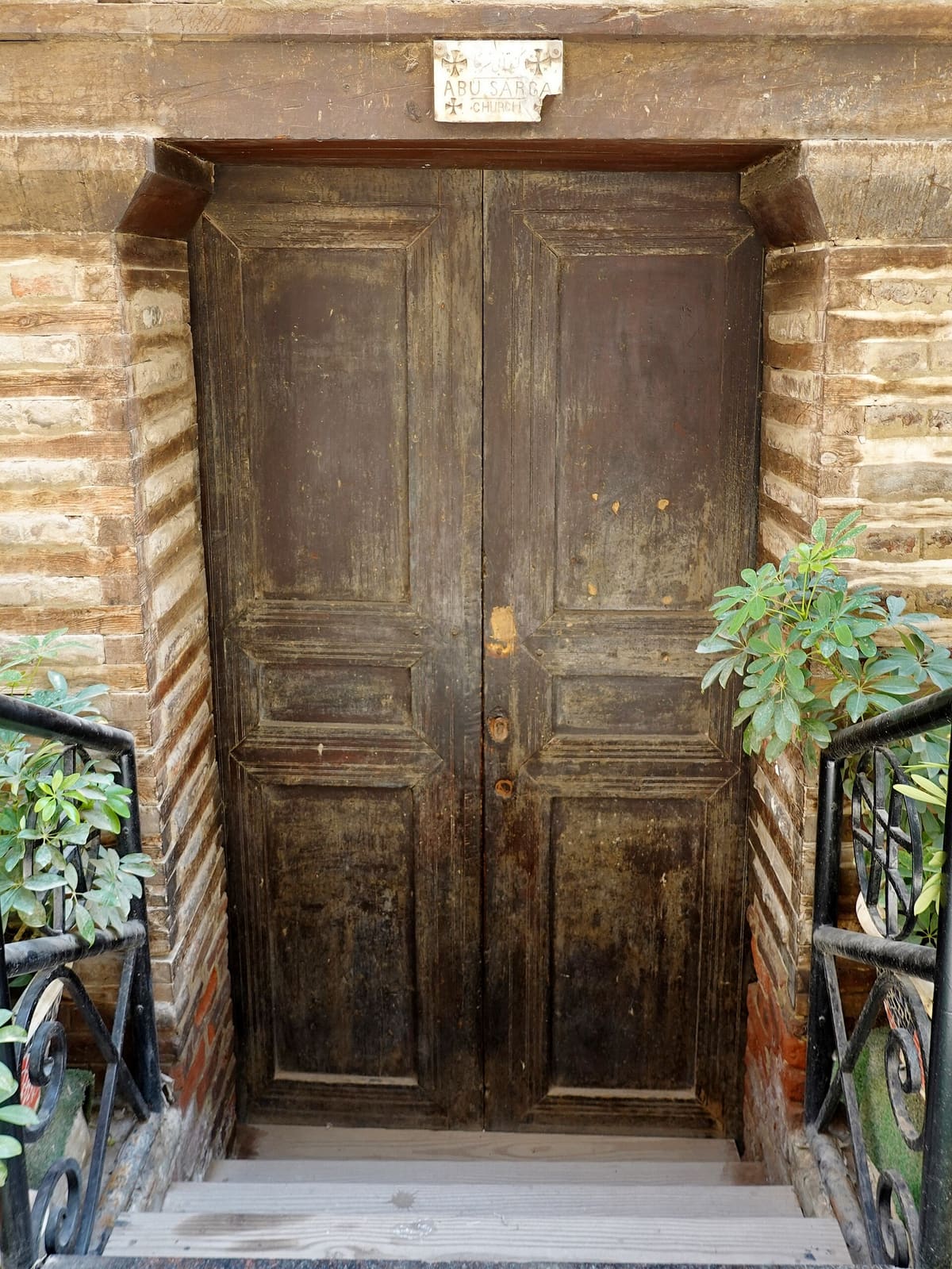
Abu Serga is an old Coptic basilica dedicated to Saints Sergius and Bacchus within the Roman fortress area of Old Cairo. Its date is debated, and the church has undergone repeated restoration.
Matthew describes the flight into Egypt without naming this site. The cave’s identification belongs to later Christian tradition.
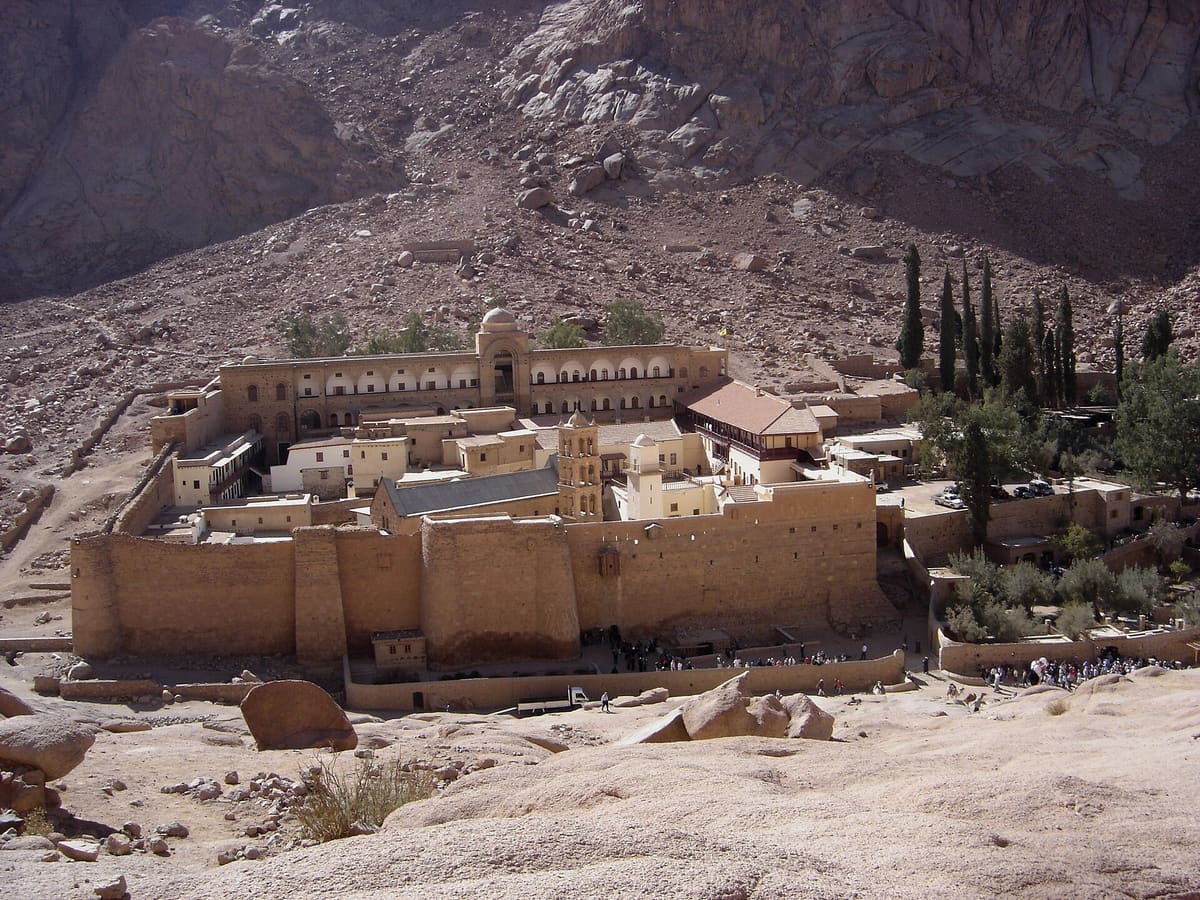
Emperor Justinian commissioned this fortified monastery in the sixth century for monks already living in Sinai. Its churches, manuscripts and art preserve a long Greek Orthodox tradition.
The monastery preserves the traditional site of Moses and the Burning Bush. Exodus tells the biblical encounter; the surviving monastery was built centuries later.
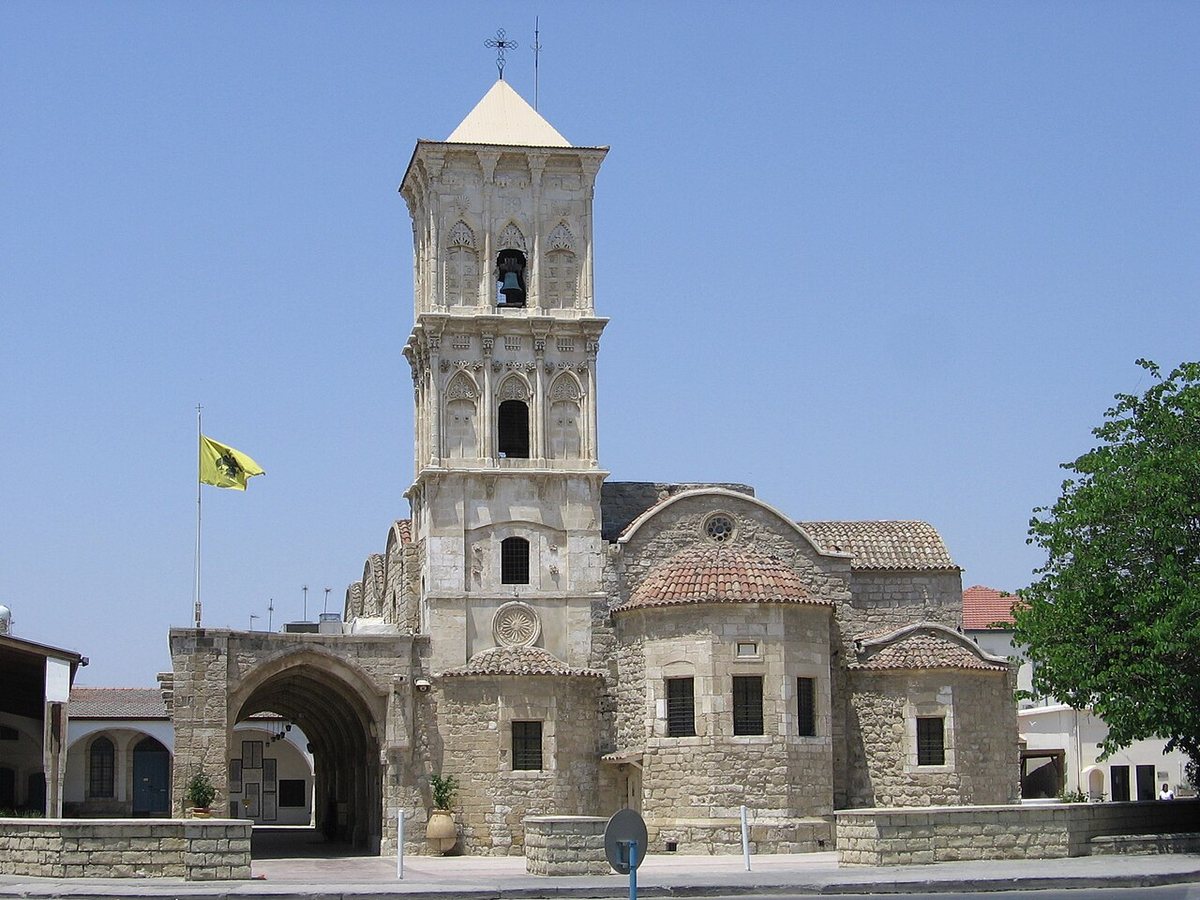
This Byzantine church was built under Emperor Leo VI in the ninth century and restored in the seventeenth. It belongs to the Orthodox Church of Cyprus.
John 11 places the resurrection in Bethany; the Cyprus connection is later tradition.
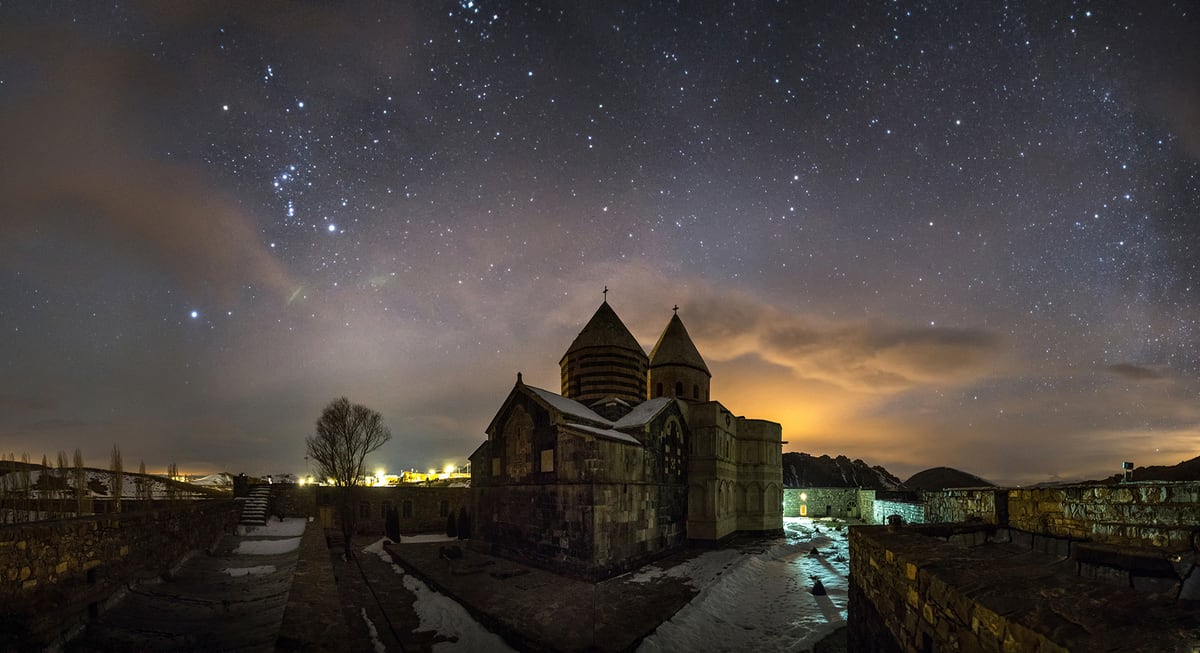
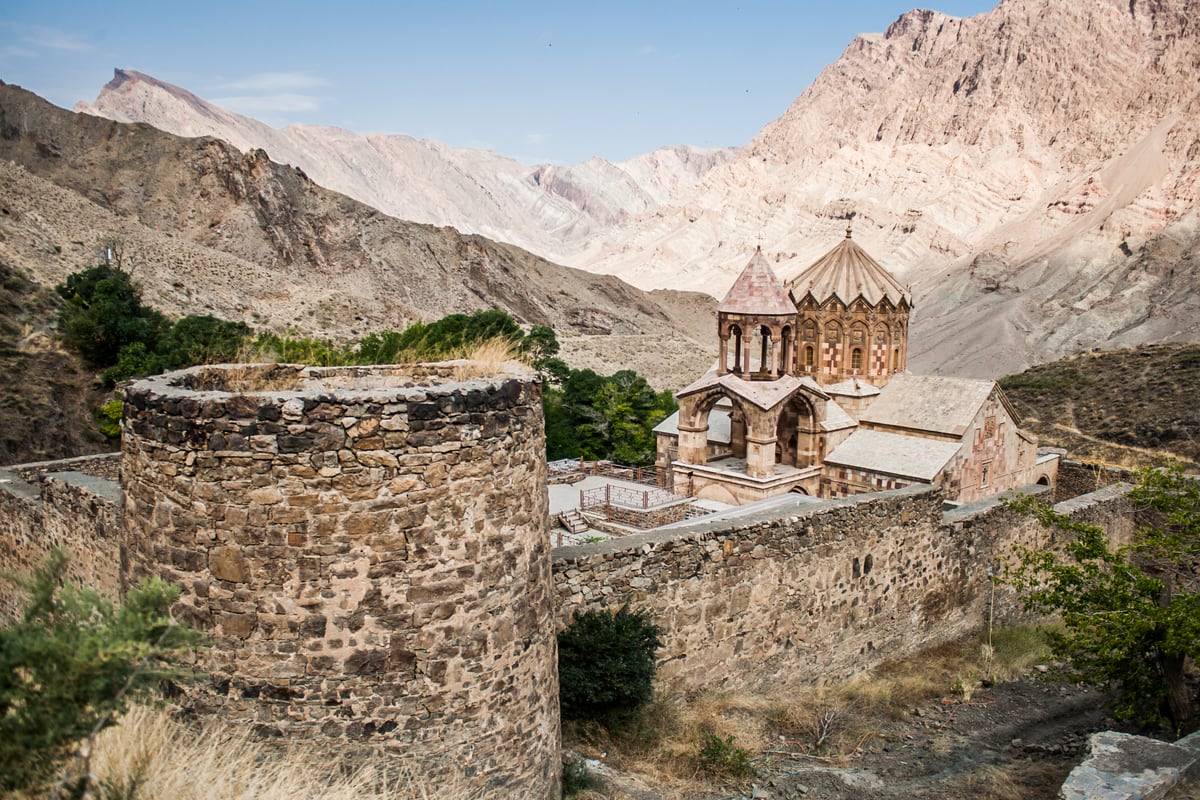
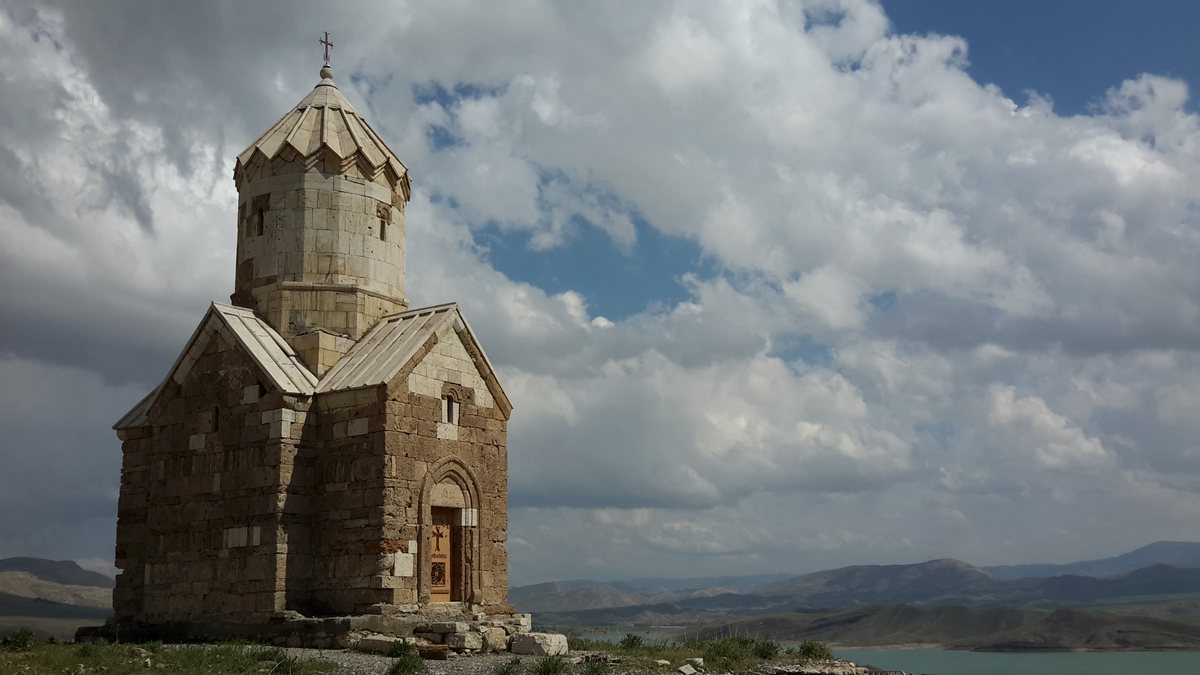
This historic Armenian monastery has seventh-century origins and has been rebuilt repeatedly. It joined UNESCO’s Armenian Monastic Ensembles of Iran in 2008.
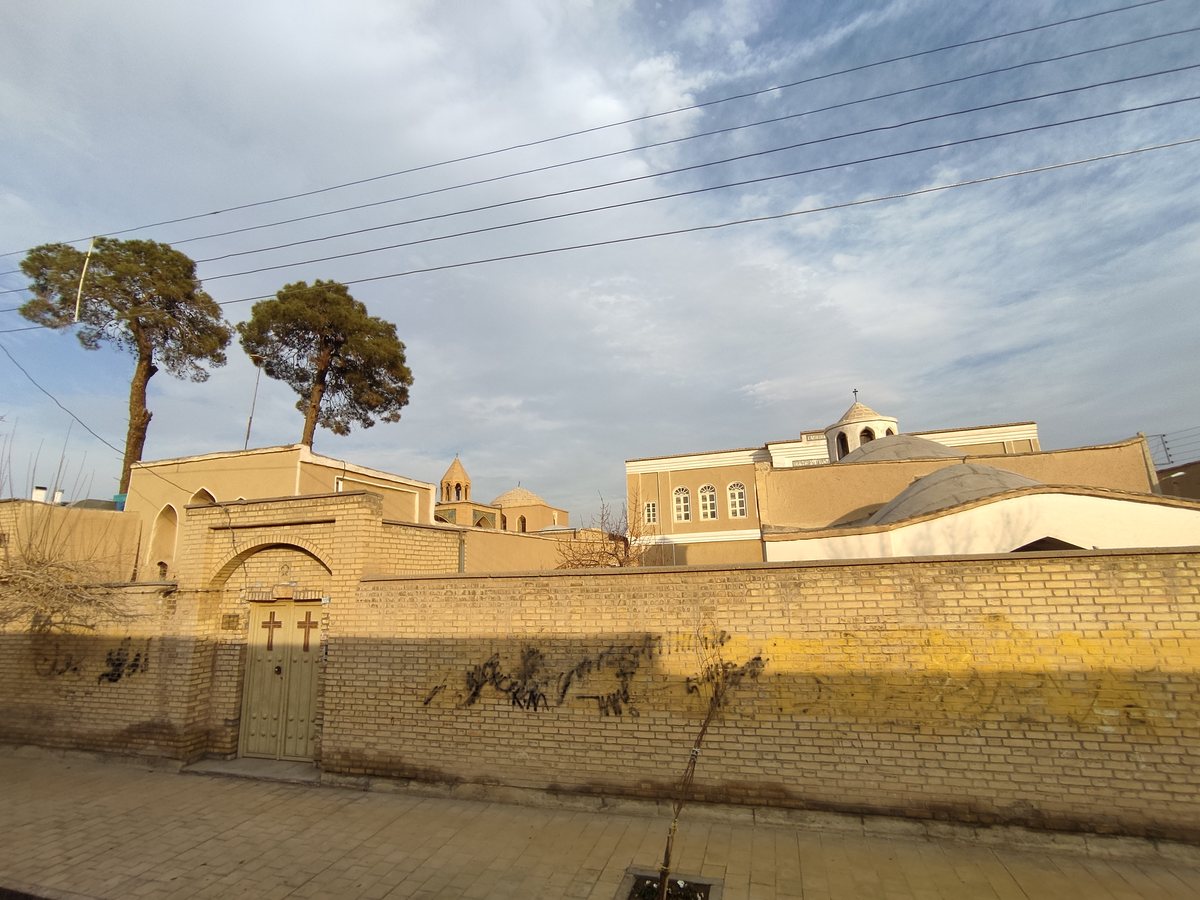
Founded in 1623 with Khwaja Yeghiazar’s support, this Armenian convent stands in New Julfa’s Charsou quarter. Part of the complex became an orphanage and a home for older people in 1967.
Built in 1940, this Armenian church was the largest gathering place for the Armenians of Abadan in its day, when the oil city drew workers from across the region. It was damaged in the Iran–Iraq war and later repaired, and Iran listed it as a national heritage site, number 8352, on 29 April 2003.
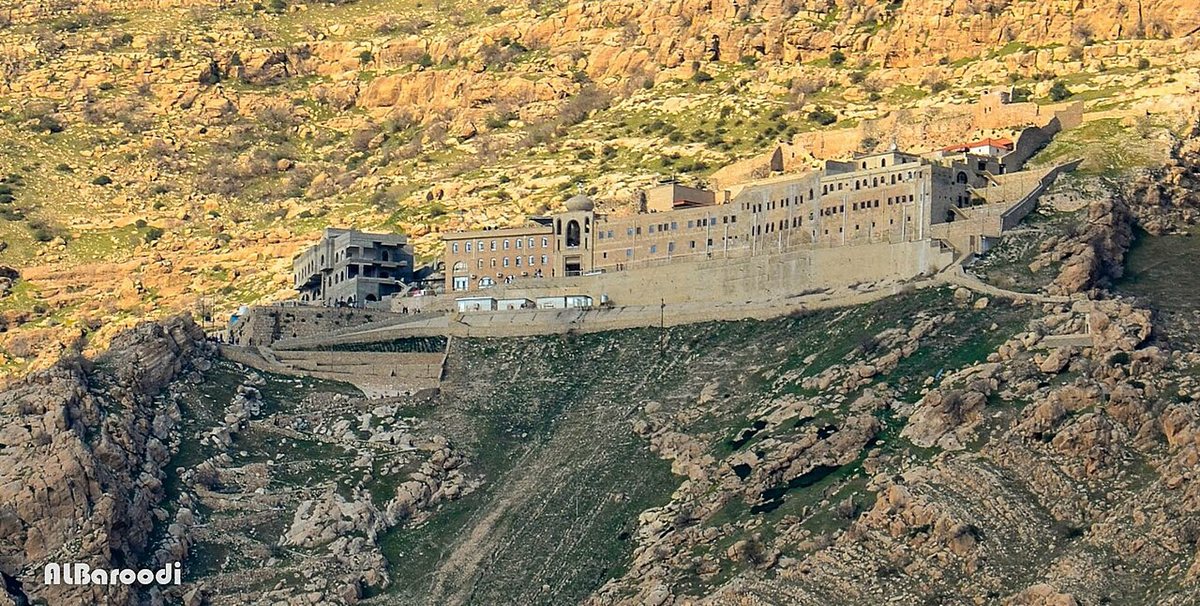
Dayro d-Mor Mattai, the Monastery of Saint Matthew, stands on Mount Alfaf about 20 kilometres north-east of Mosul. It is recognised as one of the oldest Christian monasteries in existence and the oldest Syriac Orthodox monastery in the world.
Cut into the mountainside about three kilometres from Alqosh and some 45 kilometres north of Mosul, this monastery was founded around 640 by the Church of the East and named after the monk Rabban Hormizd. From 1551 into the eighteenth century it was the official residence of the patriarchs of the Eliya line of the Church of the East.
The Monastery of the Martyrs Mar Behnam and Marth Sarah stands in the village of Khidr Ilyas, close to the town of Bakhdida in the Nineveh Plains. It was a Syriac Orthodox house until the nineteenth century and has been Syriac Catholic since.
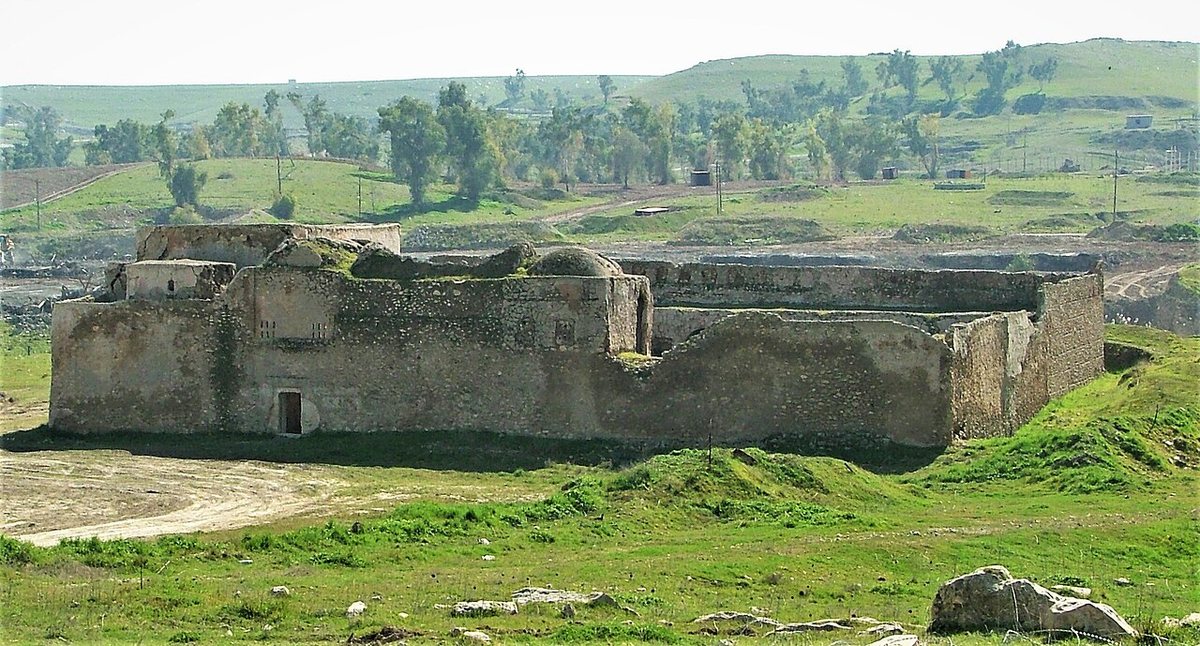
Dair Mar Elia was founded around 595 by a monk named Mar Elia and was one of the oldest monasteries in Iraq. It belonged to the Church of the East and later to the Chaldean Catholic Church.
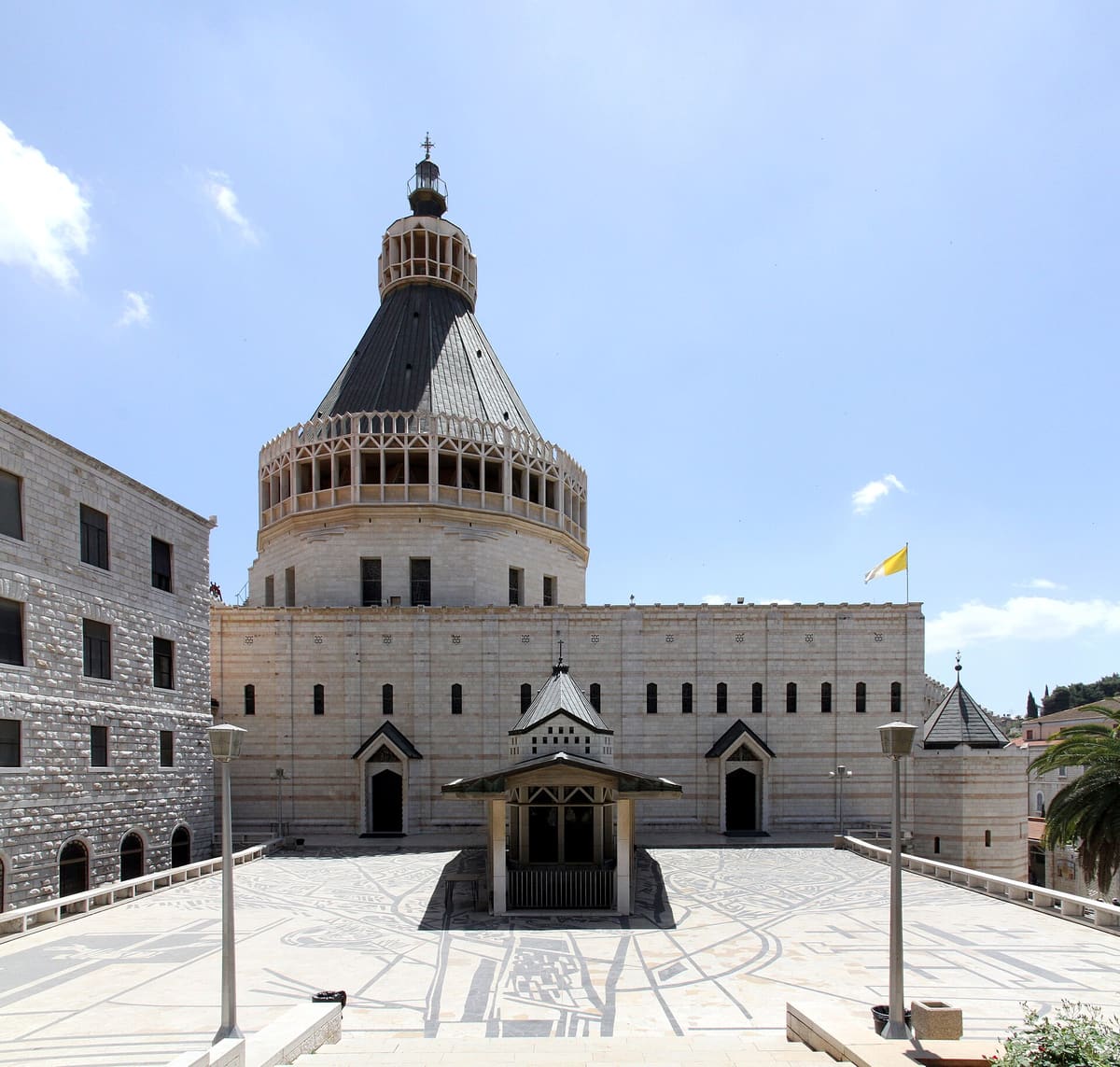
Consecrated in 1969, this basilica surrounds a grotto venerated in Catholic tradition as the place of the Annunciation. Luke describes Gabriel’s announcement to Mary in Nazareth; the present building is much later.
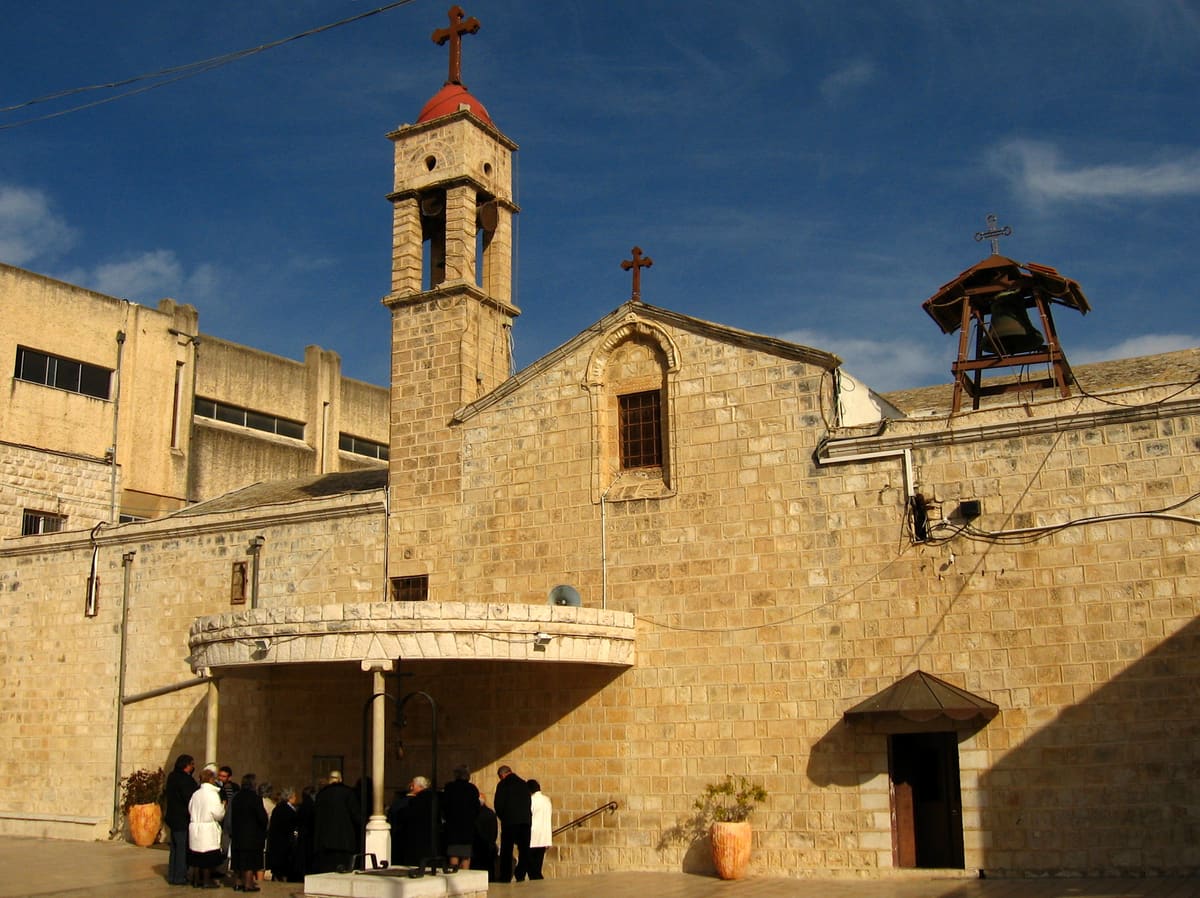
The present Greek Orthodox church developed in the eighteenth century beside an older underground sanctuary. Eastern tradition connects its water source with Gabriel’s greeting to Mary.
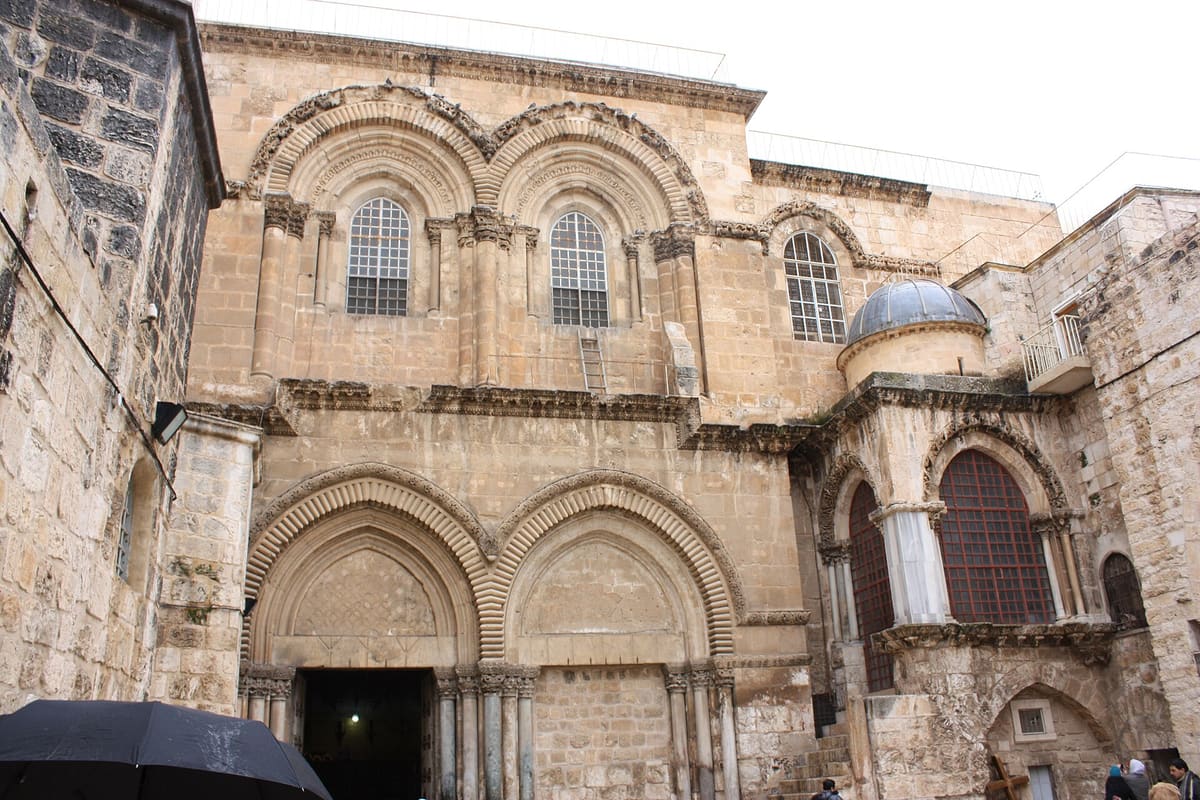
Constantine’s first church was dedicated in 335 around places Christians venerate as Golgotha and Jesus’ tomb. Rebuilding over many centuries shaped the present complex.
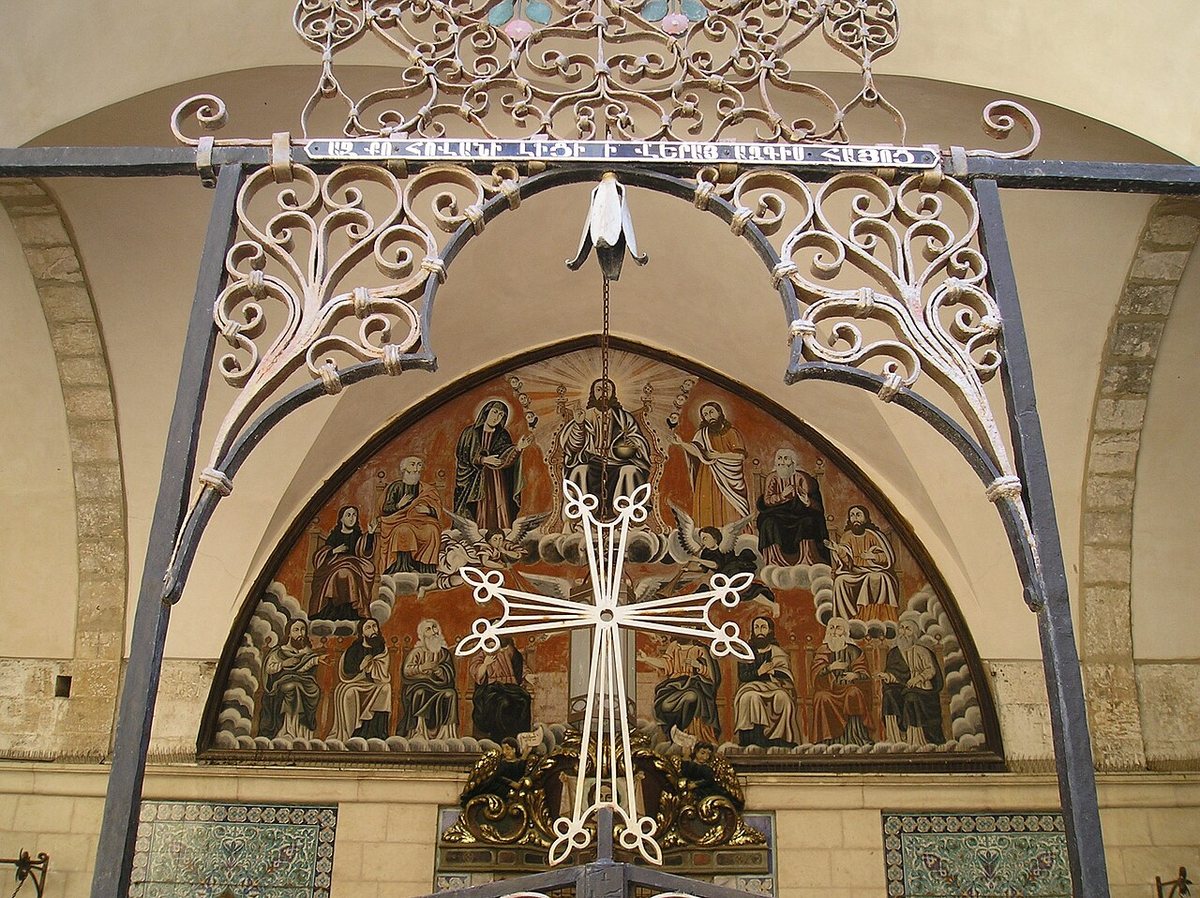
The Armenian cathedral took shape in the twelfth century and honours two saints named James: the son of Zebedee and James, the Lord’s brother. Armenian tradition associates their relics with the sanctuary.
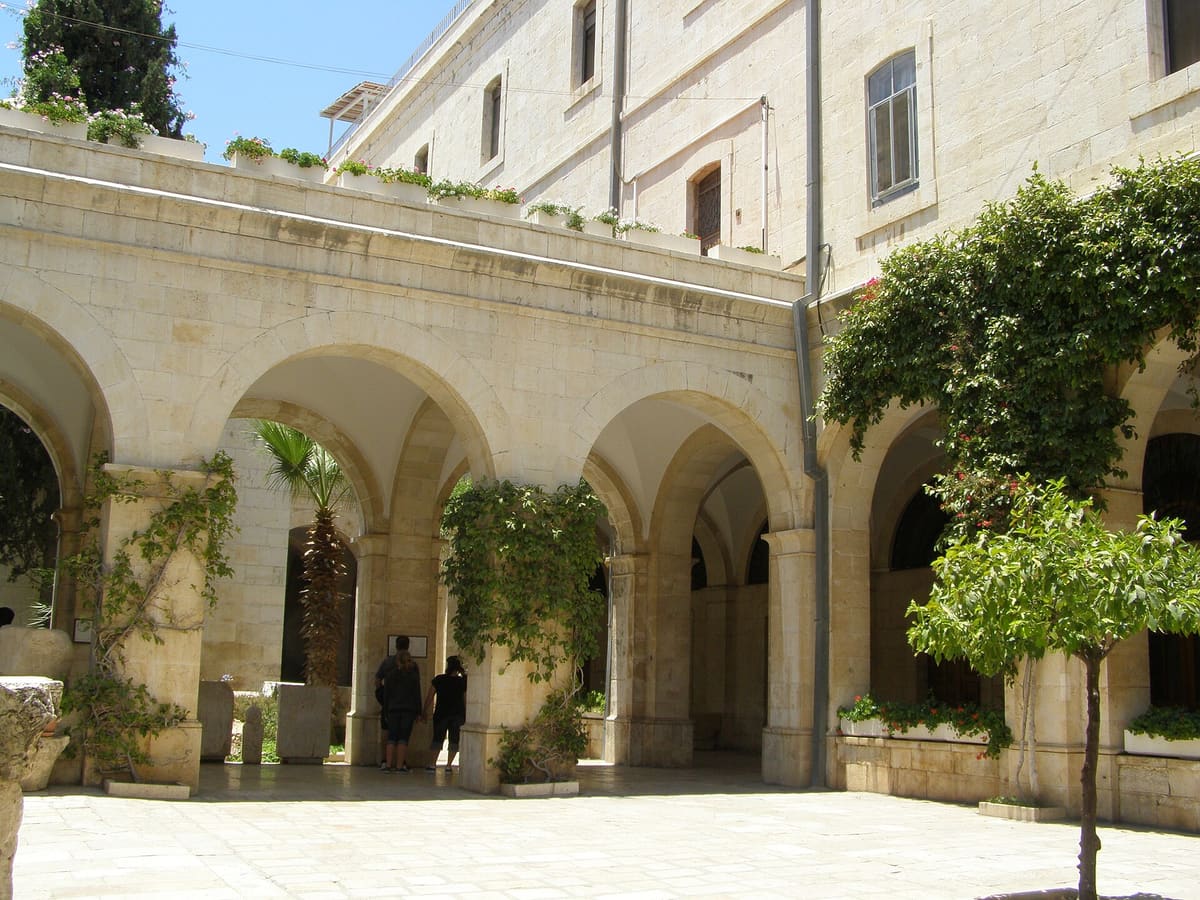
Patriarch Maximos III Mazloum inaugurated the Melkite cathedral and patriarchal residence in 1848. The complex reflects the nineteenth-century consolidation of the Melkite Greek Catholic presence in Jerusalem.
Saint Mark’s is a Syriac Orthodox sanctuary associated by tradition with the house of Mary, mother of John Mark, and the Last Supper. Medieval writings mention a House of Mark.
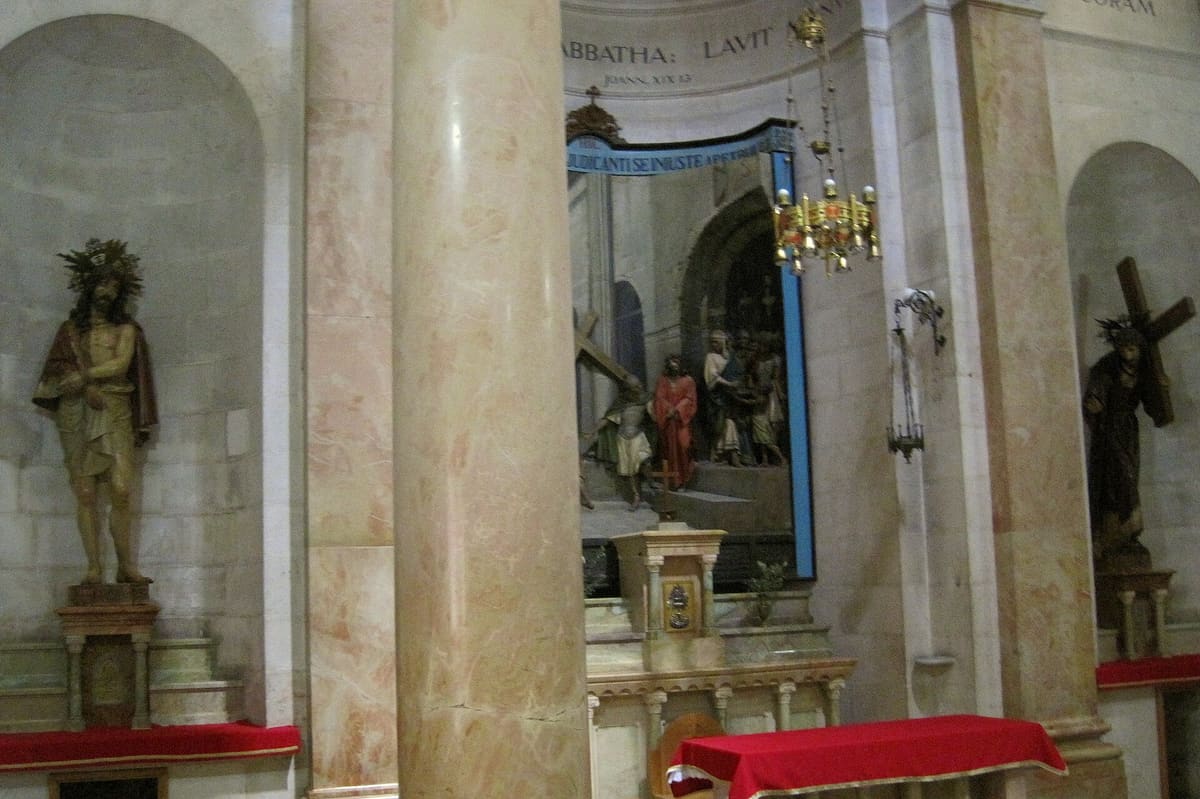
Originally a Crusader church, the sanctuary was acquired by the Franciscans in 1838 and restored by Antonio Barluzzi in 1929. It commemorates the scourging of Jesus within Jerusalem’s traditional Way of the Cross.
Franciscan friar Wendelin Hinterkeuser rebuilt this sanctuary in 1904 above a rediscovered medieval church. Its dedication commemorates Jesus’ condemnation and the taking up of the cross.
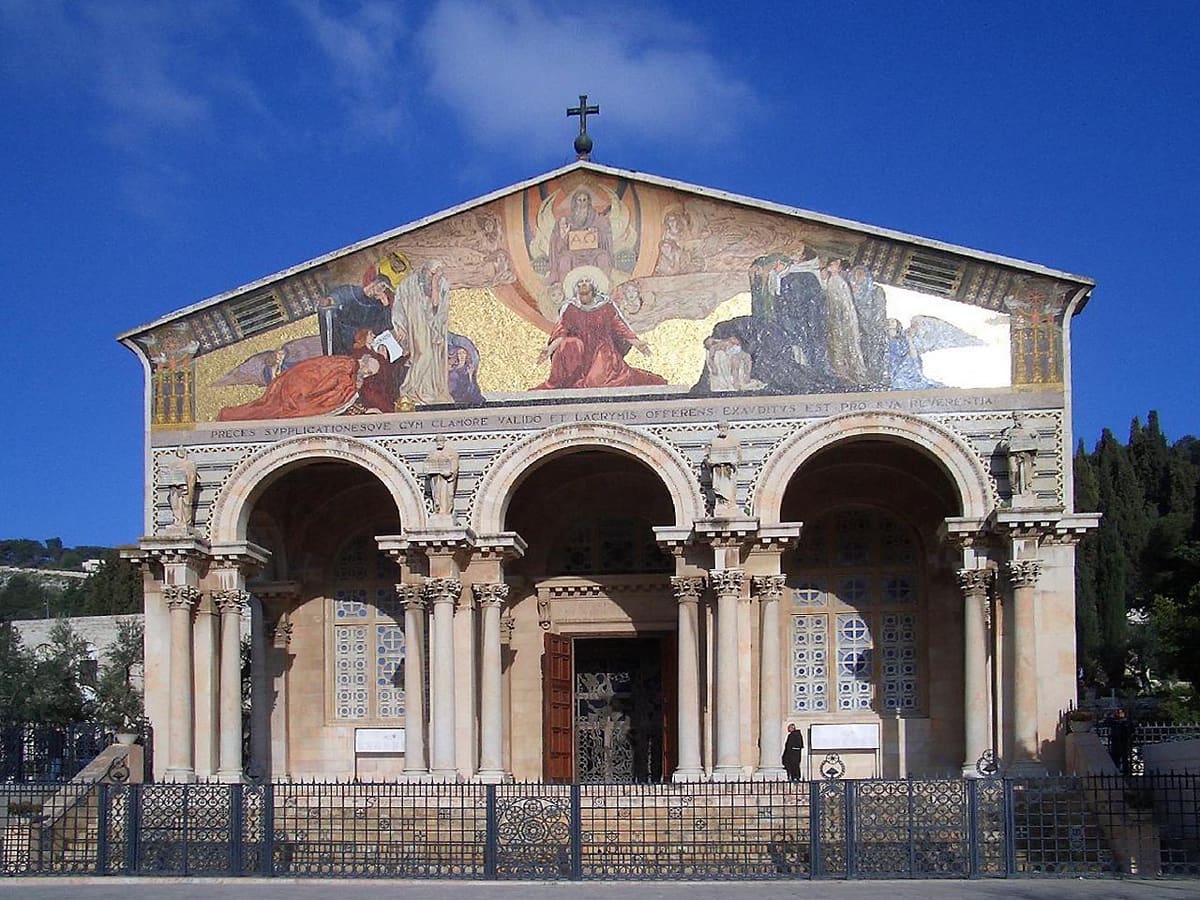
Consecrated in 1924, the Church of All Nations at Gethsemane stands among the remains of earlier Byzantine and Crusader churches. It commemorates Jesus praying before his arrest, as recounted in the Gospels.
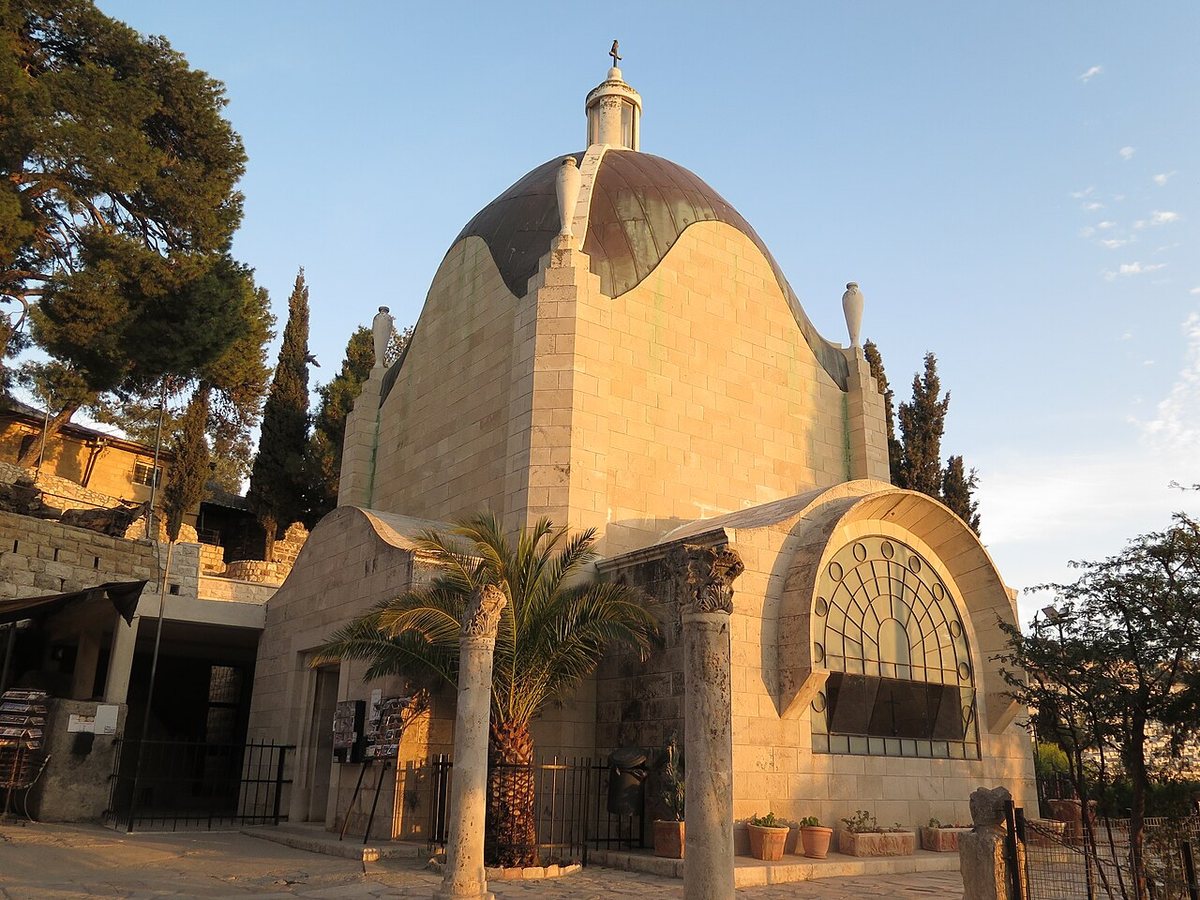
The nineteenth-century Carmelite foundation on the Mount of Olives preserves a place of pilgrimage associated with Jesus teaching his disciples. Its name refers to the Lord’s Prayer.
Built in 1955 to Antonio Barluzzi’s design, this Mount of Olives church commemorates Jesus weeping over Jerusalem in Luke’s Gospel. The association of the episode with this location is traditional.
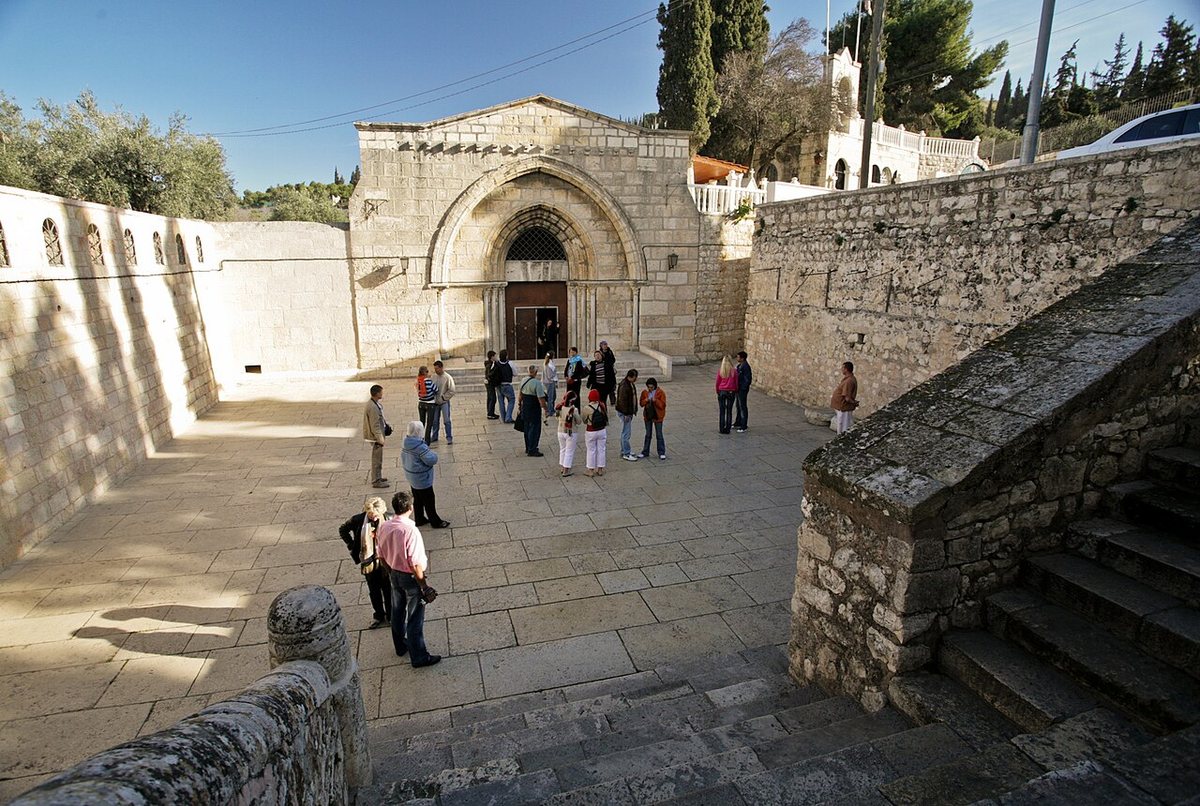
This underground sanctuary in the Kidron Valley encloses a rock-cut tomb venerated as Mary’s burial place. Its long history includes Crusader alterations and continuing Eastern Christian devotion.
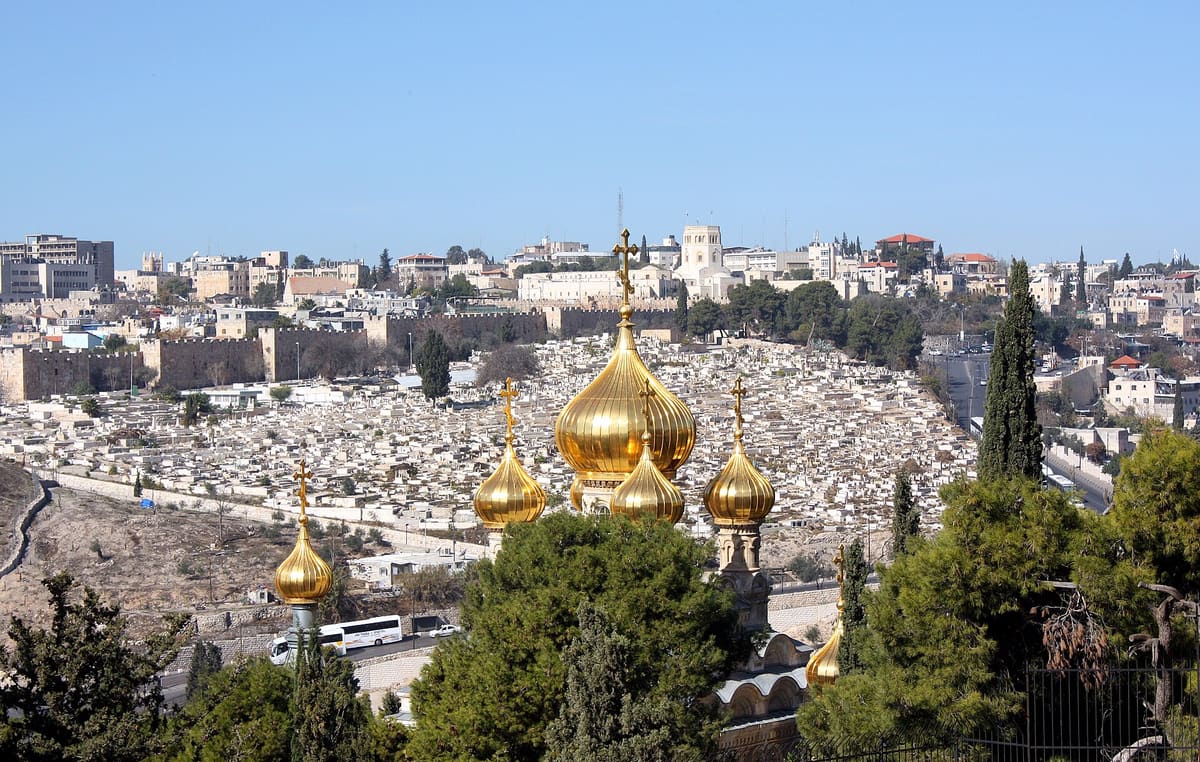
The Church of Viri Galilaei belongs to the Greek Orthodox complex known as Little Galilee on the Mount of Olives. The patriarchal residence beside it hosted important encounters between Catholic and Orthodox leaders.
The surviving medieval shrine on the Mount of Olives commemorates Jesus’ Ascension. Built by the Crusaders, it later became part of an Islamic religious endowment.
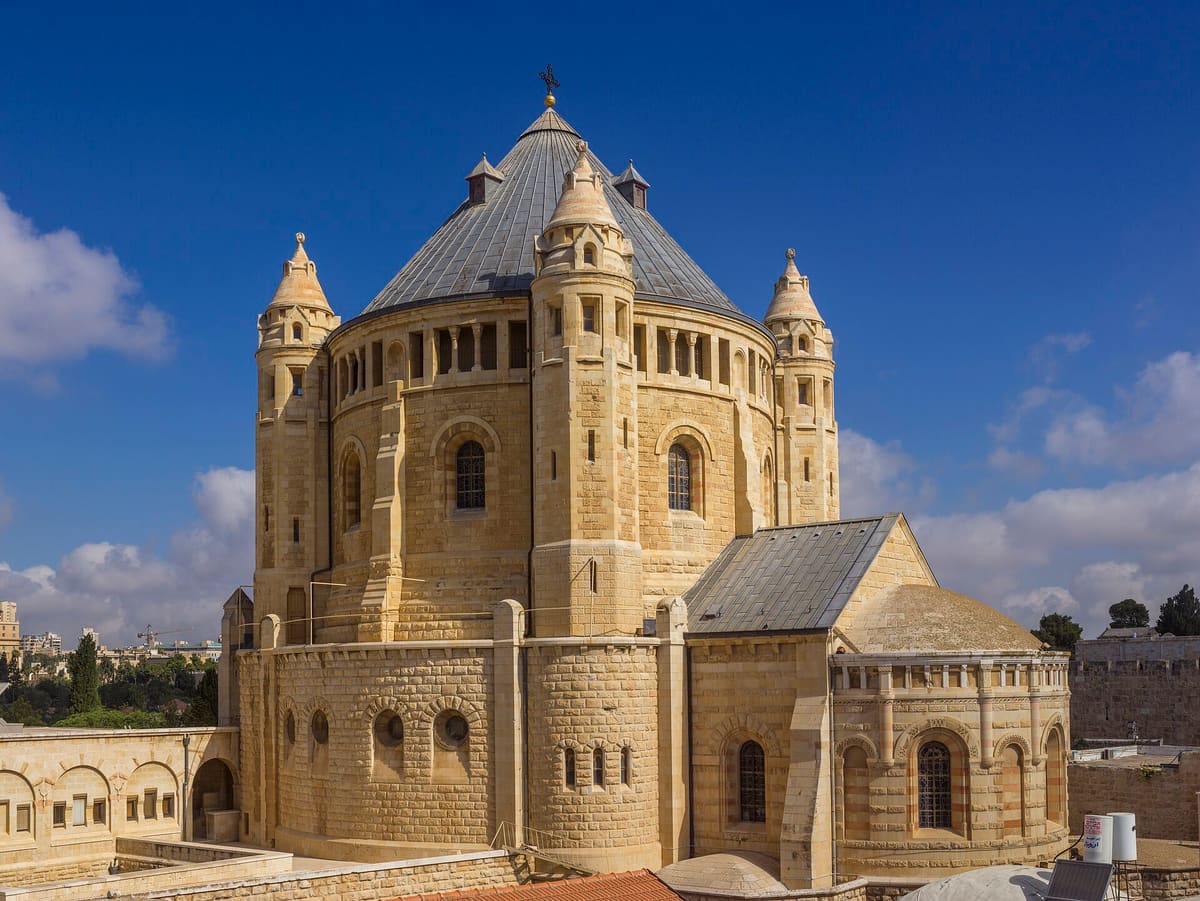
Consecrated in 1910, the Benedictine church was designed by Heinrich Renard on Mount Zion. It honours Mary’s Dormition, or falling asleep in death, associated with this place by Christian tradition.
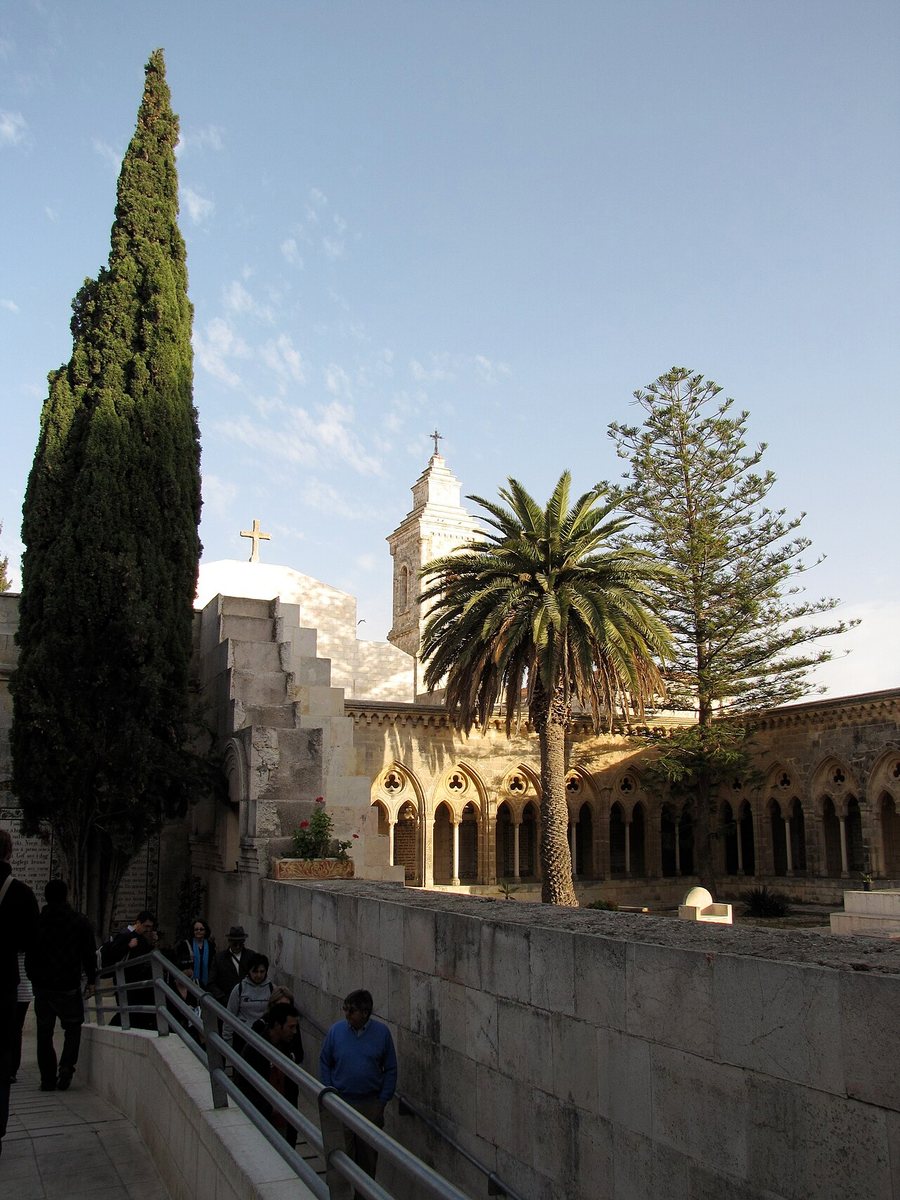
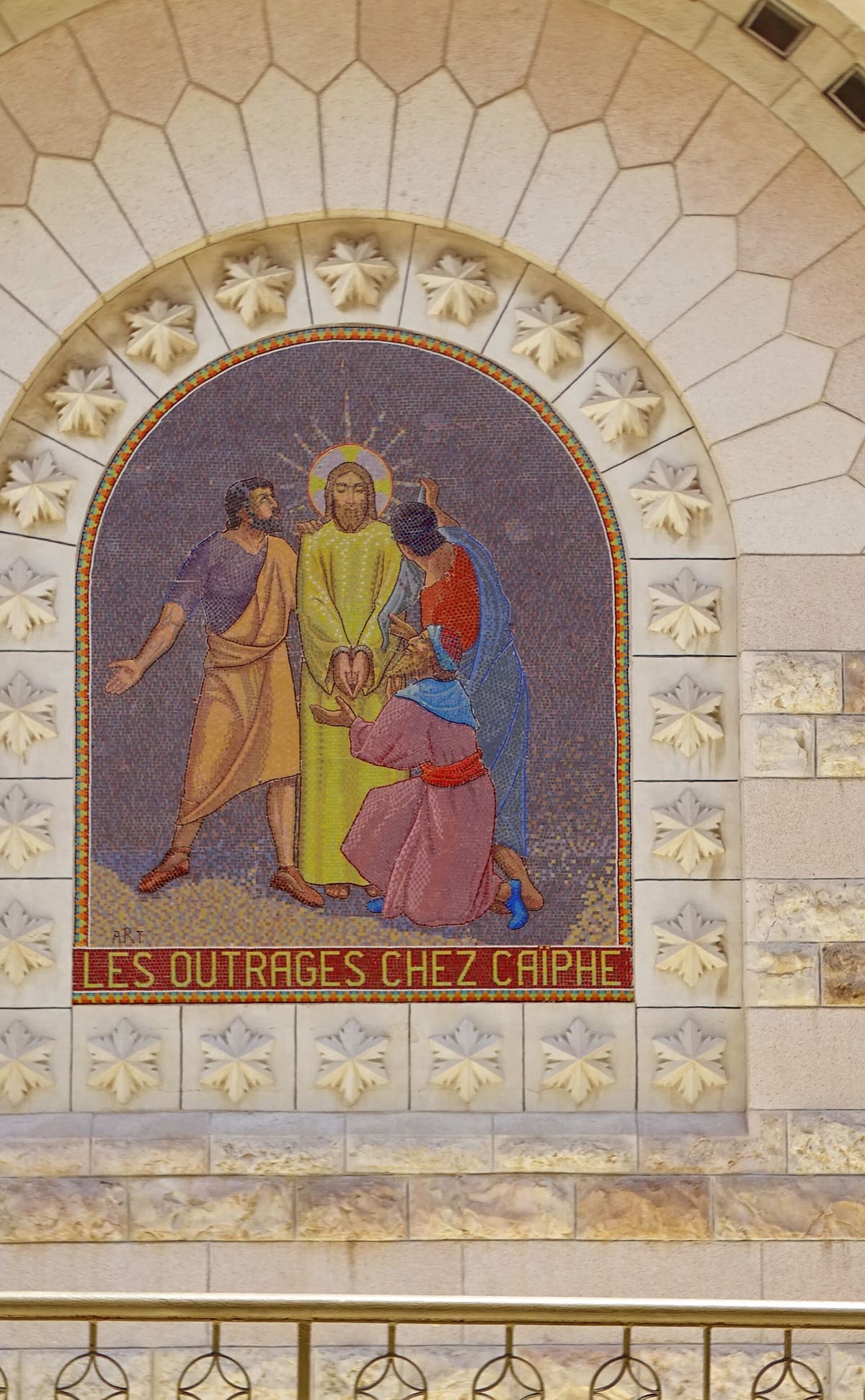
Consecrated in 1931 above remains of earlier churches, this sanctuary commemorates Peter’s denial of Jesus and his repentance. Tradition links the site to the high priest Caiaphas, but the location of his house is disputed.
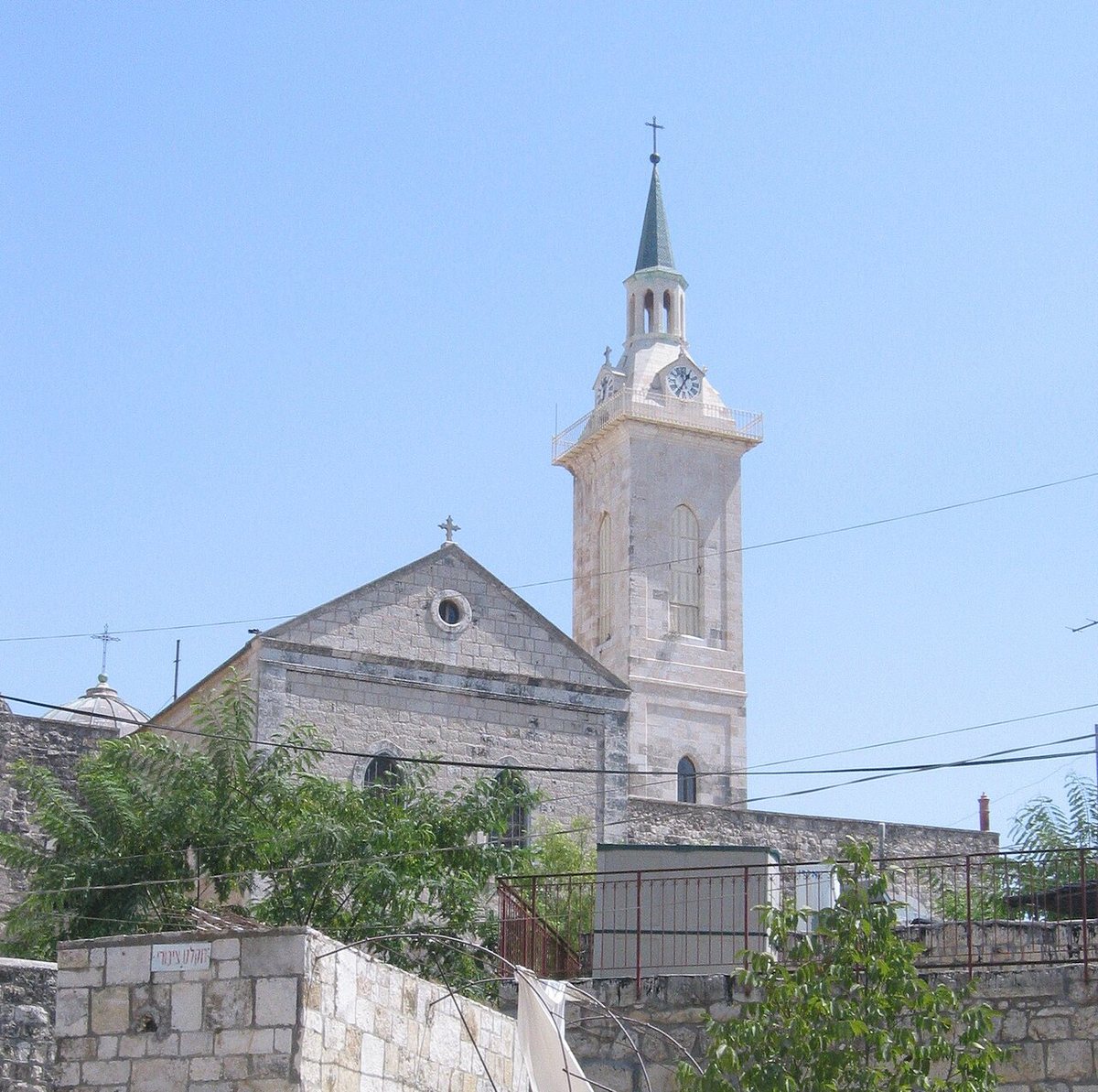
This Franciscan sanctuary in Ein Karem preserves a grotto venerated as John the Baptist’s birthplace. The devotion connects the village with Elizabeth and Zechariah, John’s parents.
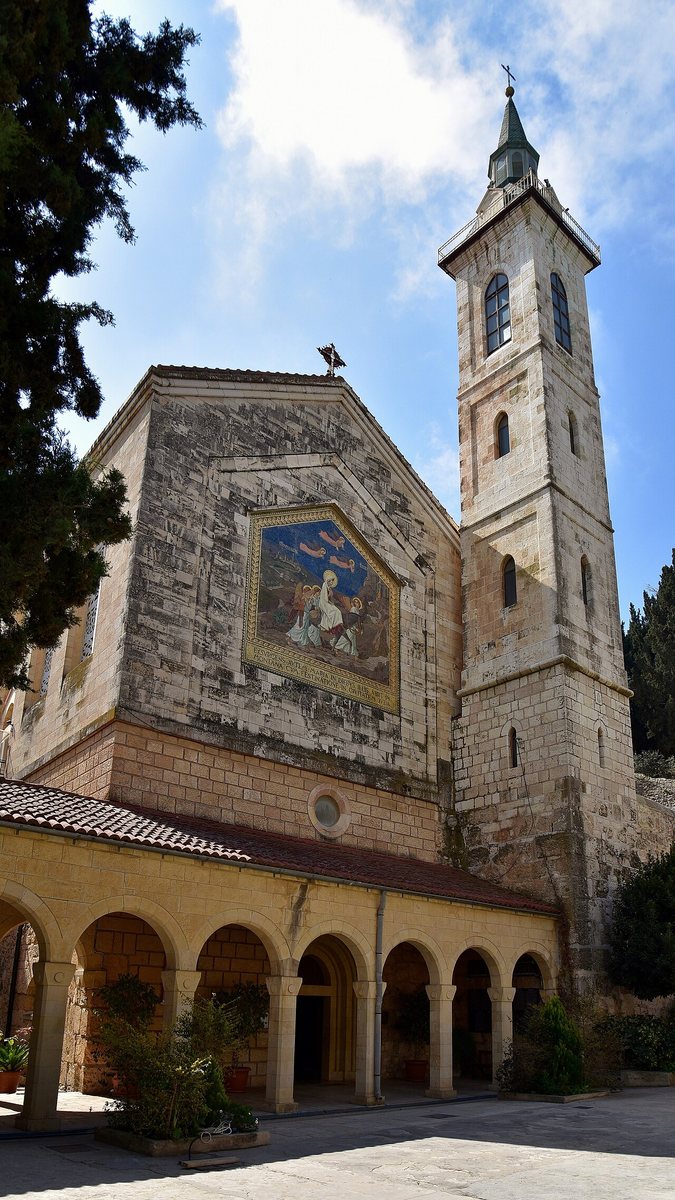
The Franciscans acquired this sanctuary in 1679; Antonio Barluzzi designed its twentieth-century rebuilding after archaeological excavations. It commemorates Mary visiting Elizabeth.
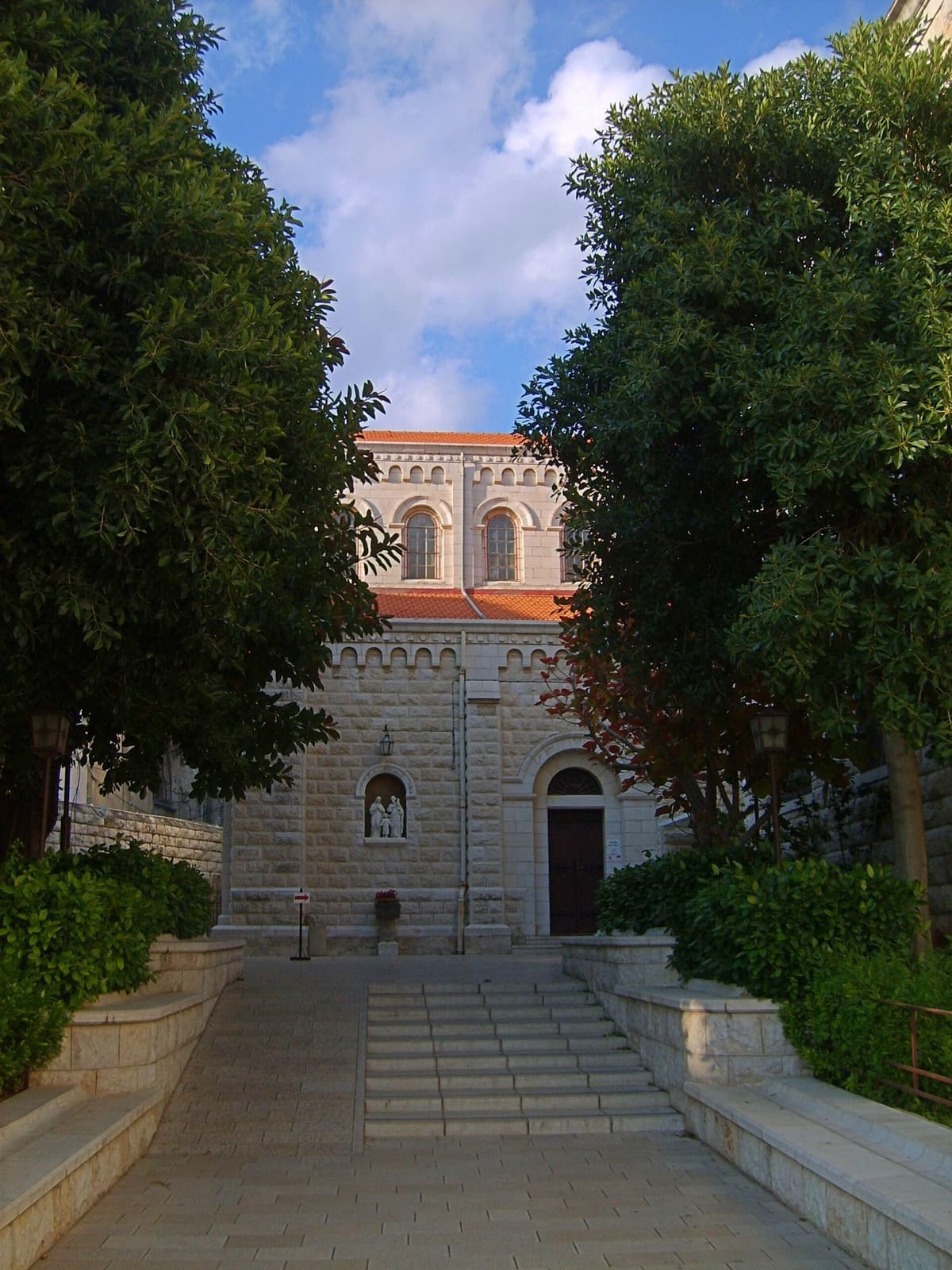
Built between 1911 and 1914, Saint Joseph’s Church commemorates Mary’s husband and Jesus’ upbringing. Local tradition associates this site with Joseph’s home or workshop; this is a devotional identification.
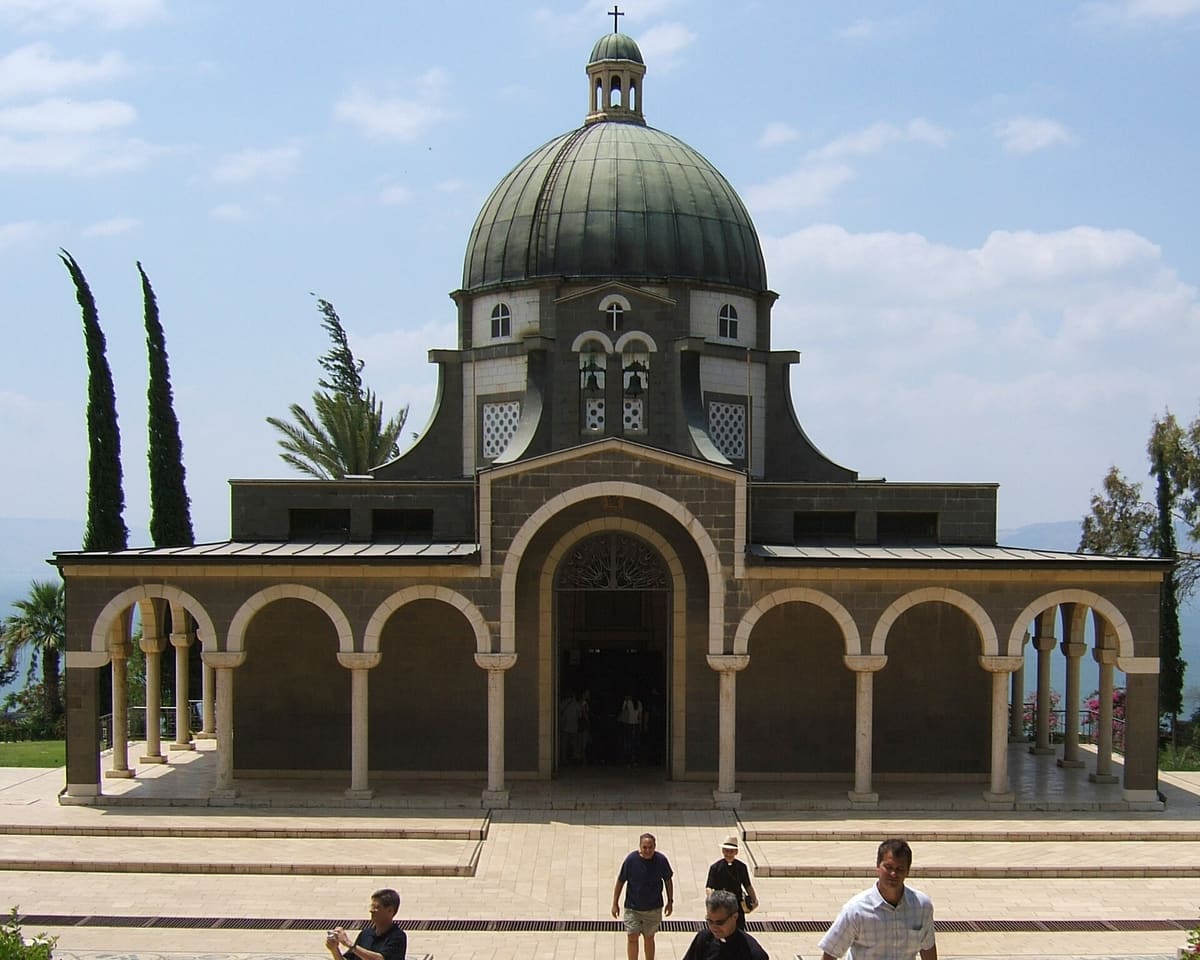
Antonio Barluzzi’s church was completed in 1938 on a hill above the Sea of Galilee. It commemorates the Sermon on the Mount in a landscape associated with that teaching by Christian tradition.
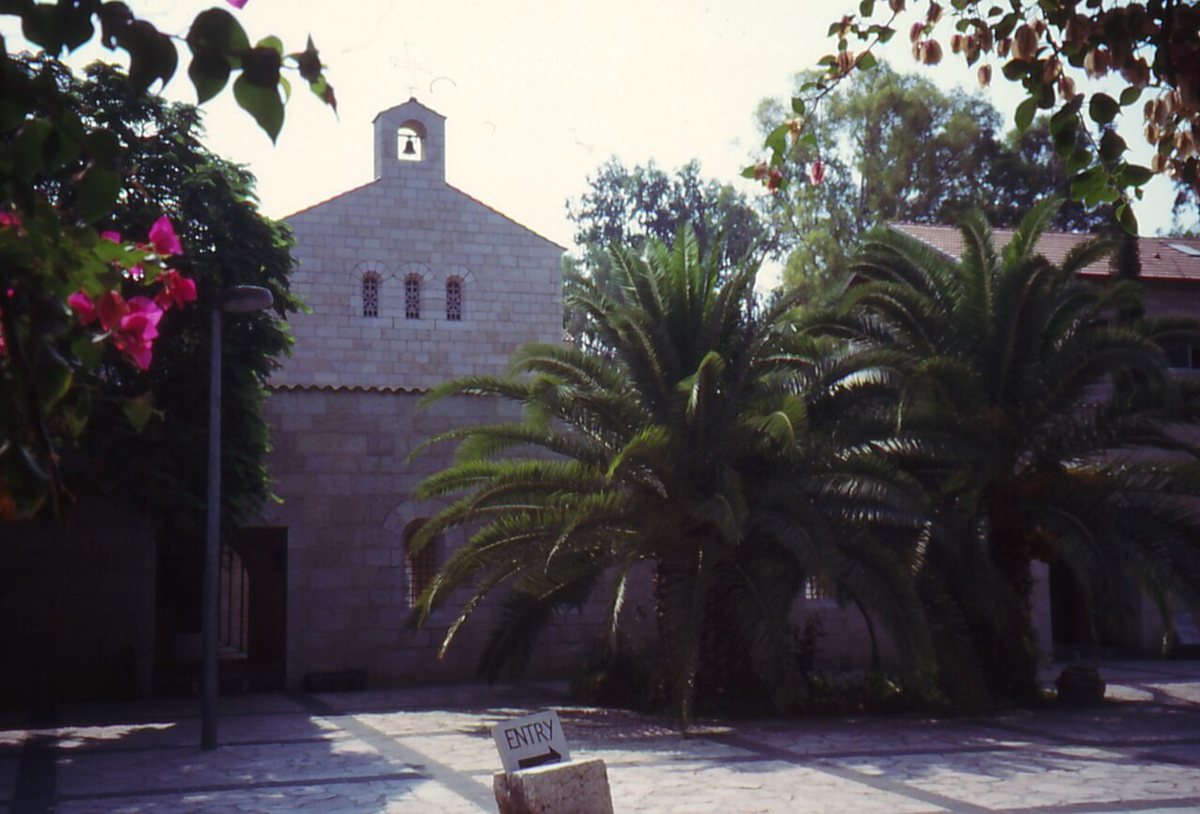
Dedicated in 1982, the modern church follows the foundations of a Byzantine predecessor and protects its ancient mosaics. It commemorates Jesus feeding the multitude with bread and fish.
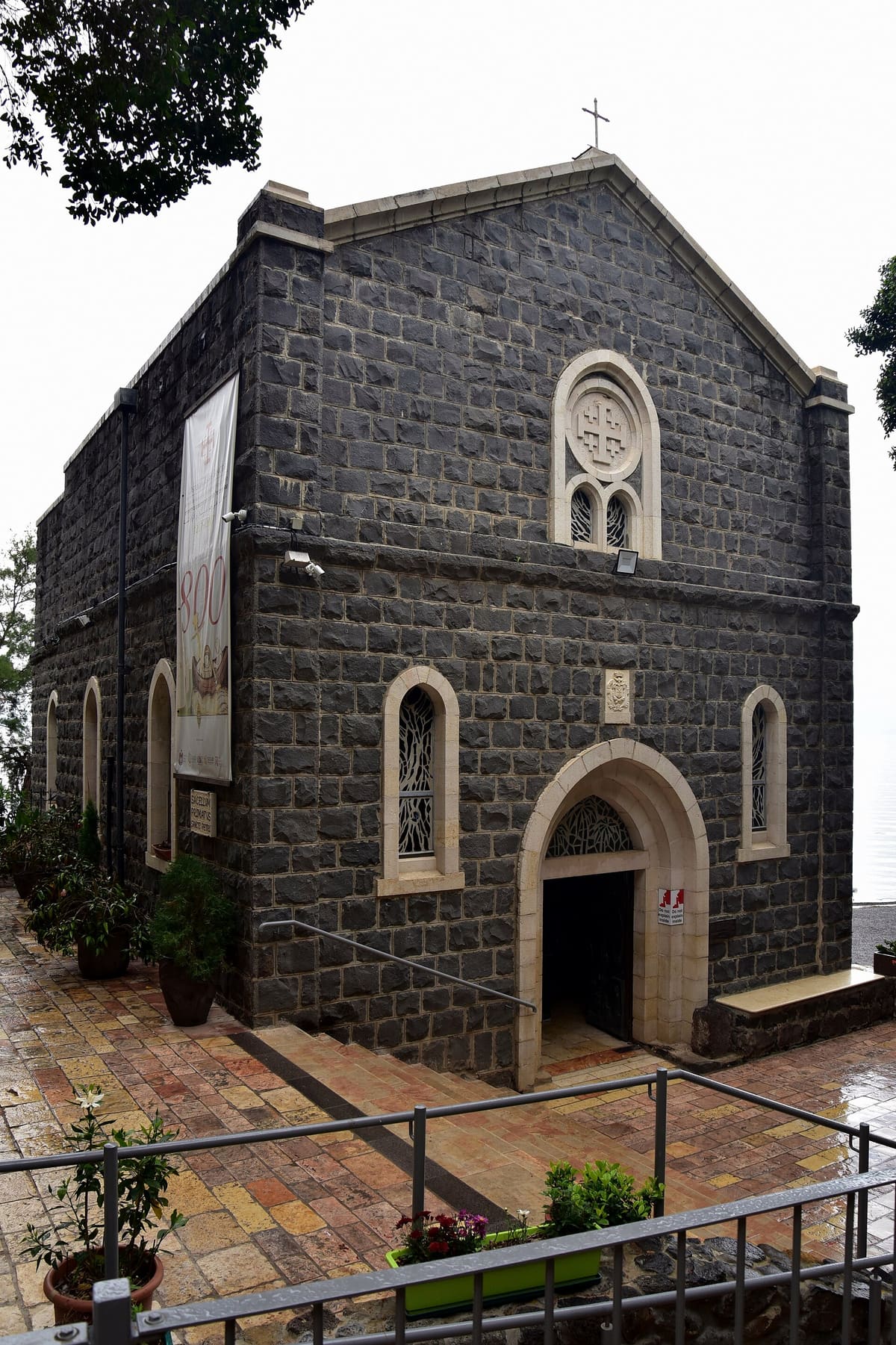
Rebuilt in 1933 over earlier remains, this chapel commemorates the risen Jesus meeting his disciples beside the lake and entrusting Peter with care of his followers. The association with this precise spot belongs to Christian tradition.
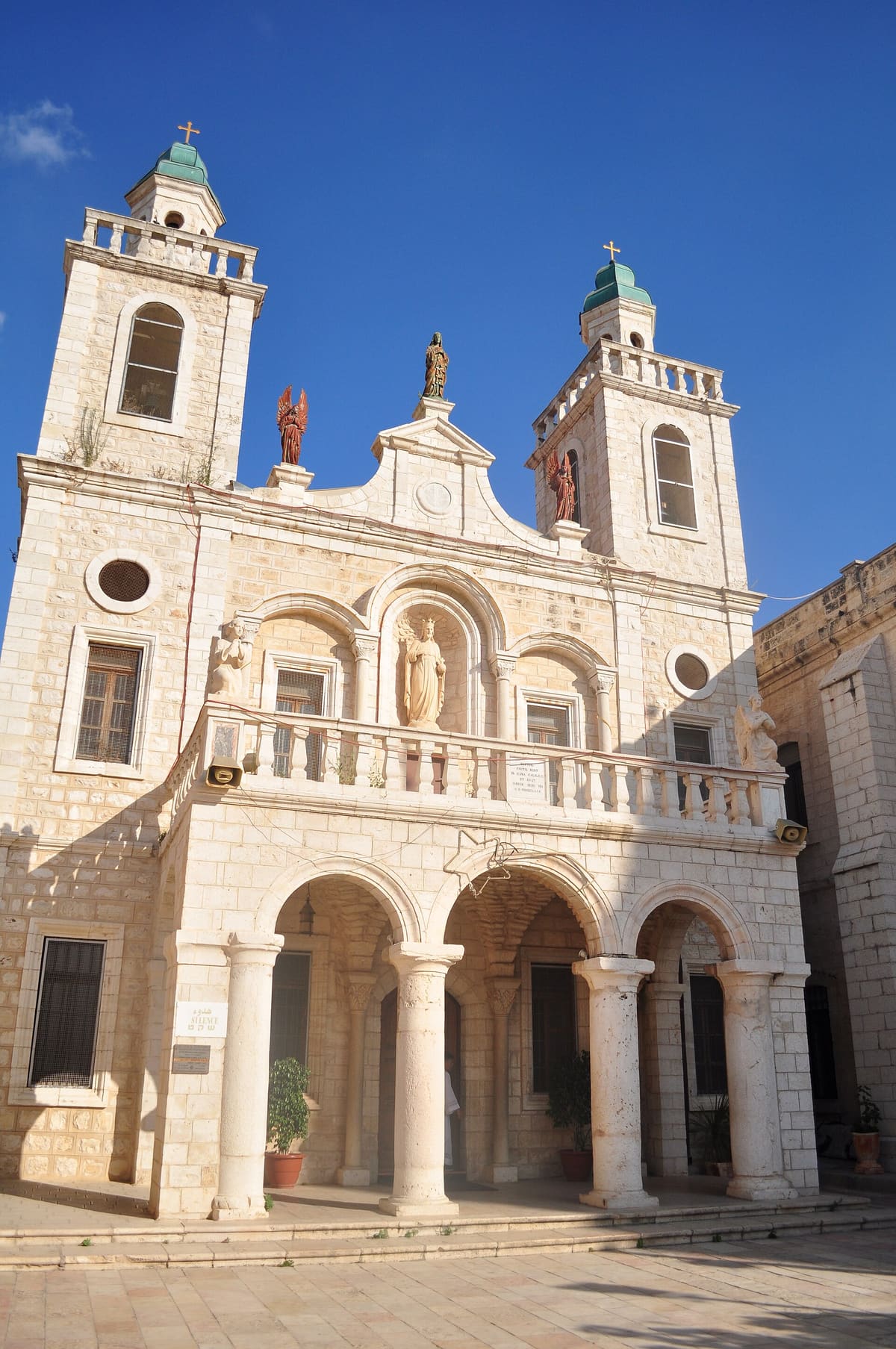
The Franciscan church was blessed in 1881 and enlarged in 1897–1905. It commemorates the wedding at Cana, where John recounts Jesus turning water into wine.
The Greek Orthodox sanctuary at Kafr Kanna commemorates the wedding where John recounts Jesus turning water into wine. Its custodians also associate the site with Simon the Cananite.
The modern memorial stands above remains of an ancient house and a later octagonal church. The house is traditionally identified with Peter’s home, where the Gospels recount Jesus healing Peter’s mother-in-law; the archaeological identification is not certain.
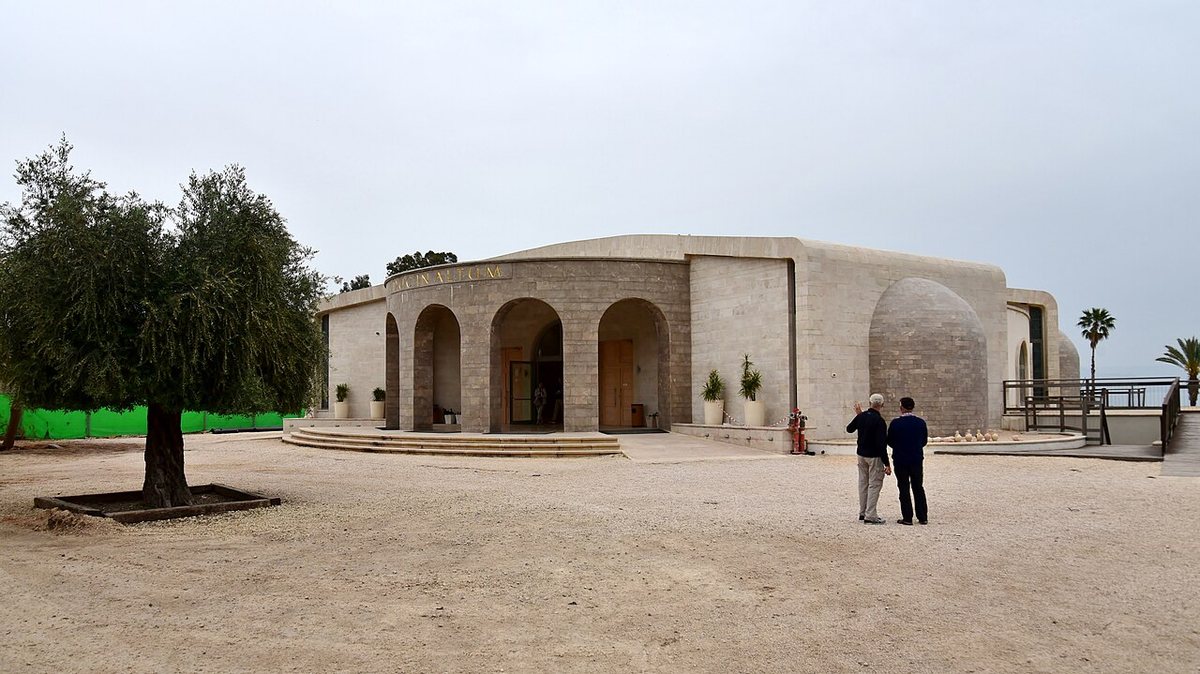
The Greek Orthodox church was built in 1931 under Patriarch Damianos near the lake at ancient Capernaum. Later restoration and decoration renewed the sanctuary.
Matthew describes Jesus settling in Capernaum. This passage concerns the town, not the twentieth-century church.
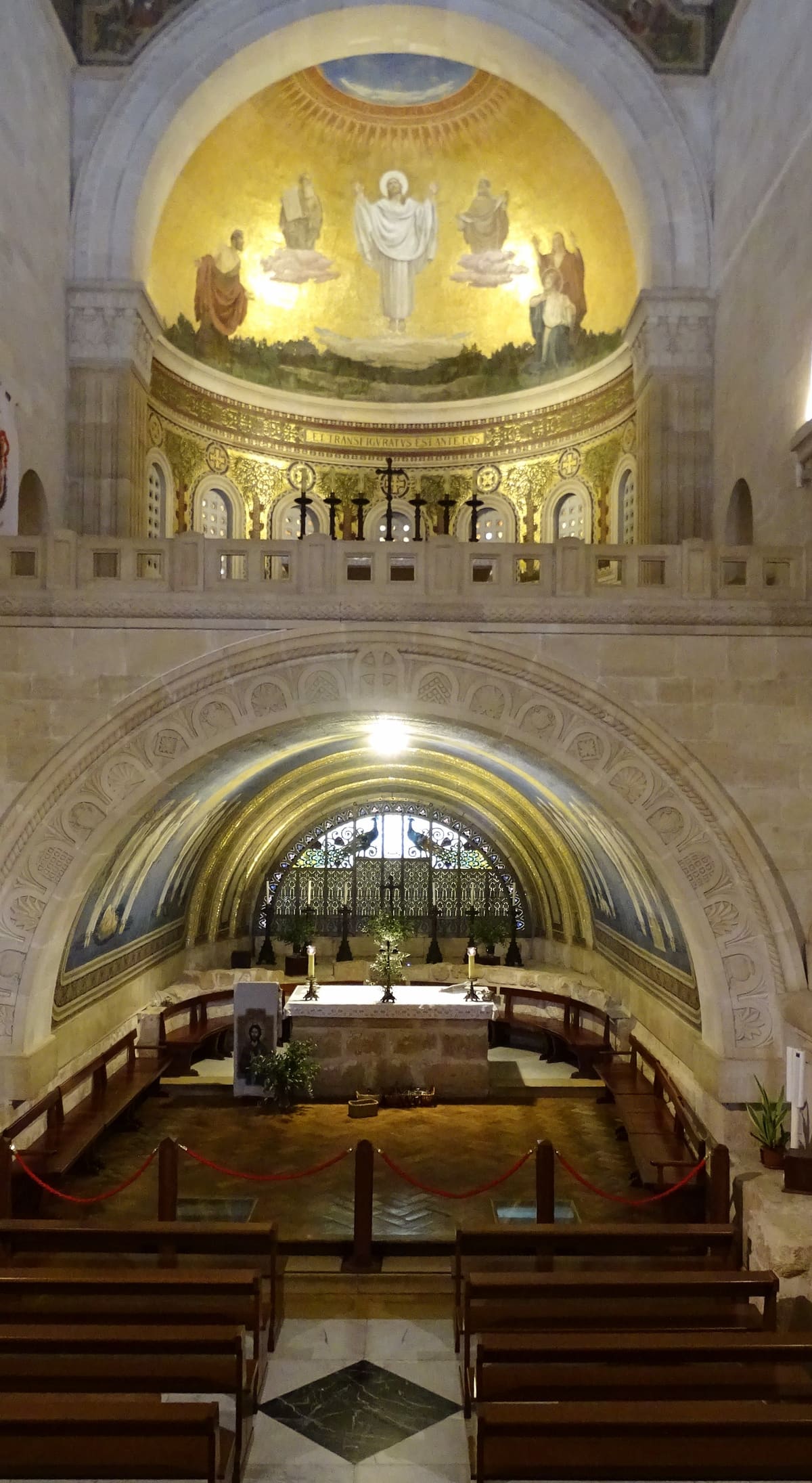
Antonio Barluzzi’s basilica was completed in 1924. Christian tradition places the Transfiguration on Mount Tabor: Jesus appears in glory with Moses and Elijah.
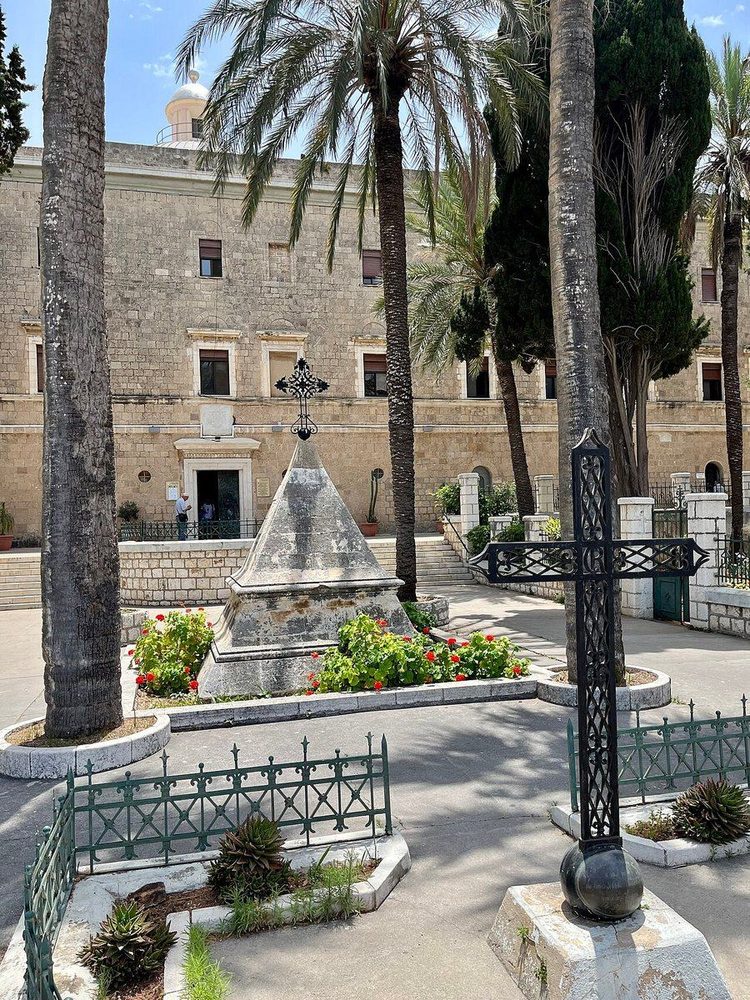
Opened in 1836, the present Carmelite church and monastery replaced earlier buildings damaged and destroyed during periods of conflict. The church overlooks the Mediterranean from Mount Carmel.
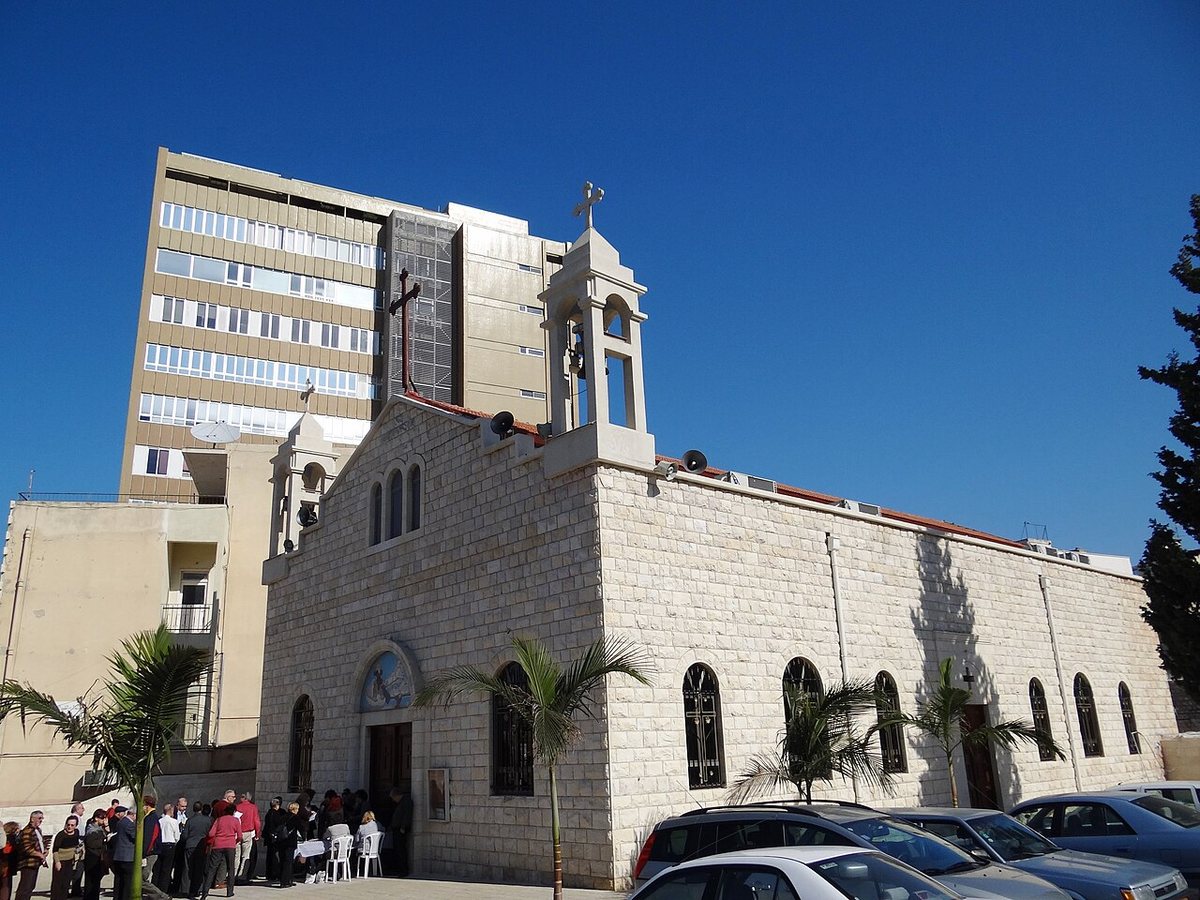
Built in 1938–1939, Saint Elias became the Melkite cathedral after the community’s displacement during the 1948 war. The episcopal seat moved here from Haifa’s older church of the Virgin Mary.
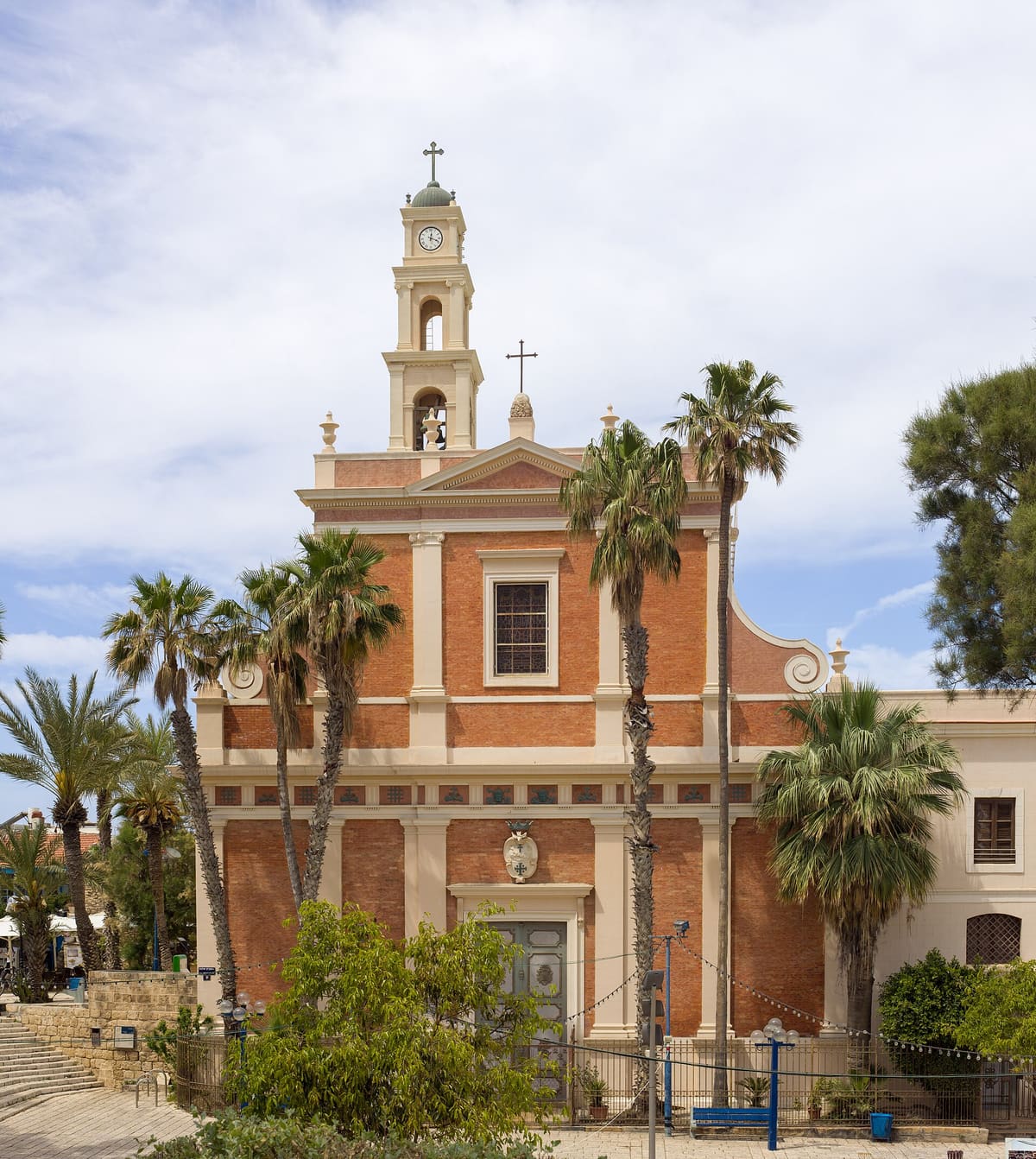
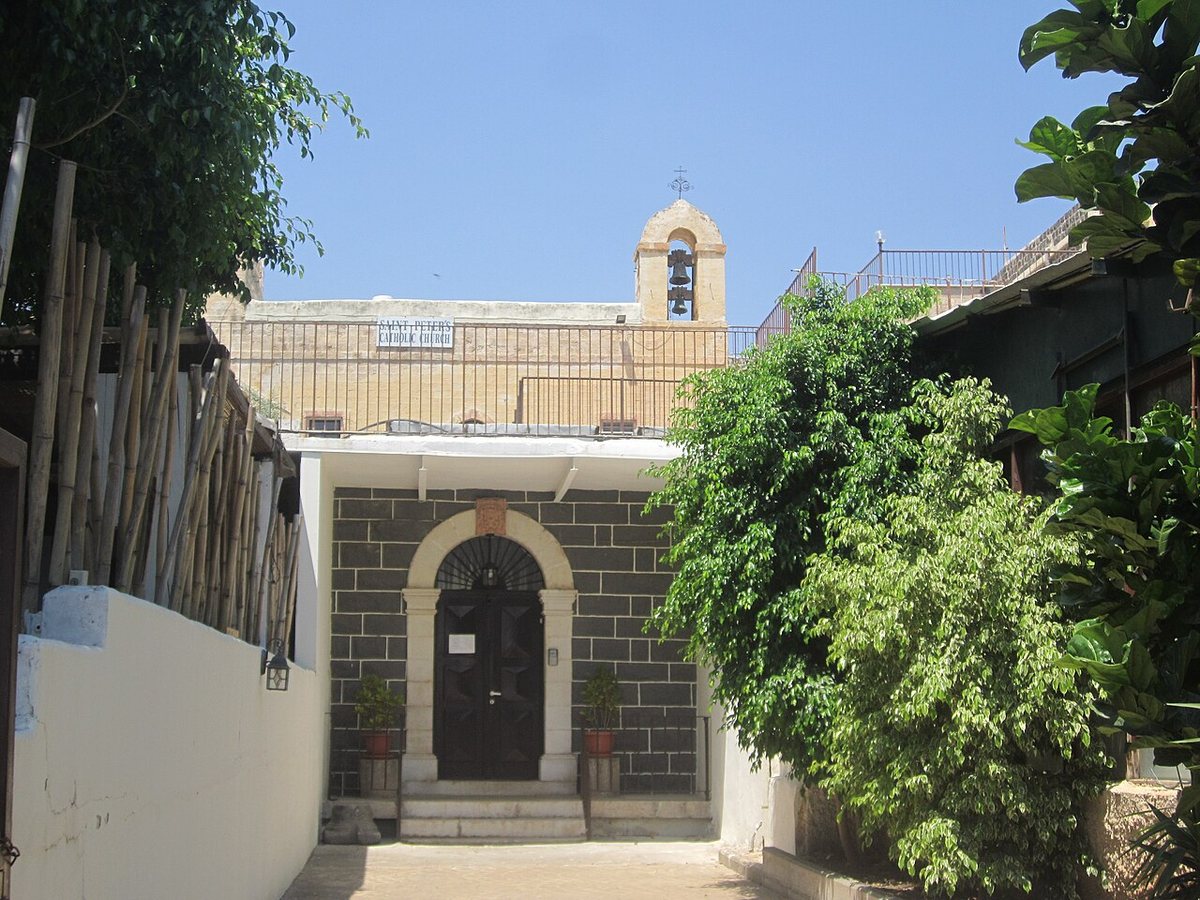
Built with Spanish support between 1888 and 1894, this Franciscan church overlooks Jaffa’s historic port. It commemorates Peter’s ministry in the city, including Tabitha’s raising and his vision described in Acts.
Consecrated in 1894, this Russian Orthodox church grew within a property developed for pilgrims by Archimandrite Antonin. Nearby ancient tombs became associated by tradition with Tabitha, whom Acts says Peter raised in Joppa.
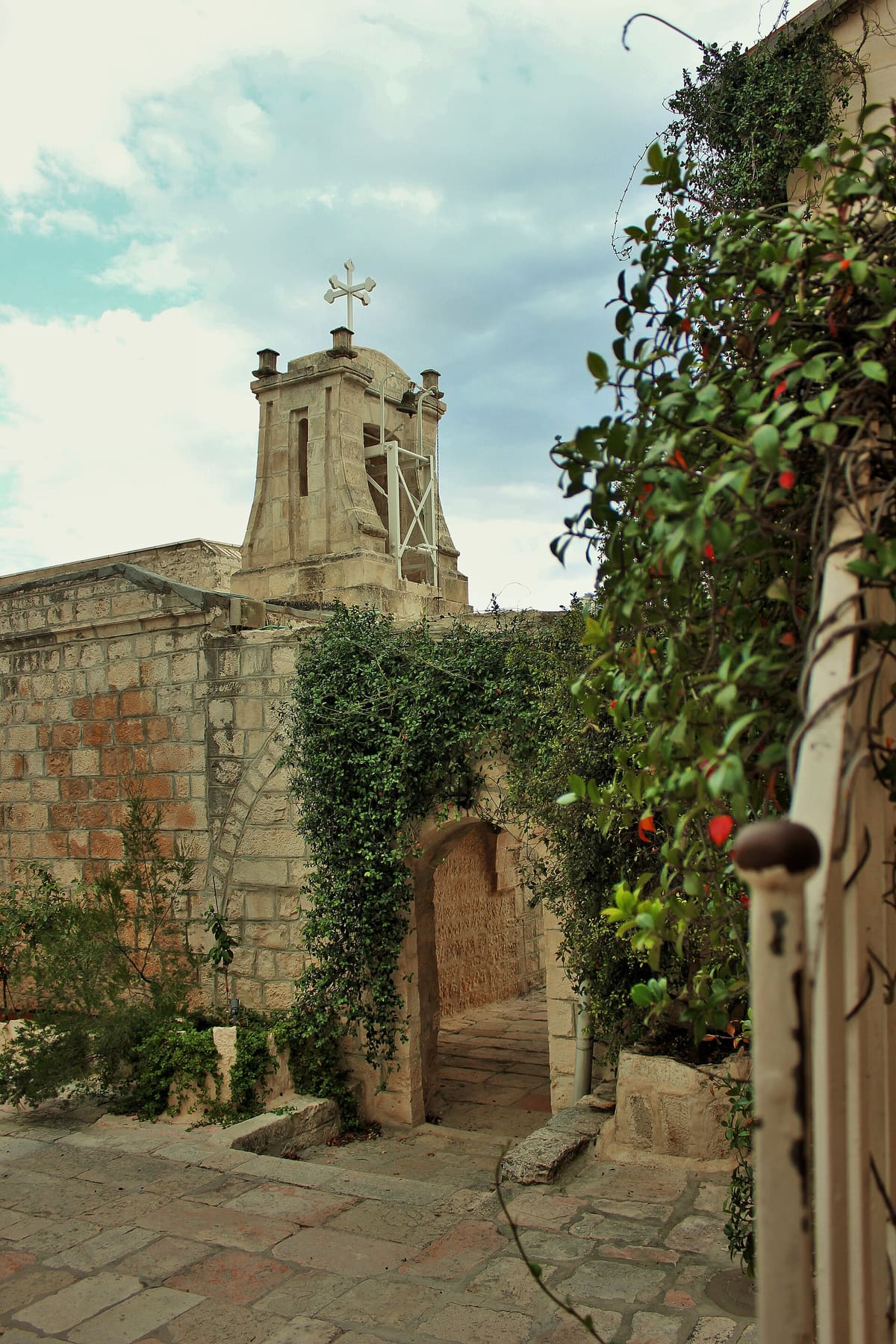
This Armenian church is mentioned by pilgrims from the fourteenth century; its original construction date is unknown. An inscription records renovation in 1725.
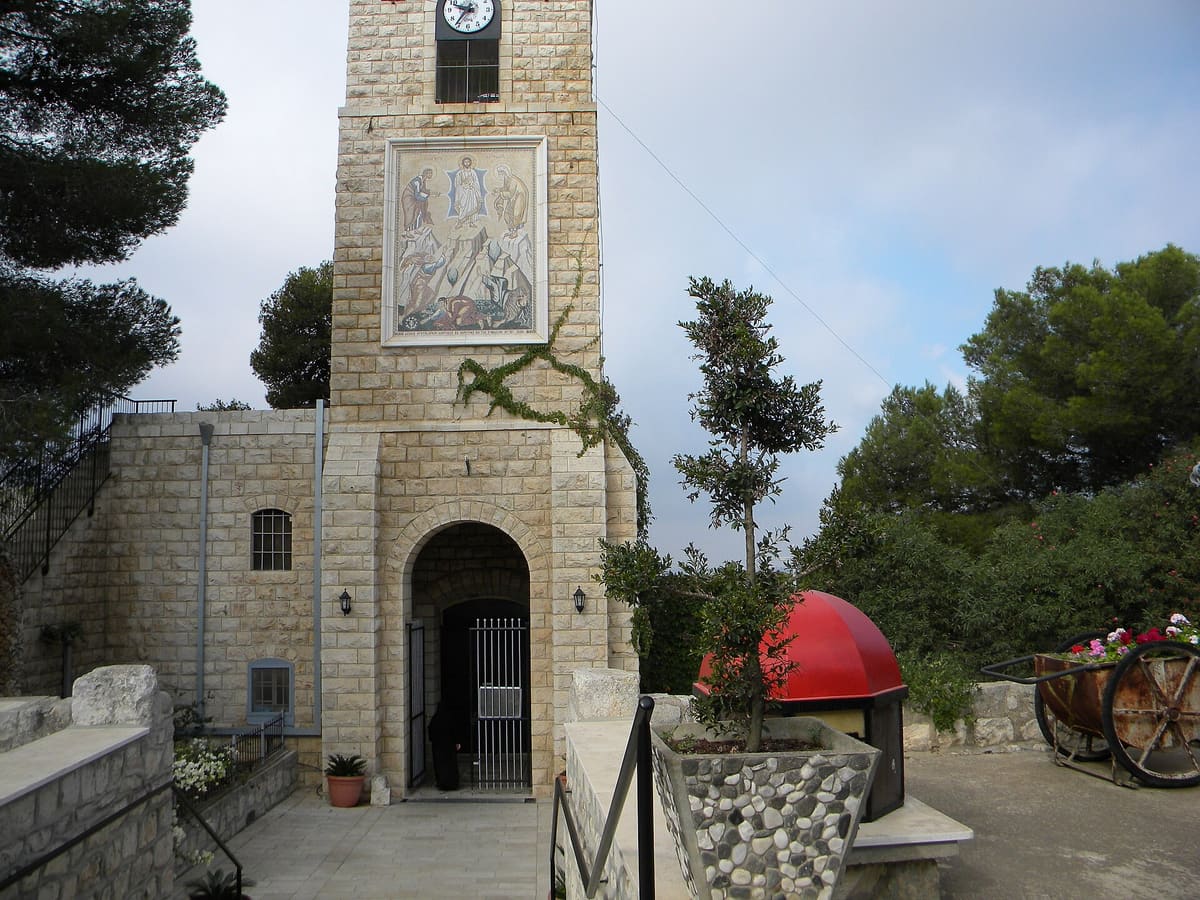
The Greek Orthodox monastery’s present church dates to the nineteenth century. It commemorates the Transfiguration, traditionally associated with Mount Tabor.
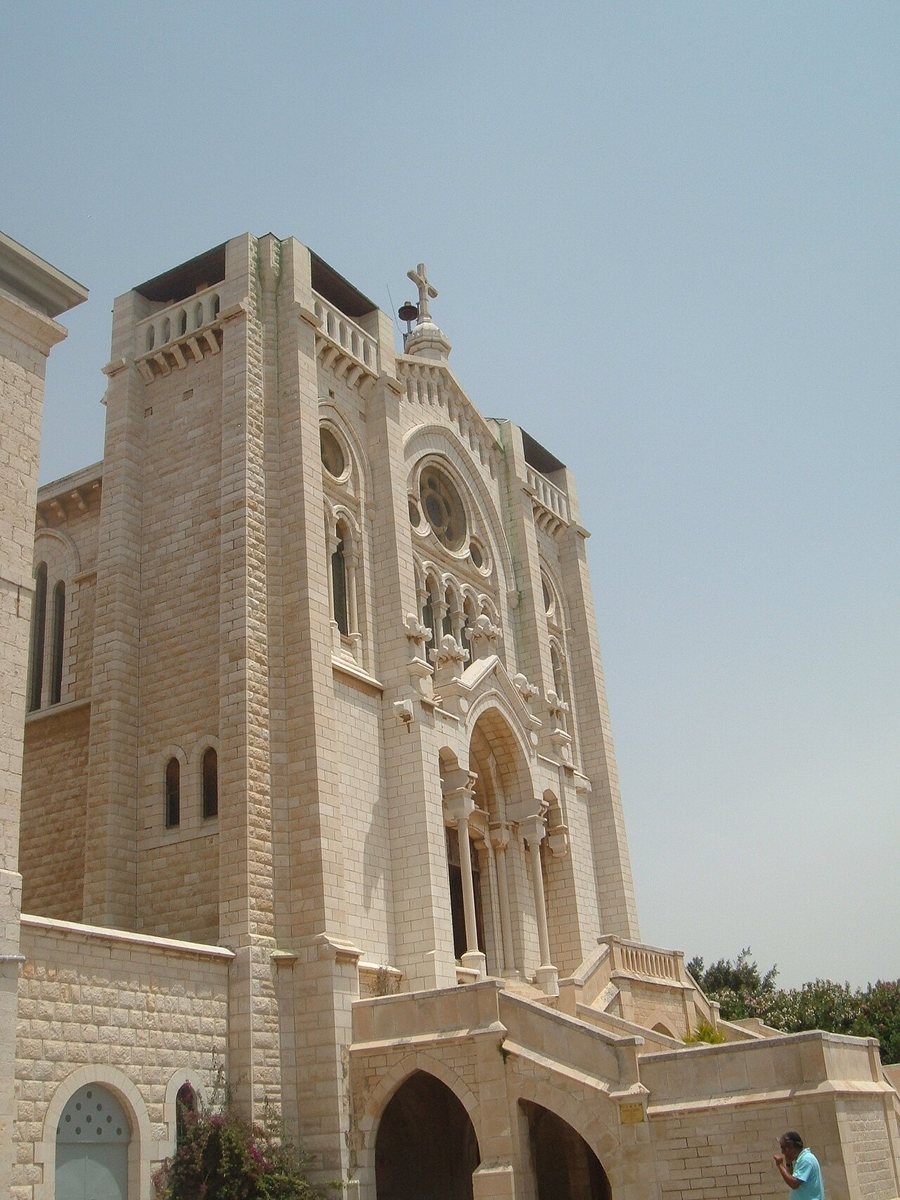
Built between 1906 and 1923 in a Gothic style, this Catholic church belongs to the Salesians of Don Bosco and stands beside their school on a hill overlooking Nazareth known as the Mount of the Start. Its dedication to Jesus as an adolescent reflects the Salesian focus on the education of the young, and points to the years the Gospels place in Nazareth between Jesus' childhood and his public ministry.
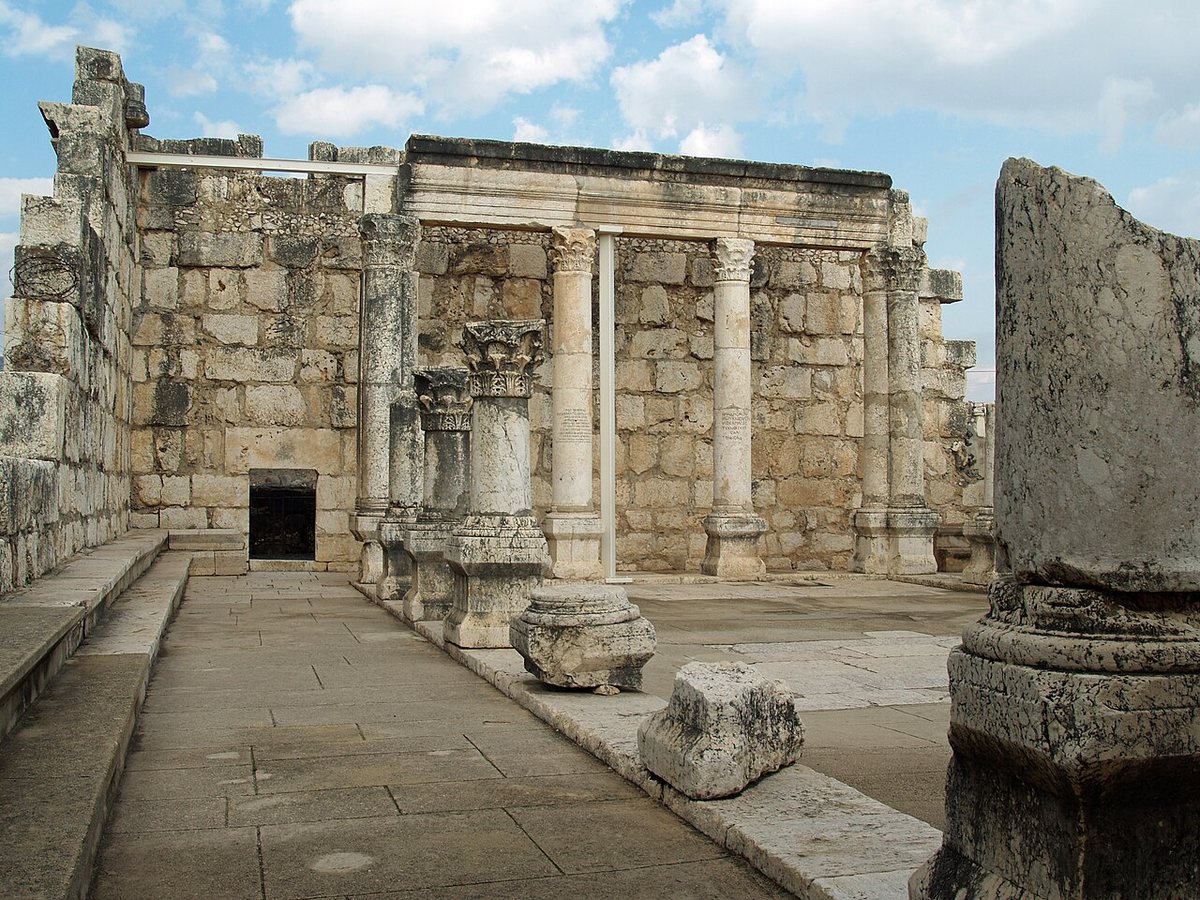
Capernaum on the north shore of the Sea of Galilee is the village the gospels make the base of Jesus’ Galilean ministry, and Matthew calls it “his own town”. The excavated site holds a white limestone synagogue of the fourth or fifth century, built over the black basalt foundations of an earlier one, and a cluster of basalt houses.
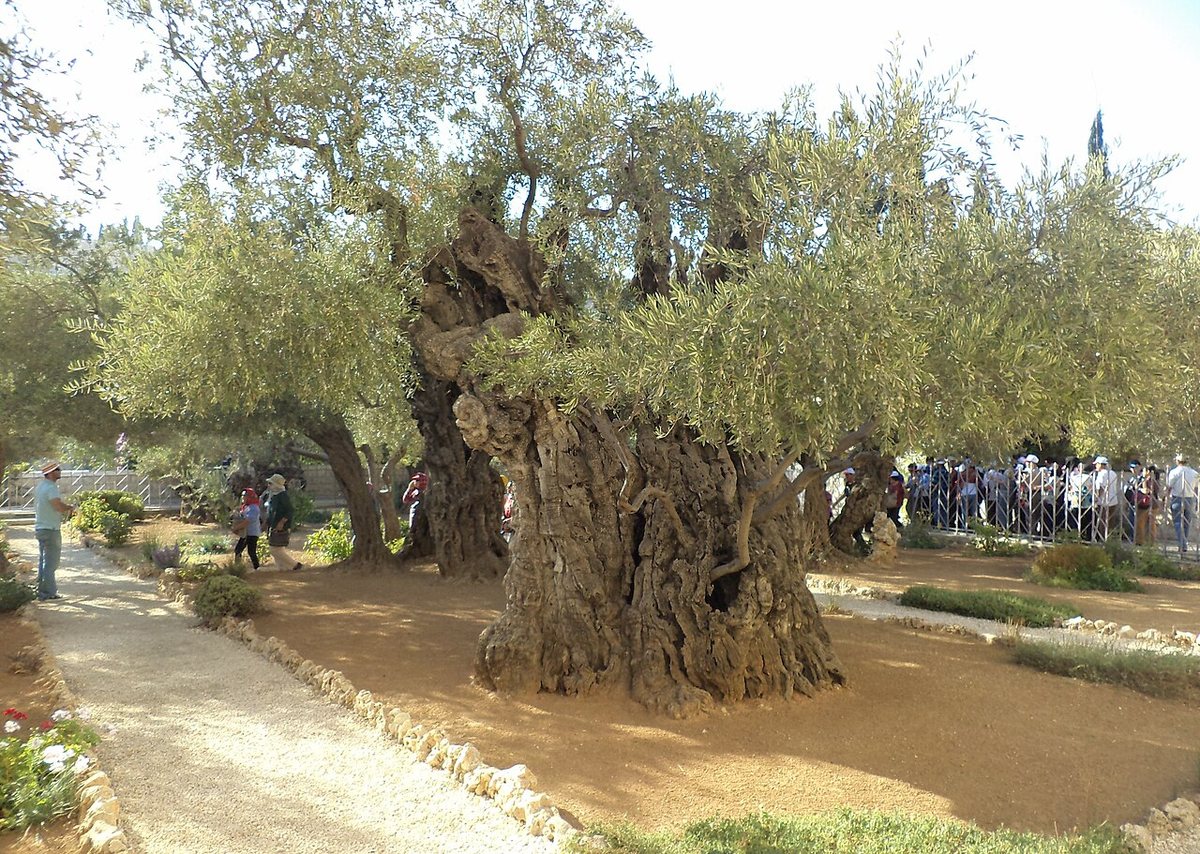
Gethsemane lies at the foot of the Mount of Olives, across the Kidron valley from the Old City. The name comes from the Aramaic for an oil press, and the gospels place Jesus’ agony and arrest in a garden here on the night before the crucifixion.
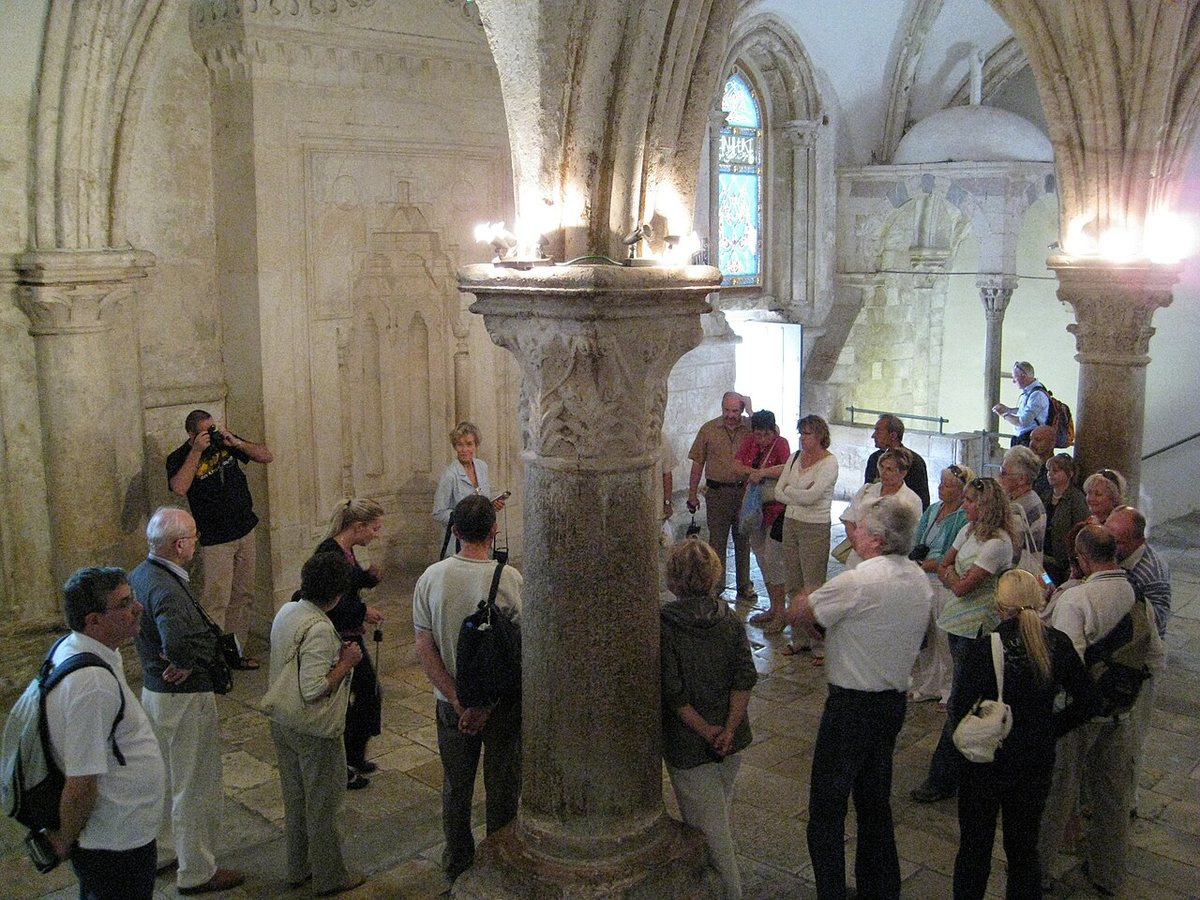
The Cenacle is an upper room on Mount Zion, venerated as the place of the Last Supper and of Pentecost. The room standing today is Crusader work of the twelfth century, rebuilt in the Gothic style; it was held by the Franciscans from the fourteenth century until they were expelled in the sixteenth, after which it served as a mosque, and the mihrab from that period is still in the south wall.
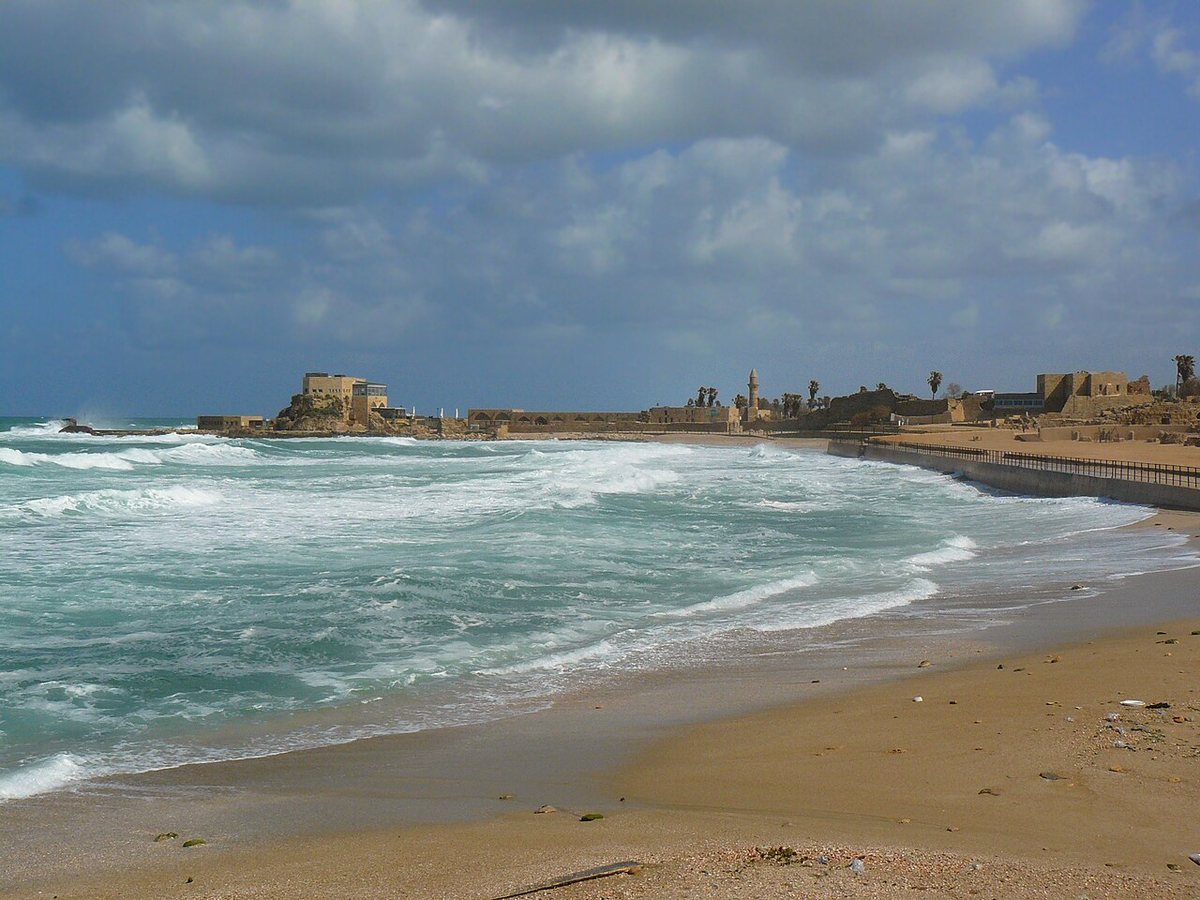
Caesarea Maritima was built by Herod the Great between about 22 and 10 BC, with an artificial harbour raised on hydraulic concrete poured into the sea. In Acts it is the city where the centurion Cornelius was baptised, the first Gentile received into the church; where Philip the Evangelist settled; and where Paul was held for two years before being sent to Rome.
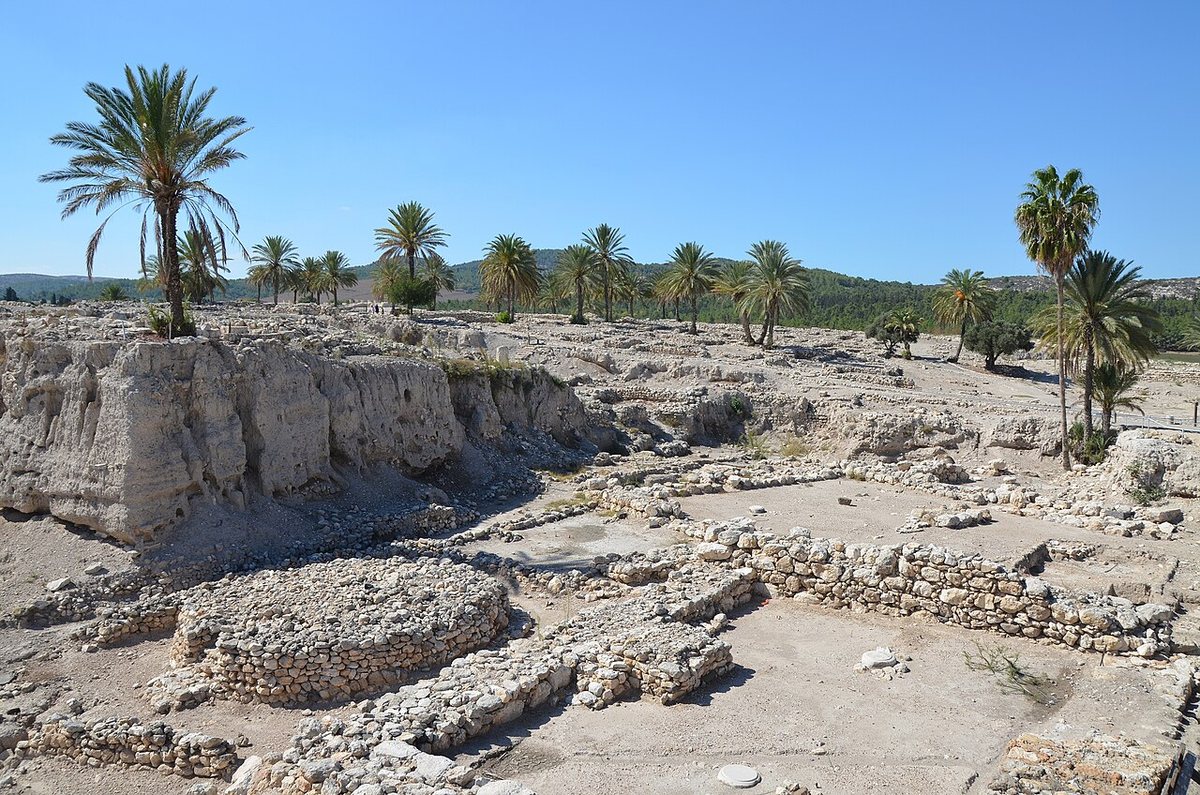
Tel Megiddo is a settlement mound above the Jezreel Valley, occupied from the fourth millennium BC and commanding the pass on the road between Egypt and Mesopotamia. It is inscribed by UNESCO, with Hazor and Beer Sheba, as one of the Biblical Tels.
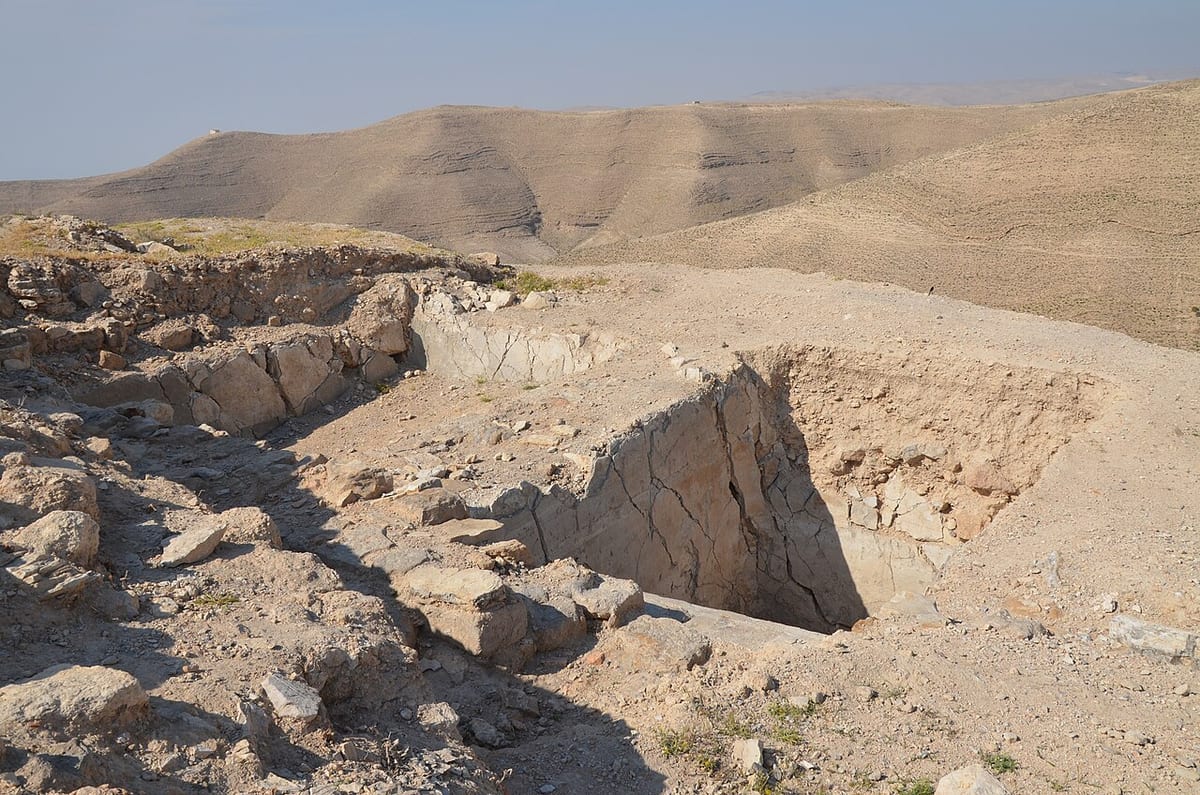
Mount Nebo is a ridge in Jordan rising about 700 metres above sea level, named in the Bible as the place from which Moses was granted a view of the promised land before his death. A Byzantine church and monastery stood on the summit, and the Franciscan Custody of the Holy Land now cares for the site and the memorial church that shelters those remains and their mosaics.
Madaba is known for a remarkable concentration of Byzantine and Umayyad mosaics, of which the sixth-century Madaba Map is the most famous. The remains recorded here preserve mosaic floors from that same tradition, with the profusion of plants, birds, fish and animals typical of the town's fifth- to seventh-century pavements.
Known also as the Cathedral of Saint Mary, this church in Jerash is now in ruins. It was built on the site of a former Roman temple, one of several places in the ancient city where a Christian building replaced an earlier sanctuary.
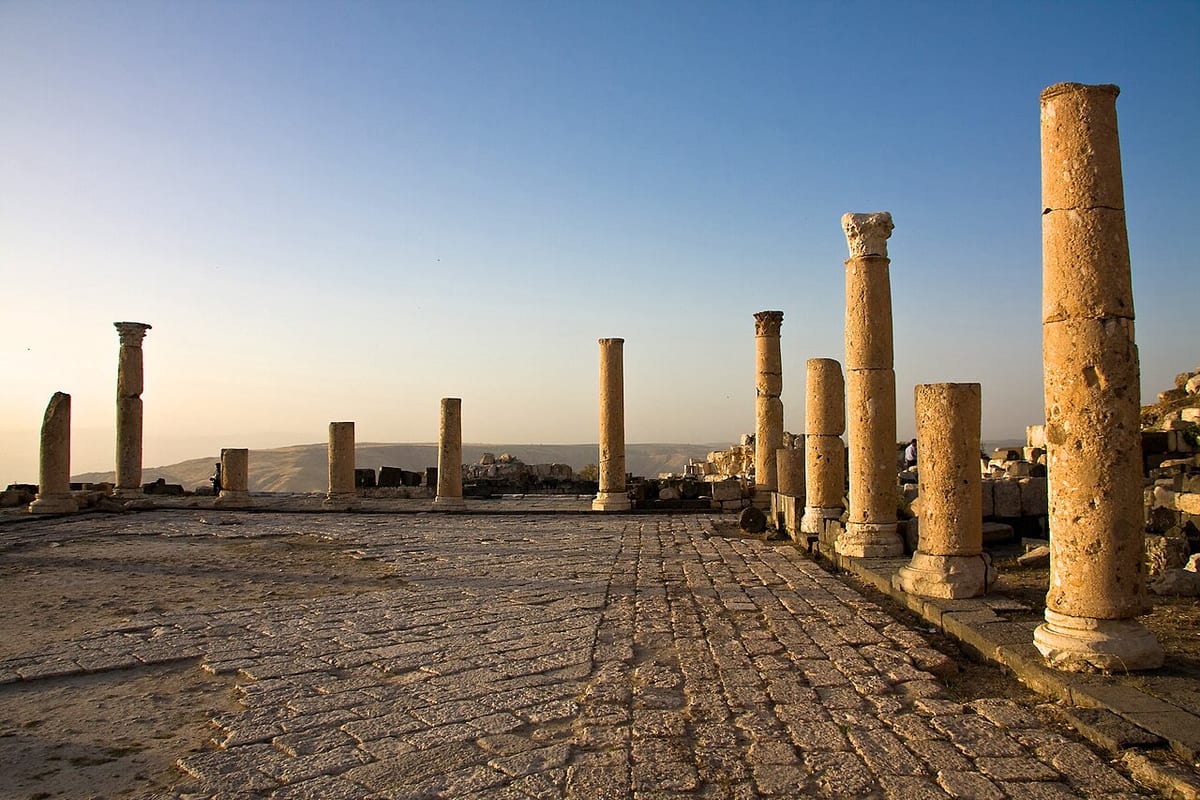
This building in the Decapolis city of Gerasa began as a Byzantine-era synagogue and was later converted into a church. It stands on high ground overlooking the Temple of Artemis.
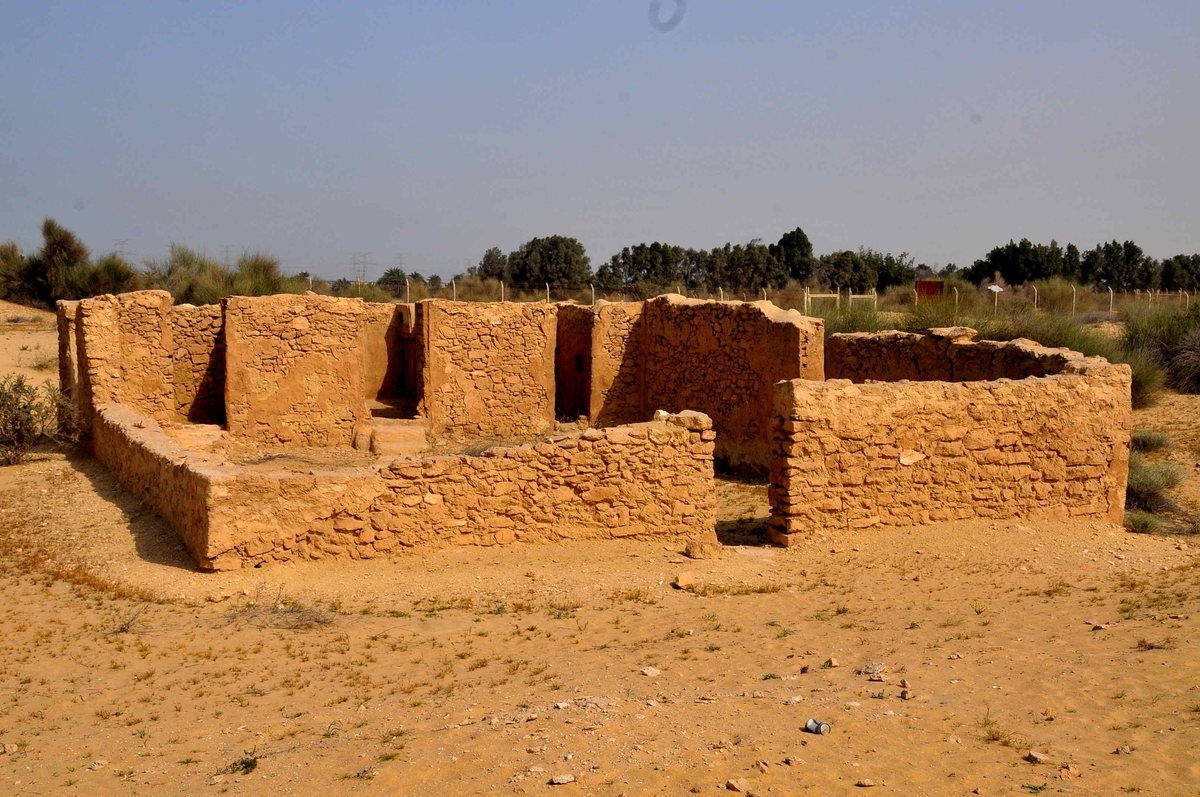
Archaeologists unearthed this mud-brick building at Aqaba in 1998 and dated its first phase to between 293 and 303. That makes it the oldest known church built to be a church: older than the Church of the Holy Sepulchre in Jerusalem and the Church of the Nativity in Bethlehem, both raised in the late 320s.
Umm ar-Rasas, the ancient Kastron Mefa'a, lies about 30 kilometres south-east of Madaba, and archaeologists connect it with Mephaath, a settlement named in the book of Jeremiah. A Roman garrison held the site before Christian and then Muslim communities lived there.
A tell is an archaeological mound, and this one rises just outside Ajloun in the hills of Gilead. On top are the ruins of a Byzantine monastery dedicated to the prophet Elijah, containing two churches.
This is the main Byzantine church of Petra, standing on high ground north of the colonnaded street and keeping a lavish, well-preserved mosaic floor. It is one of three Byzantine churches on the hillside, with the Ridge Church above it and the Blue Chapel nearby, the last named for the blue Egyptian granite it was built with.
Built on the ridge above Petra in the third or fourth century, from reused Nabataean and Roman material, this is thought to be the oldest church building in the city. It was square, with two rows of pillars down the middle carrying the roof and a semicircular sanctuary at the end of the main chamber.
Ancient Gadara, a city of the Decapolis, survives at Umm Qais with Roman monuments and Byzantine Christian remains. Its basilicas reveal a later Christian community.
Gospel accounts and manuscript traditions use different regional names: Gadarenes, Gerasenes and Gergesenes. Translations may therefore differ. These references do not identify the ruins as the exact scene.
Our Lady of Nourieh is a Marian shrine and monastery at Hamat, on the coast north of Byblos. Nourieh derives from the Arabic nour, meaning light, so the shrine is known in English as Our Lady of Light.
Founded in 1157 as Belmont, in the Crusader County of Tripoli, Balamand was begun by Cistercian monks and kept as such until the Mamluk conquest of 1289. After a poorly documented gap of three centuries it was re-established by Greek Orthodox monks in 1610, and it belongs to the Greek Orthodox Church of Antioch.
Youssef Makhlouf entered this Lebanese Maronite house in the Byblos district after beginning his training at Mayfouq, received the habit and the name Charbel, and made his final profession on 1 November 1853. He died on 24 December 1898 and was buried here on Christmas Day.
This Maronite monastery in the Qadisha Valley is dedicated to Anthony the Great and is among the oldest in the valley; scholarly dating of its foundation differs, and remains from the seventh century survive. It served for a period as the seat of the Maronite Patriarchate.
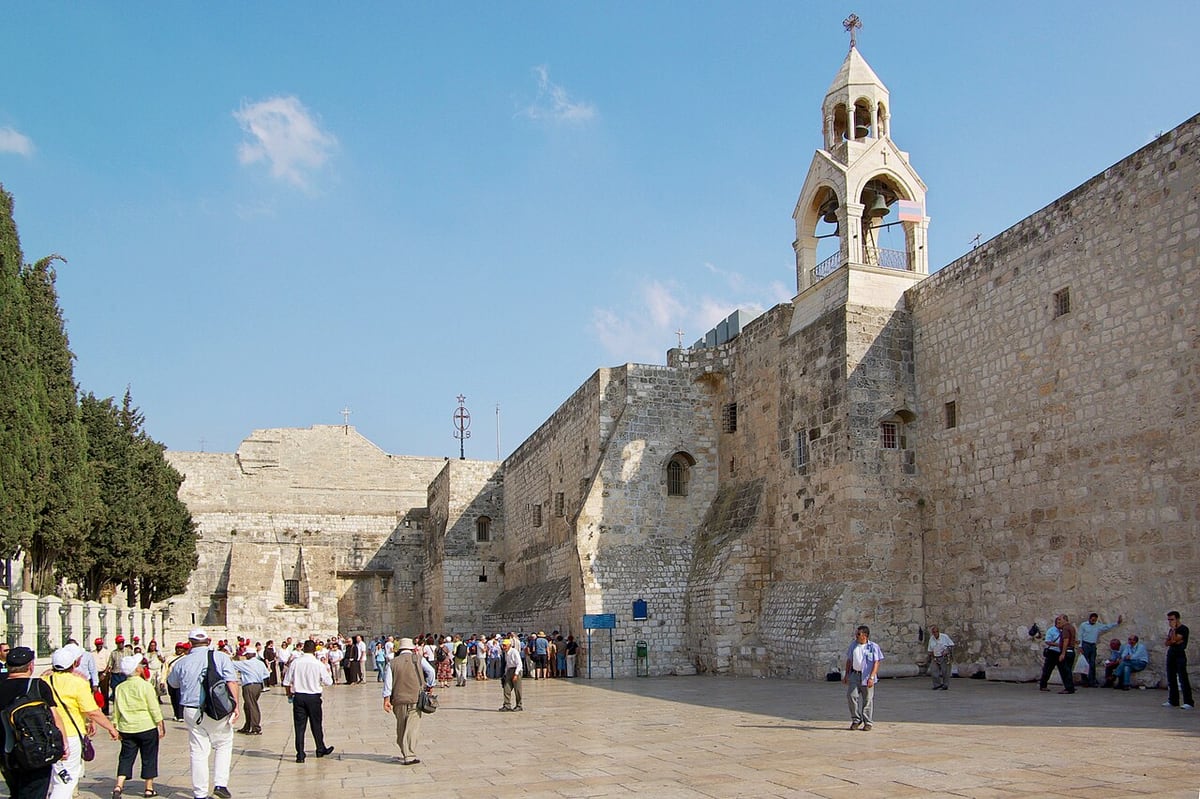
Bethlehem is identified in Christian tradition as the birthplace of Jesus, and a church has stood over the venerated grotto since the fourth century. The present basilica largely reflects a sixth-century rebuilding under Justinian after the first church was damaged.
The well known as Jacob's Well, or the Well of Sychar, lies in Balata on the edge of Nablus and is enclosed today within an Eastern Orthodox church and monastery. Religious tradition has associated the well with the patriarch Jacob for a very long time.
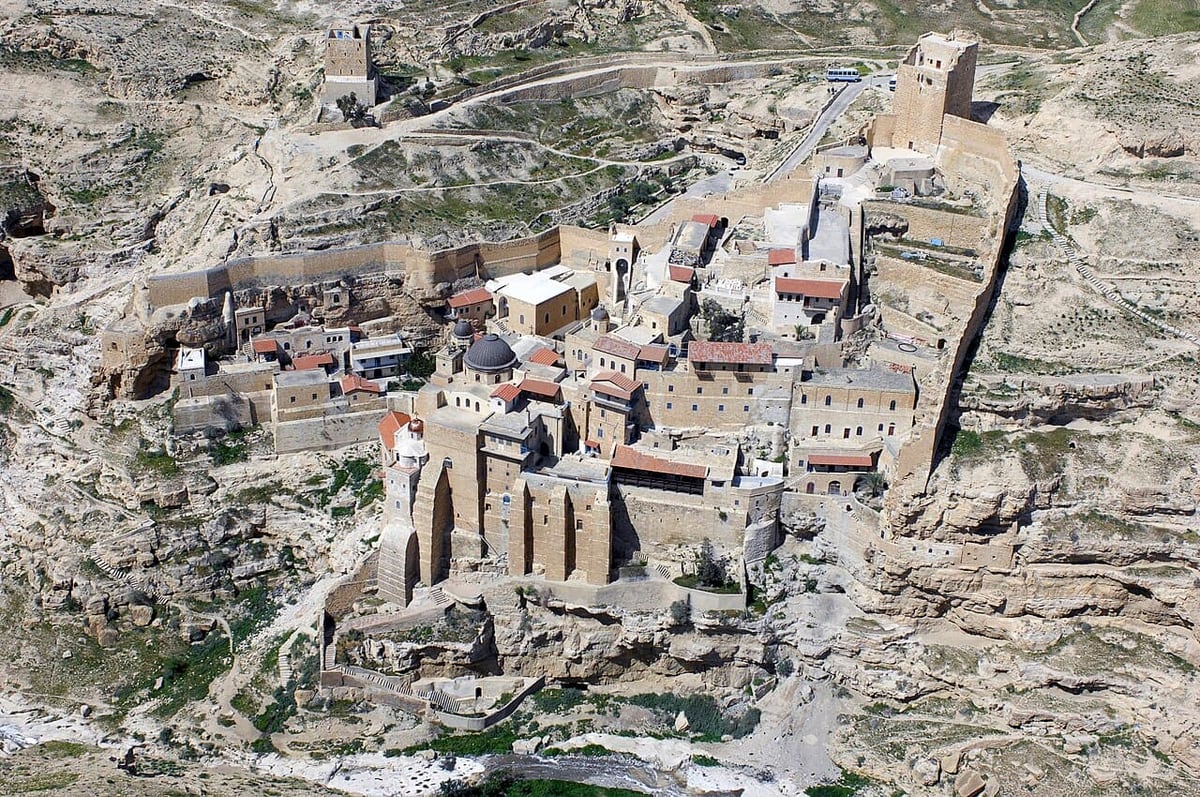
The Holy Lavra of Saint Sabbas overlooks the Kidron Valley in the Bethlehem Governorate, roughly halfway between Bethlehem and the Dead Sea. Greek Orthodox and dating to 483, it is among the oldest almost continuously inhabited monasteries in the world, and it keeps many of its ancient customs.
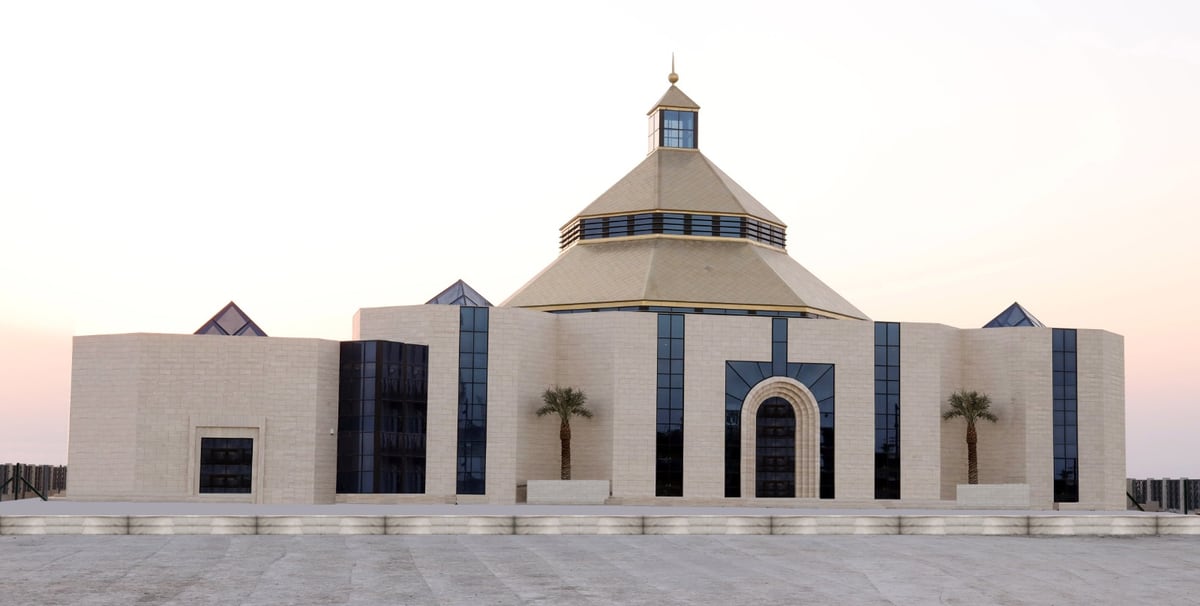
Discovered beneath dunes near Jubail in 1986, these church ruins preserve traces of Christianity on Arabia’s Gulf coast. Their construction date remains uncertain: Robert Carter’s 2008 study found that the published archaeological evidence did not permit precise dating.
This ancient underground structure at the end of the Street Called Straight in Old Damascus is held to be the remains of the house of Ananias of Damascus. Acts describes Ananias being sent to Saul of Tarsus, who regained his sight and was baptised, becoming Paul the Apostle.
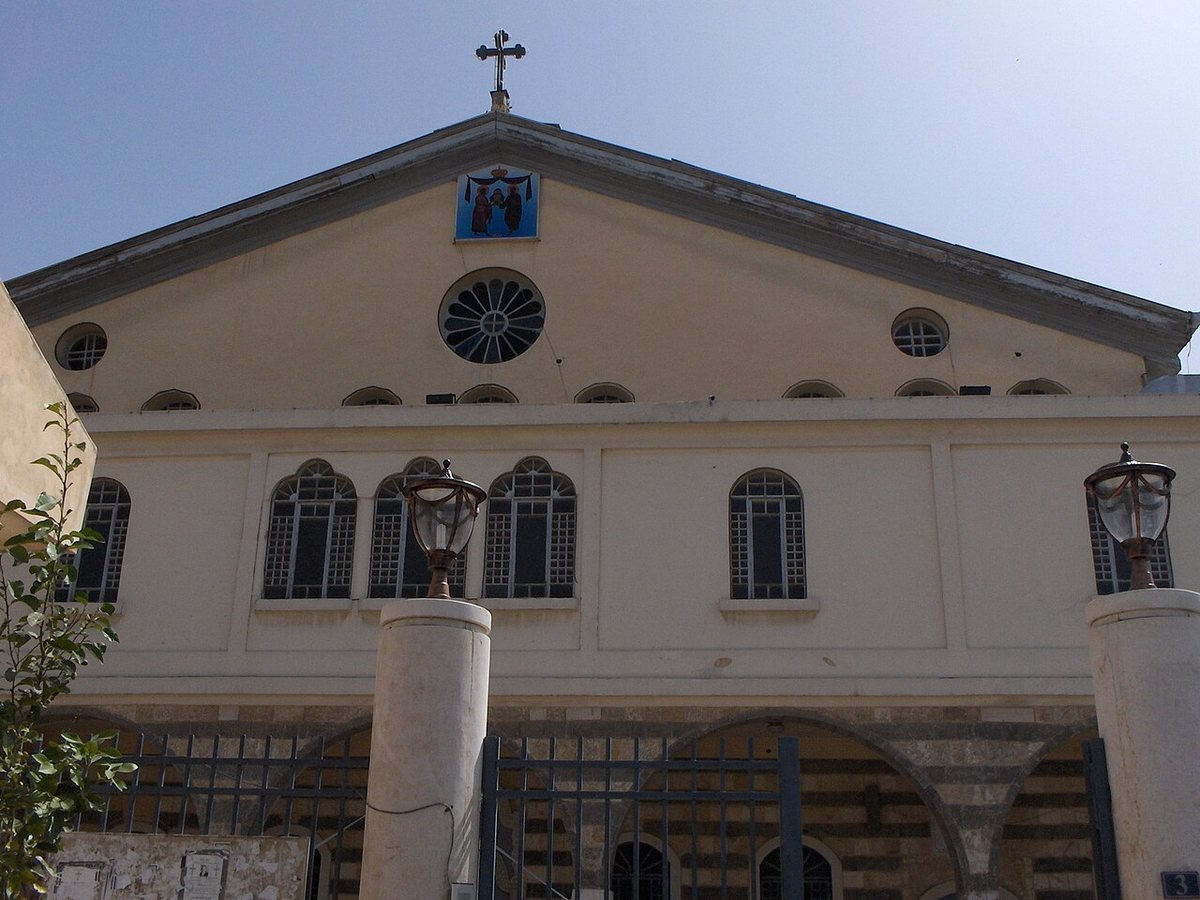
The Mariamite Cathedral, also called the Maryamiyya Church, is one of the oldest Greek Orthodox churches in Damascus and holds the seat of the Greek Orthodox Church of Antioch. The church complex stands on the Street Called Straight, the thoroughfare named in the account of Paul's time in the city.
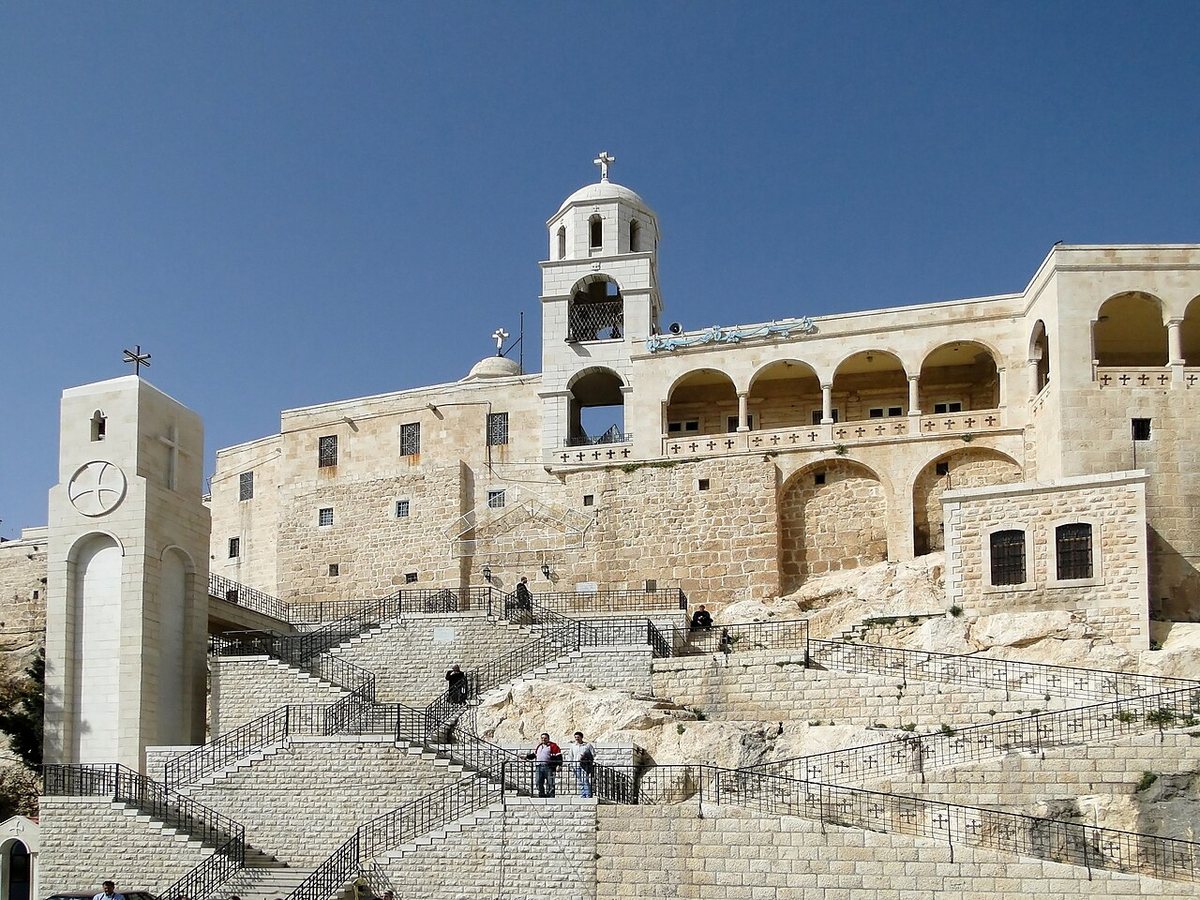
The Patriarchal Monastery of Our Lady of Saidnaya belongs to the Greek Orthodox Church of Antioch and stands in the town of Saidnaya north of Damascus. It is among the most ancient monasteries in the world and in the Middle East, traditionally held to have been founded by the Byzantine emperor Justinian I in 547.
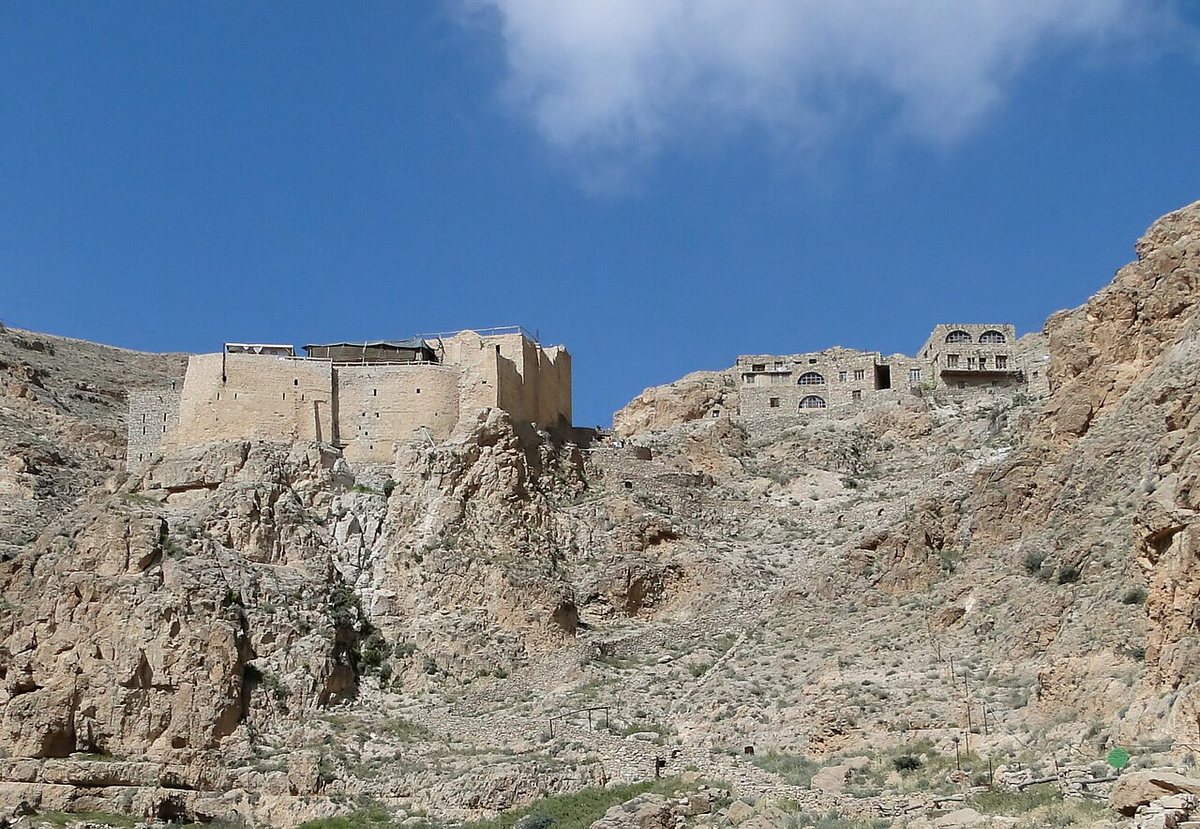
Deir Mar Georges is a historic Greek Orthodox monastery in the village of al-Mishtaya, in the Valley of the Christians, Wadi al-Nasara, in Homs Governorate. It lies a few kilometres north of the castle of Krak des Chevaliers.
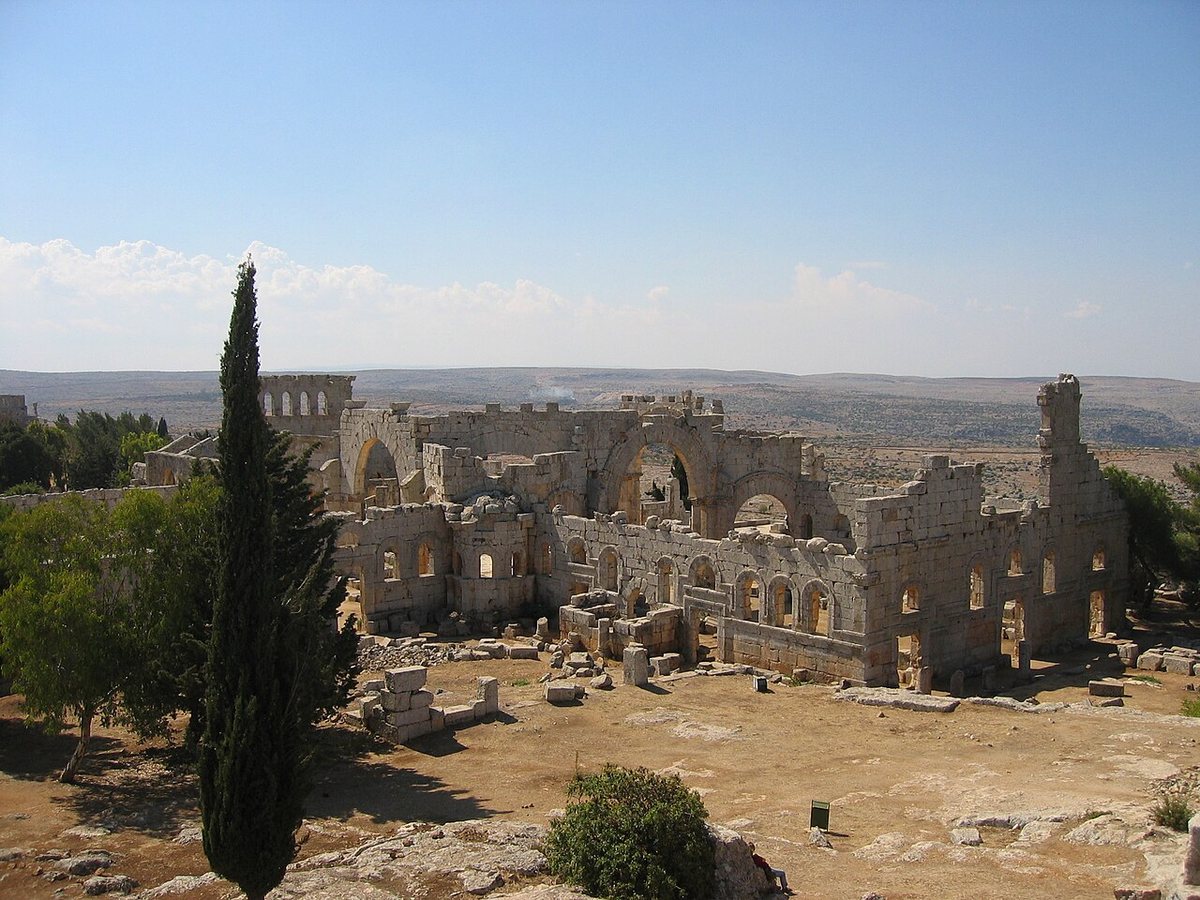
One of the oldest surviving church complexes, founded in the fifth century about 30 kilometres north-west of Aleppo. It was built around the pillar on which Simeon Stylites, the best known of the pillar-dwelling monks, spent his years.
This Greek Orthodox convent at Maaloula was built in 1935 around the grotto venerated as Saint Thecla's, and is administered by the Greek Orthodox Patriarchate of Antioch. Thecla is known from the second-century Acts of Paul and Thecla, a text outside the New Testament canon.
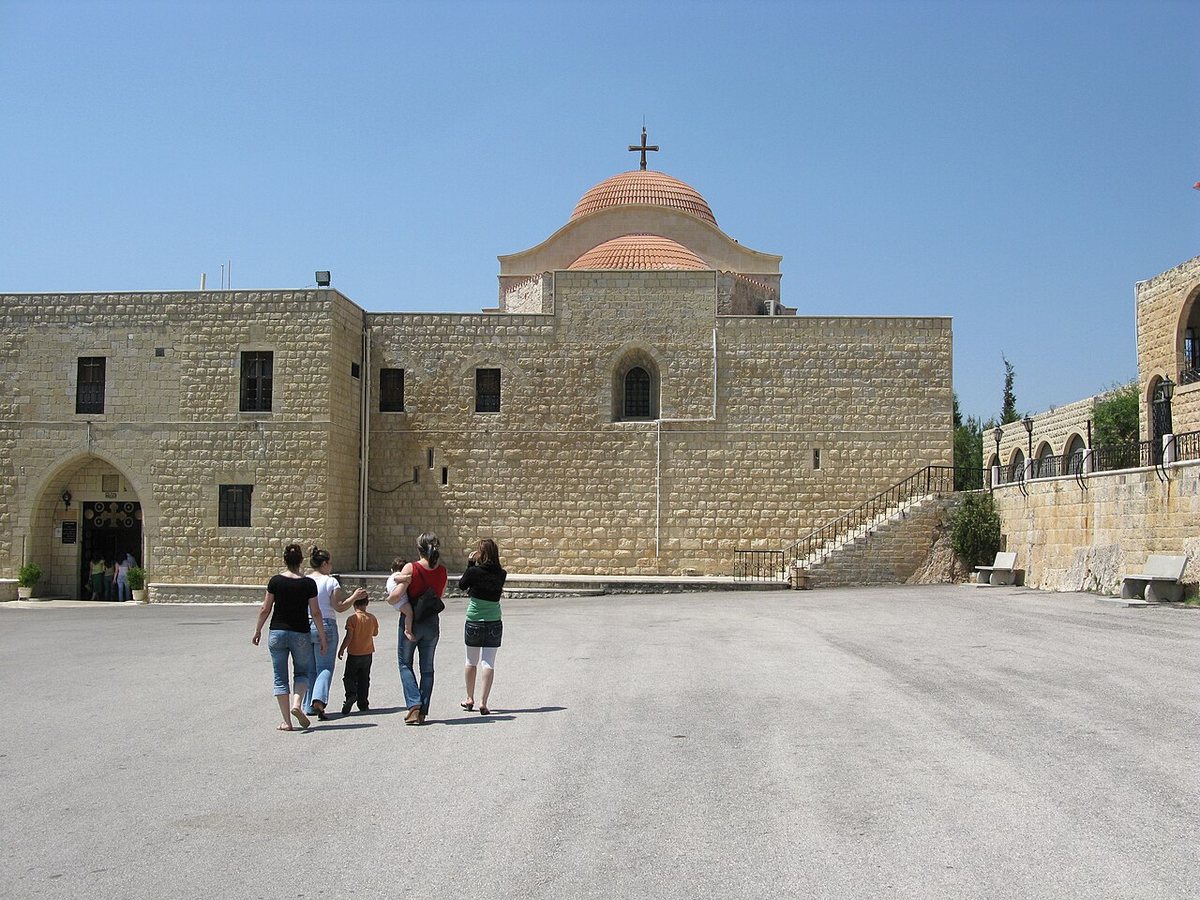
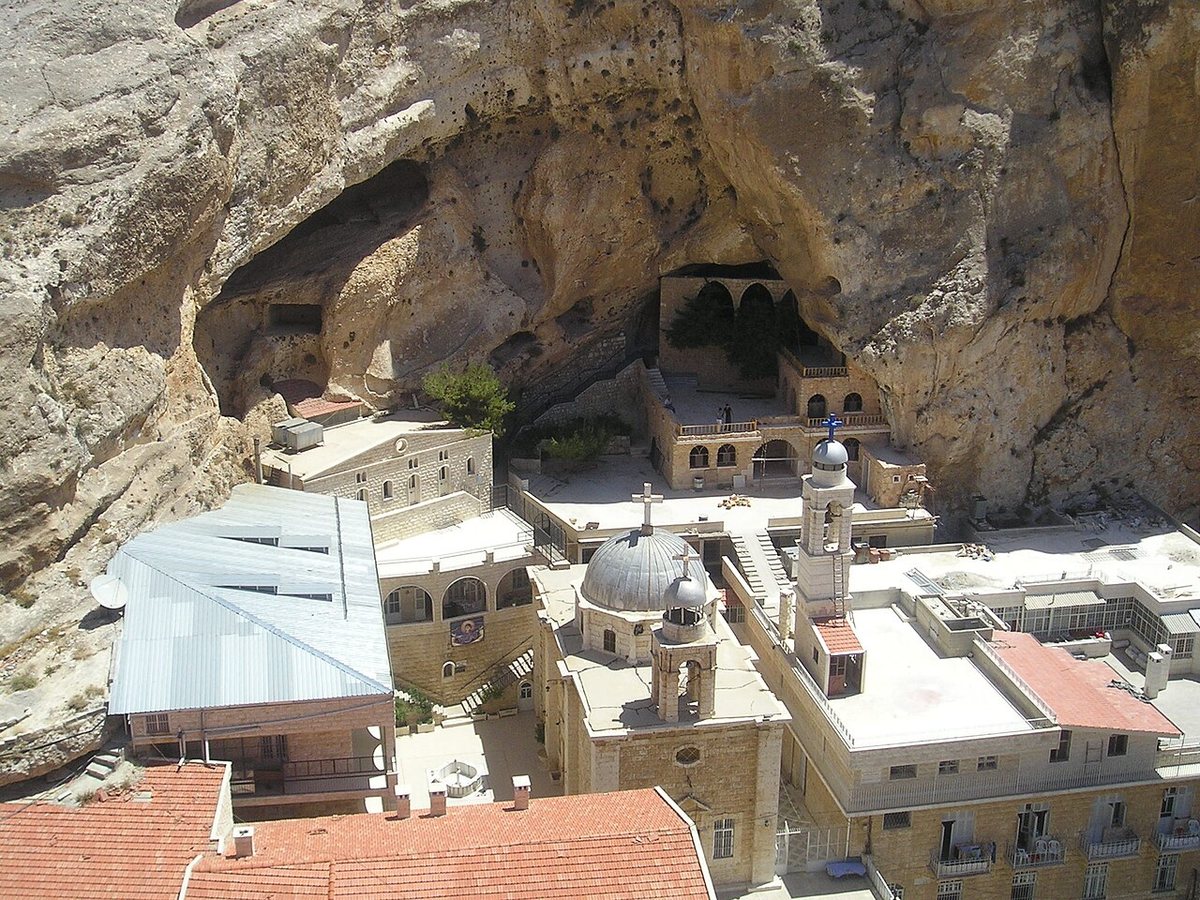
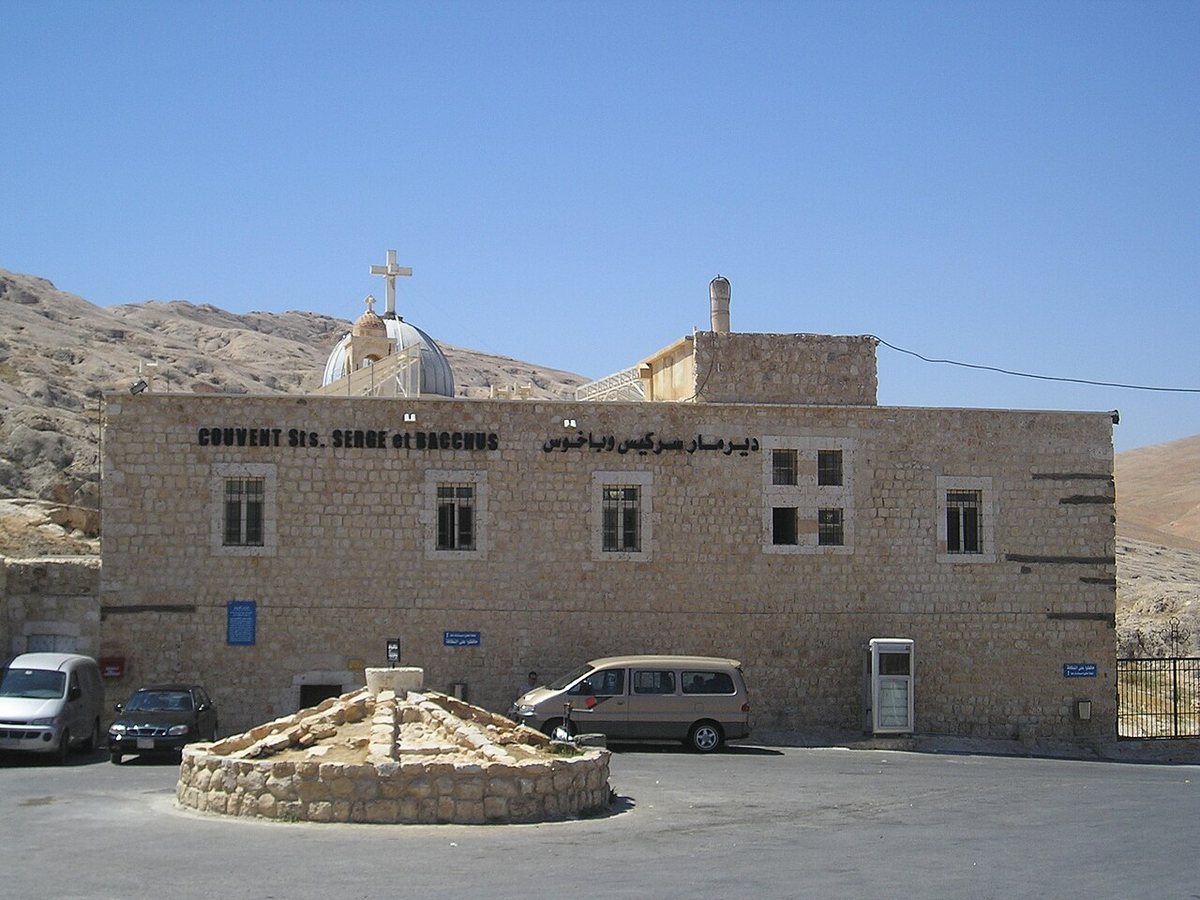
The Melkite Greek Catholic monastery of Mar Sarkis is among the oldest surviving monasteries in Syria. It was built on the site of a pagan temple and keeps elements from the fifth to sixth-century Byzantine period.
This Syriac Catholic monastic community sits on the eastern slopes of the Anti-Lebanon mountains about 80 kilometres north of Damascus, near the town of Nabk. It is named for Moses the Black.
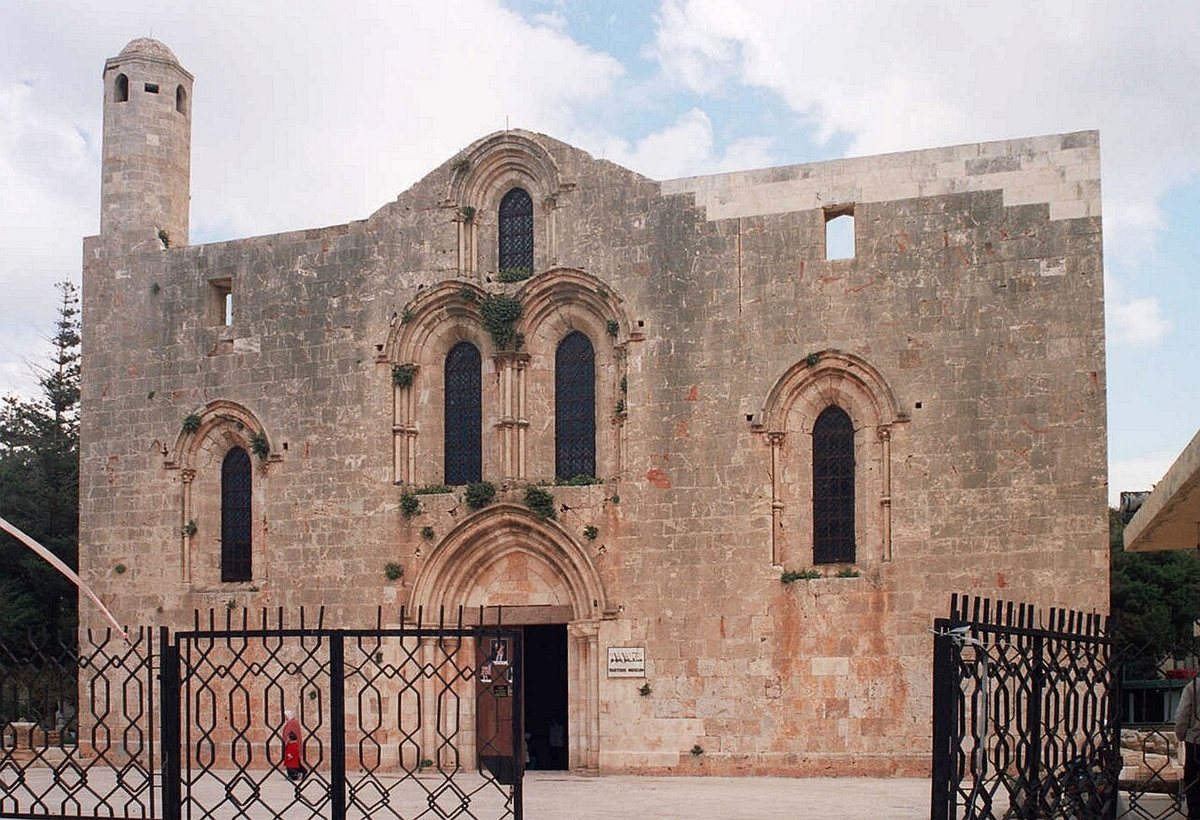
Raised in the twelfth century, this Crusader cathedral has been described by historians as the best-preserved religious building of the Crusades. Pilgrims came because Saint Peter was said to have founded a small church on the spot dedicated to the Virgin Mary.
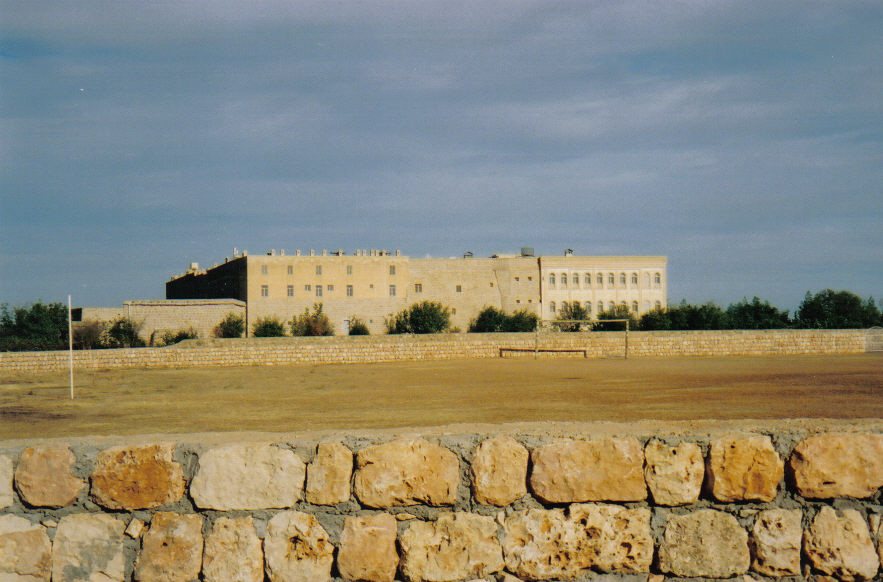
Founded in 397 by the ascetics Mor Shmuel and Mor Shemʿun of Qartmin, Mor Gabriel stands on a hilltop near Midyat in Tur Abdin and is one of the oldest continuously active Christian monasteries anywhere. It has been a centre of Syriac monasticism, theology and language for sixteen centuries, through Byzantine persecution, Turco-Mongol raids and, in recent decades, land and legal disputes with the Turkish state.
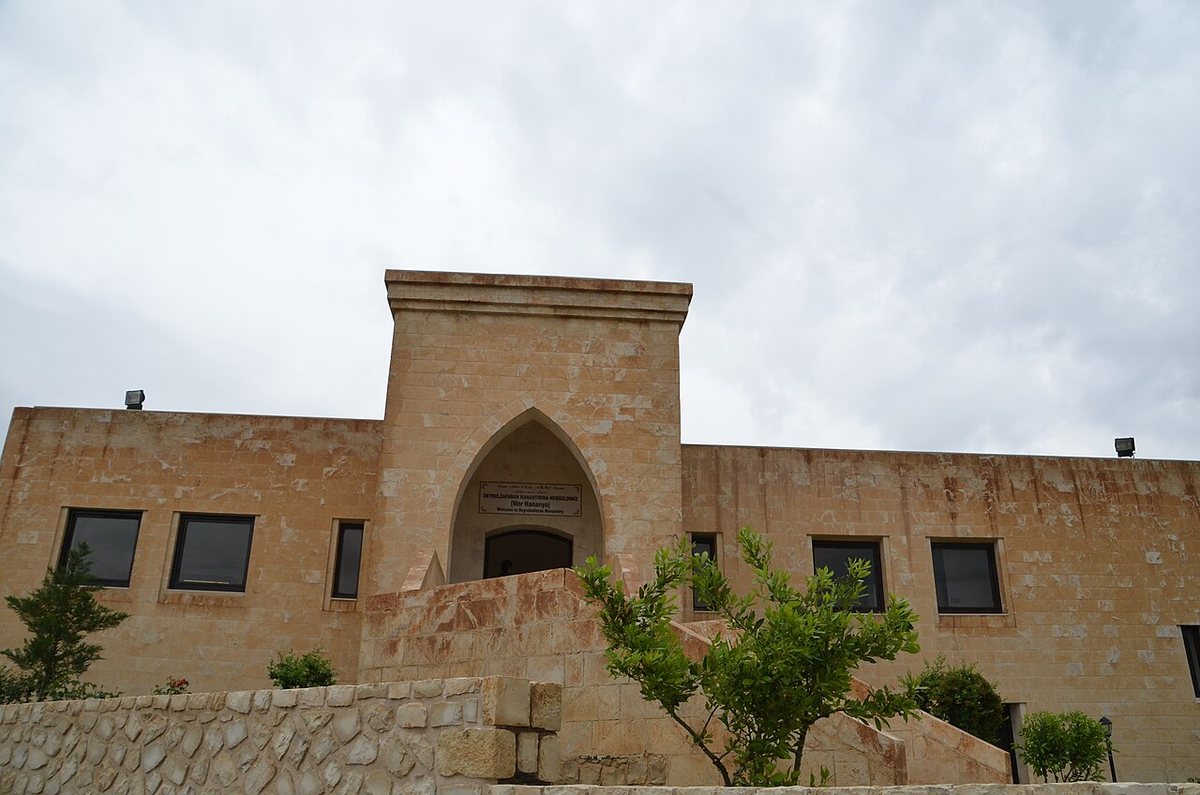
Known in Syriac as Mor Hananyo and in English as the Saffron Monastery, Deyrulzafaran lies about three kilometres east of Mardin in Tur Abdin. From 1166 until 1932 it was the patriarchal see of the Syriac Orthodox Church of Antioch, and fifty-three patriarchs and metropolitans are buried in its chambers.
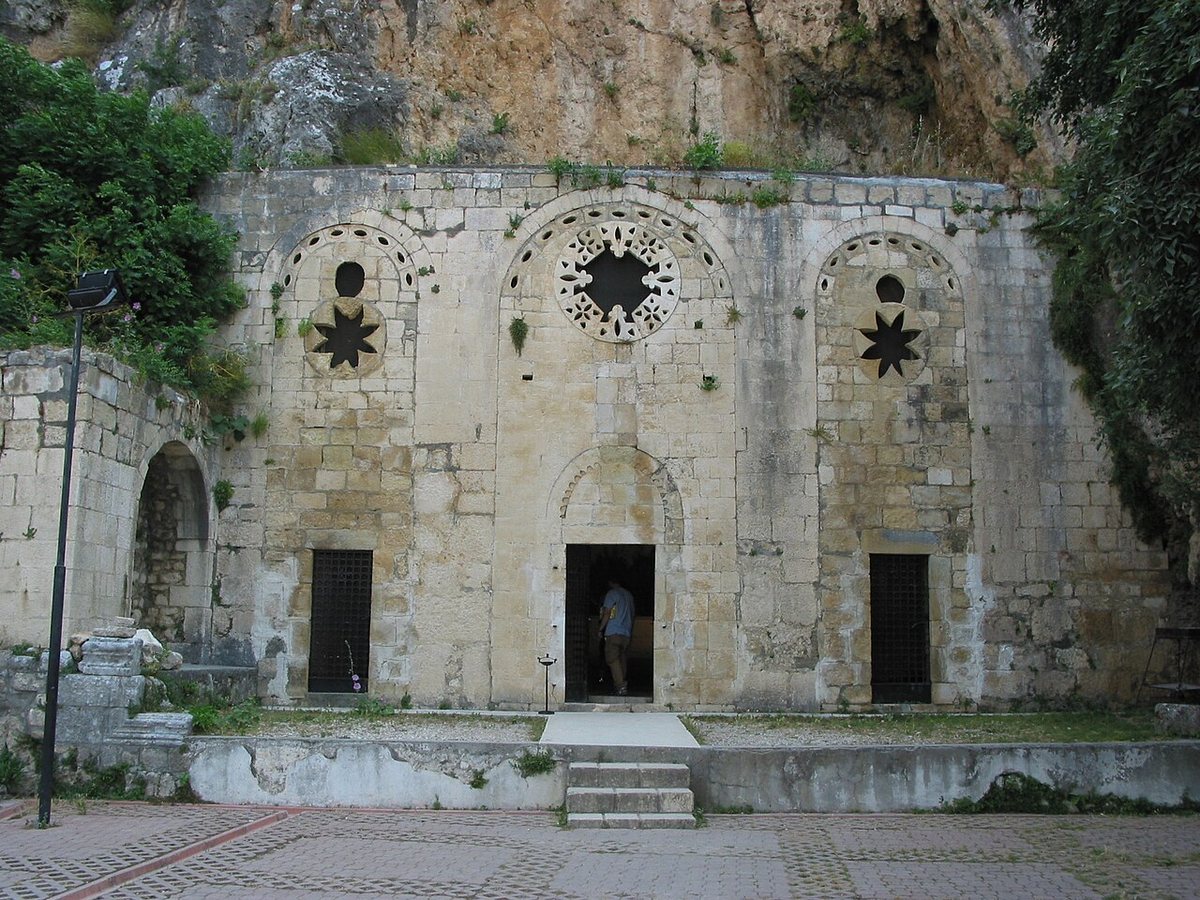
A cave thirteen metres deep cut into Mount Starius above Antakya — ancient Antioch, where the book of Acts says the disciples were first called Christians. Tradition holds that Peter preached here and founded the church of Antioch, though nothing dates the building reliably; the oldest surviving parts, some floor mosaic and traces of fresco beside the altar, are fourth or fifth century.
Archaeologists found this monastery on Sir Bani Yas island in 1992, and it is the clearest evidence that Christianity was practised in what is now the United Arab Emirates before Islam. The island belonged to Beth Qatraye, the Syriac name for the Christian region along the Gulf, and the community is believed to have been of the Church of the East.


.jpg)


_2.jpg)


.jpg)

.jpg)


.jpg)


.jpg)


.JPG)


.JPG)
.jpg)


.jpg)

.jpg)
.jpg)


.jpg)


