Church tradition
Latin Catholics
Latin Catholics follow the Latin tradition within the Catholic Church, alongside the region’s distinct Eastern Catholic churches. In the Holy Land, the Latin Patriarchate of Jerusalem serves communities in Palestine, Israel, Jordan and Cyprus, including local Arabic-speaking parishes, Hebrew-speaking Catholics and migrant congregations, illustrating how one church can embrace several languages and cultural identities.
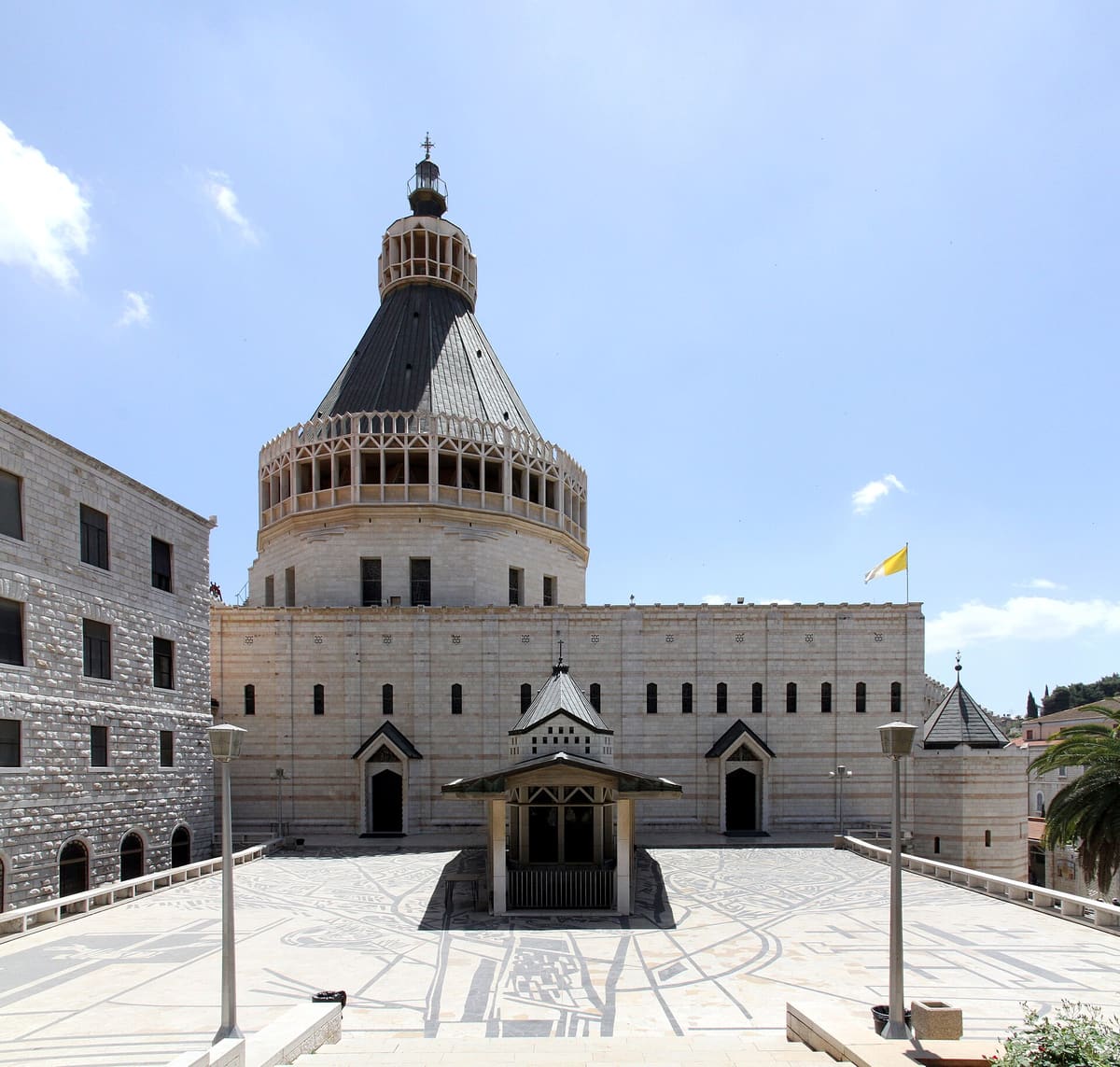

These communities are connected by church tradition, language, culture, homeland or migration. The labels overlap: a Palestinian Christian may also be an Israeli citizen and belong to an Orthodox, Catholic or Protestant church. This is an introduction to that diversity, not a complete list or a set of separate population groups.
Historical roots
Pope Pius IX restored the Latin Patriarchate of Jerusalem in 1847 and appointed Giuseppe Valerga to lead it. Parish schools accompanied the renewed diocesan structure, and a new patriarchal church was consecrated in 1872. These nineteenth-century institutions helped organize local Catholic life; their dates should not be confused with the origins of Christianity in the Holy Land.
Latin Patriarchate · History of the Pro-Cathedral ↗Latin Patriarchate · Schools in Palestine ↗
Worship, languages and traditions
Latin Catholic worship commonly follows the Roman rite, with the Mass joining readings from Scripture and the celebration of the Eucharist. “Latin” names a church tradition, not a requirement to pray only in Latin or an ethnic identity. Local practice includes Arabic and Hebrew, while Eastern Catholics maintain distinct rites within the same Catholic communion.
Vatican II · Sacrosanctum Concilium ↗Saint James Vicariate · Liturgy in Hebrew ↗Christian Information Center · Catholic Christmas services 2025–2026 ↗Vatican II · Orientalium Ecclesiarum ↗
Regional life and diaspora
The Jerusalem diocese spans Palestine, Israel, Jordan and Cyprus, bringing together local parishes and ministries for different language communities. Its schools educate pupils from varied religious backgrounds, extending church activity beyond Sunday worship. Alongside clergy and religious orders, teachers, families and other lay members sustain this presence through education, parish life and service to their neighbours.
Latin Patriarchate · About the diocese ↗Latin Patriarchate · Schools in Palestine ↗Latin Patriarchate · Bishops on education and local families ↗
Sources
- Latin Patriarchate · About the diocese ↗
- Latin Patriarchate · Migrant communities ↗
- Latin Patriarchate · History of the Pro-Cathedral ↗
- Latin Patriarchate · Schools in Palestine ↗
- Vatican II · Sacrosanctum Concilium ↗
- Saint James Vicariate · Liturgy in Hebrew ↗
- Christian Information Center · Catholic Christmas services 2025–2026 ↗
- Vatican II · Orientalium Ecclesiarum ↗
- Latin Patriarchate · Bishops on education and local families ↗