Church tradition
Greek / Rum Orthodox Christians
Greek Orthodox communities belong to the Eastern Orthodox family, including the historic patriarchates of Antioch and Jerusalem and their many Arabic-speaking faithful. Often called Rum Orthodox in the region, they preserve a Byzantine church tradition; “Greek” in a church name does not mean that every worshipper is ethnically Greek or a citizen of Greece.
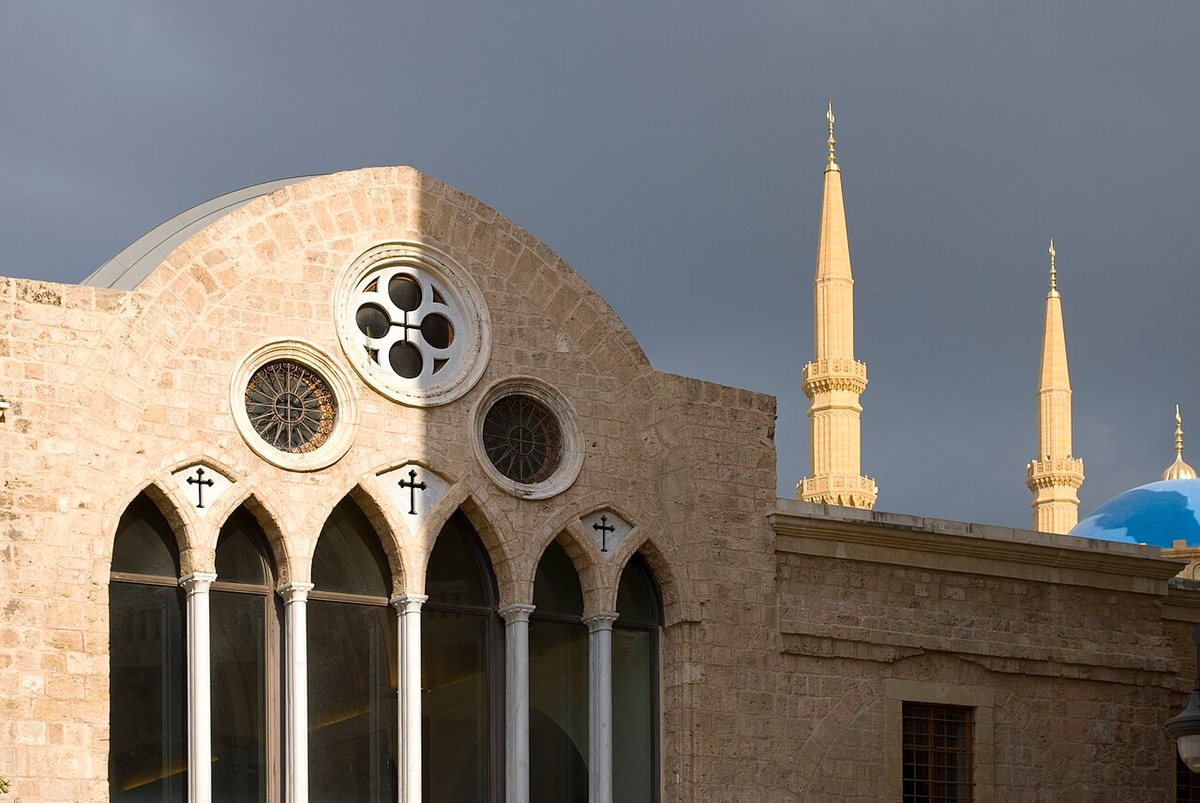

These communities are connected by church tradition, language, culture, homeland or migration. The labels overlap: a Palestinian Christian may also be an Israeli citizen and belong to an Orthodox, Catholic or Protestant church. This is an introduction to that diversity, not a complete list or a set of separate population groups.
Historical roots
Antioch and Jerusalem developed into influential church centres in the eastern Roman world. Jerusalem’s fourth-century sanctuaries and desert monasteries helped shape pilgrimage, theology and worship, while Antioch linked congregations across the region. Their later histories include changing empires and church divisions; today’s patriarchates preserve these inheritances without representing every Christian tradition that arose in those cities.
World Council of Churches · Antiochian history ↗World Council of Churches · Jerusalem patriarchate ↗
Worship, languages and traditions
The Divine Liturgy, icons, fasting and the cycle of feasts are central to this Byzantine heritage. Arabic has an established place in regional worship alongside Greek and other languages. The patriarchates belong to Eastern Orthodoxy, a different church family from Oriental Orthodoxy; neither the language of a service nor the word “Greek” determines a worshipper’s ethnicity.
Antiochian Archdiocese · Orthodox faith and worship ↗World Council of Churches · Jerusalem patriarchate ↗Antiochian Village · English and Arabic service books ↗
Regional life and diaspora
Antiochian church life connects communities in Syria and Lebanon with congregations established through migration in the Americas, Europe and Australia. Jerusalem’s patriarchate serves communities in Israel, Palestine and Jordan while maintaining monasteries and holy places. Parish worship, theological education and social service therefore coexist with international pilgrimage and diaspora ties; these connections do not erase local roots.
World Council of Churches · Antiochian history ↗World Council of Churches · Jerusalem patriarchate ↗