Cultural identity
Coptic Christians
Coptic Christianity is rooted in Egypt and the ancient Church of Alexandria, with a rich heritage of monastic life, Coptic liturgy and Arabic worship. The Coptic Orthodox Church belongs to the Oriental Orthodox family; Coptic Catholics share the Alexandrian tradition while belonging to the Catholic communion, so “Coptic” does not name only one church.
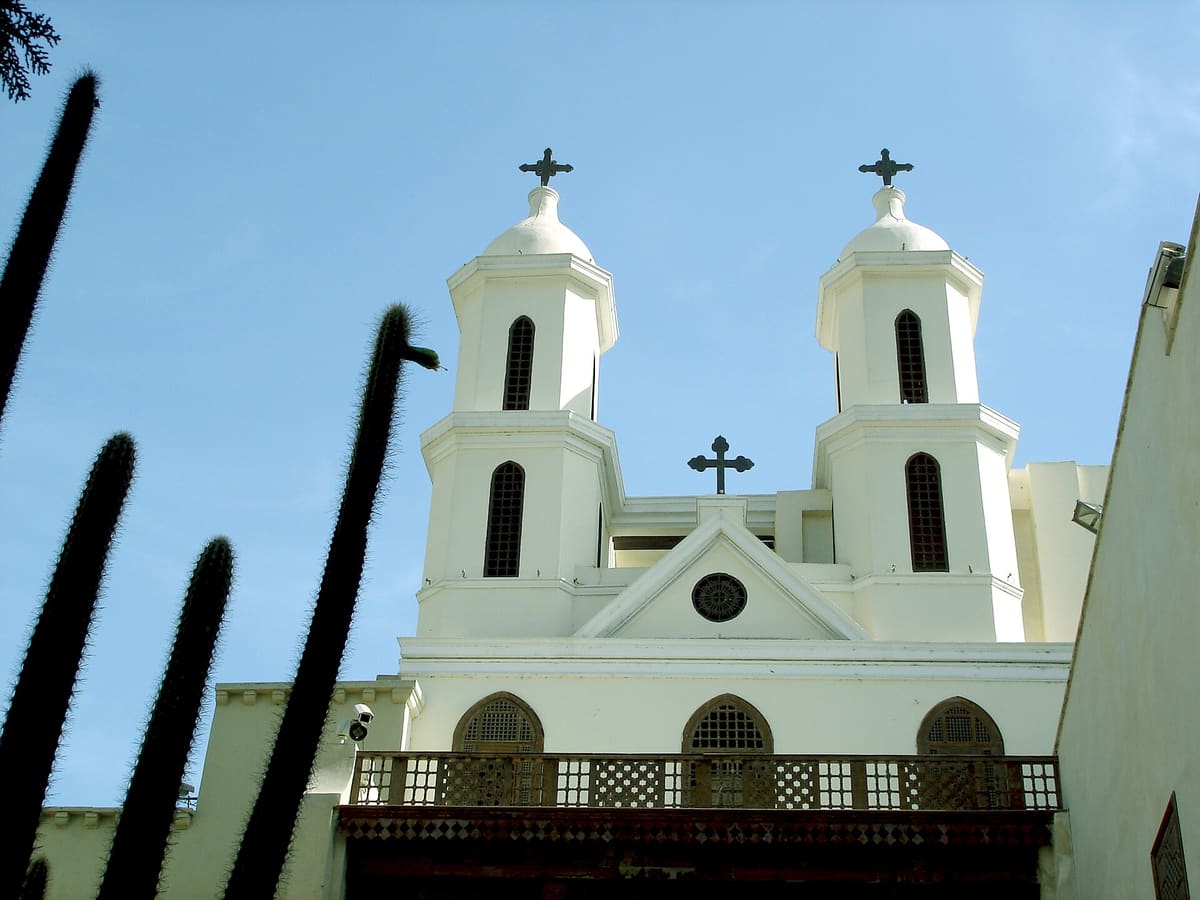

These communities are connected by church tradition, language, culture, homeland or migration. The labels overlap: a Palestinian Christian may also be an Israeli citizen and belong to an Orthodox, Catholic or Protestant church. This is an introduction to that diversity, not a complete list or a set of separate population groups.
Historical roots
Egyptian church tradition associates Saint Mark with the foundation of the Church of Alexandria. In the late third and fourth centuries, ascetics such as Anthony and Pachomius helped shape solitary and communal monastic life in Egypt; their example influenced Christianity far beyond Egypt, while surviving monasteries and church buildings have their own later construction histories.
World Council of Churches · Coptic origins ↗Metropolitan Museum of Art · Early monasticism ↗
Worship, languages and traditions
Coptic, the last historical stage of the Egyptian language, remains important in worship alongside Arabic. Coptic Orthodox services use liturgies associated with Saints Basil, Gregory and Cyril, and fasting seasons shape the church year; Coptic Catholics also inherit the Alexandrian tradition, but communion and church governance distinguish their church from the Coptic Orthodox Church.
World Council of Churches · Coptic worship ↗CNEWA · Coptic Catholic tradition ↗
Regional life and diaspora
Coptic community life extends beyond monasteries: lay women and men participate in parish councils, schools and charitable associations. Egypt remains the central homeland, with established congregations in Europe, North America and Australia; in Cairo, the Institute of Coptic Studies adds research into history and tradition to the church’s educational and pastoral work.