Cultural identity
Assyrian Christians
Assyrian Christians have deep connections with Mesopotamia and the Syriac Christian heritage, including communities historically established in Iraq and Iran. The Assyrian Church of the East preserves an East Syriac tradition, but Assyrian cultural identity should not be treated as identical to membership of one church or imposed on everyone who shares related traditions.
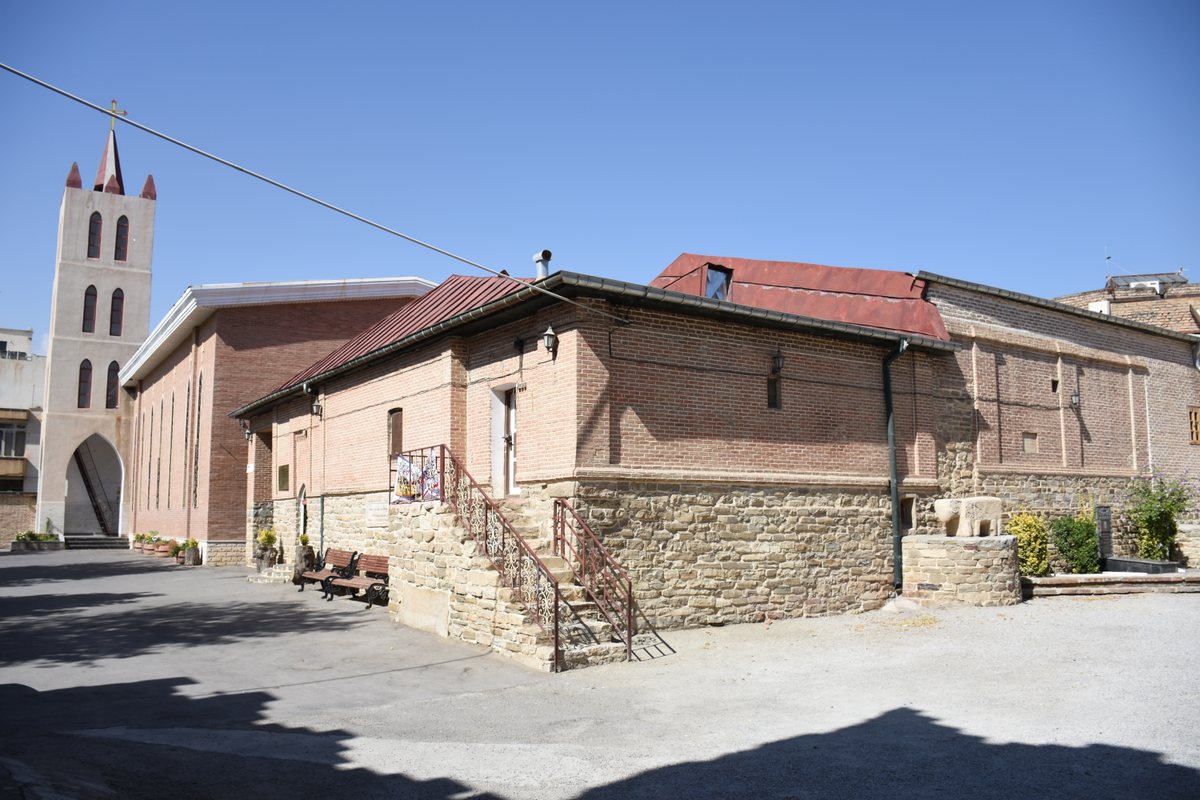

These communities are connected by church tradition, language, culture, homeland or migration. The labels overlap: a Palestinian Christian may also be an Israeli citizen and belong to an Orthodox, Catholic or Protestant church. This is an introduction to that diversity, not a complete list or a set of separate population groups.
Historical roots
The Church of the East developed among Christian communities of Mesopotamia within the Persian Empire, beyond Roman rule. Its bishops were organized around Seleucia-Ctesiphon, while Nisibis became an important centre of learning. Monks and missionaries carried this tradition across Asia, including India and China; that historic network was wider than any one modern ethnic or national community.
Worship, languages and traditions
East Syriac worship uses a Syriac literary inheritance and ancient Eucharistic prayers, notably that of Addai and Mari. The Assyrian Church of the East is distinct from the Oriental Orthodox churches and from the Catholic Chaldean Church. A 1994 Catholic–Assyrian declaration affirmed shared belief in Christ while acknowledging that full communion had not been restored.
Catholic–Assyrian common declaration · 1994 ↗Holy See · Eucharistic guidelines · 2001 ↗
Regional life and diaspora
War, massacres and displacement during the twentieth century reshaped Assyrian communities, contributing to diasporas in Europe, North America and Australia. Churches maintain connections with Iraq, Iran and neighbouring countries. Cultural identification and church membership can overlap in different ways: an individual’s preferred Assyrian, Chaldean, Syriac or other name should not be assigned by outsiders.
CNEWA · The Assyrian Church of the East ↗Holy See · Eucharistic guidelines · 2001 ↗Aaron Michael Butts · Assyrian Christians ↗